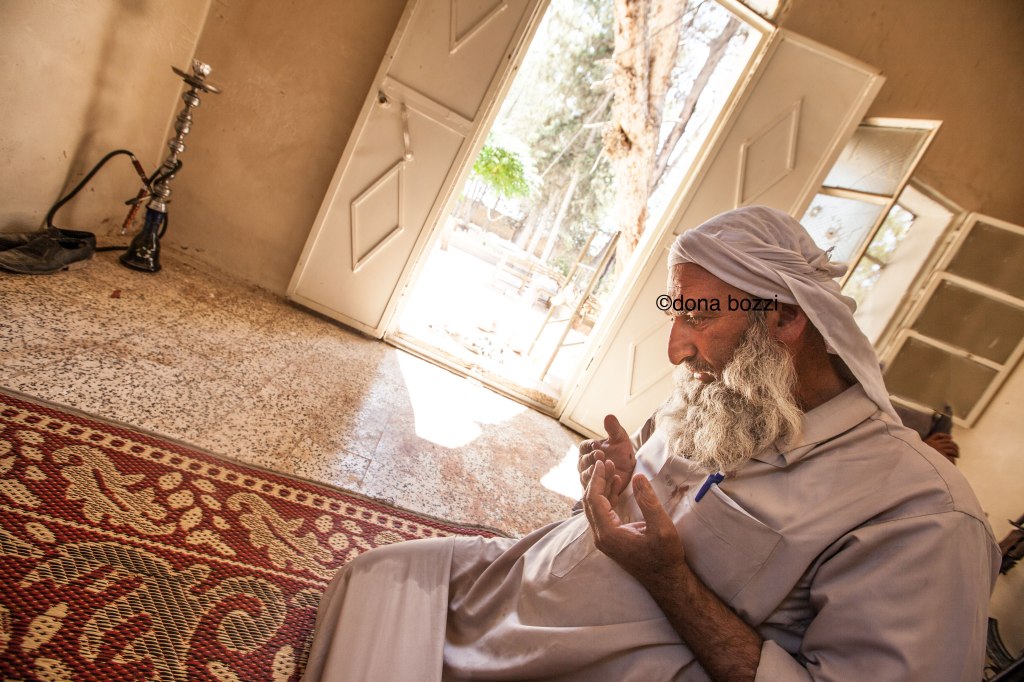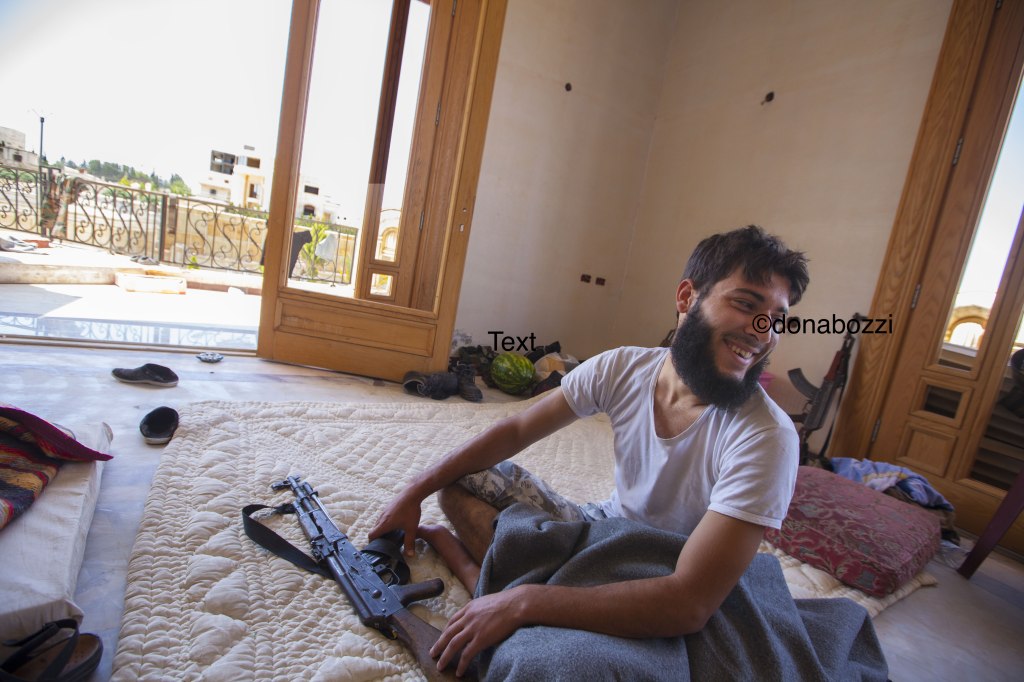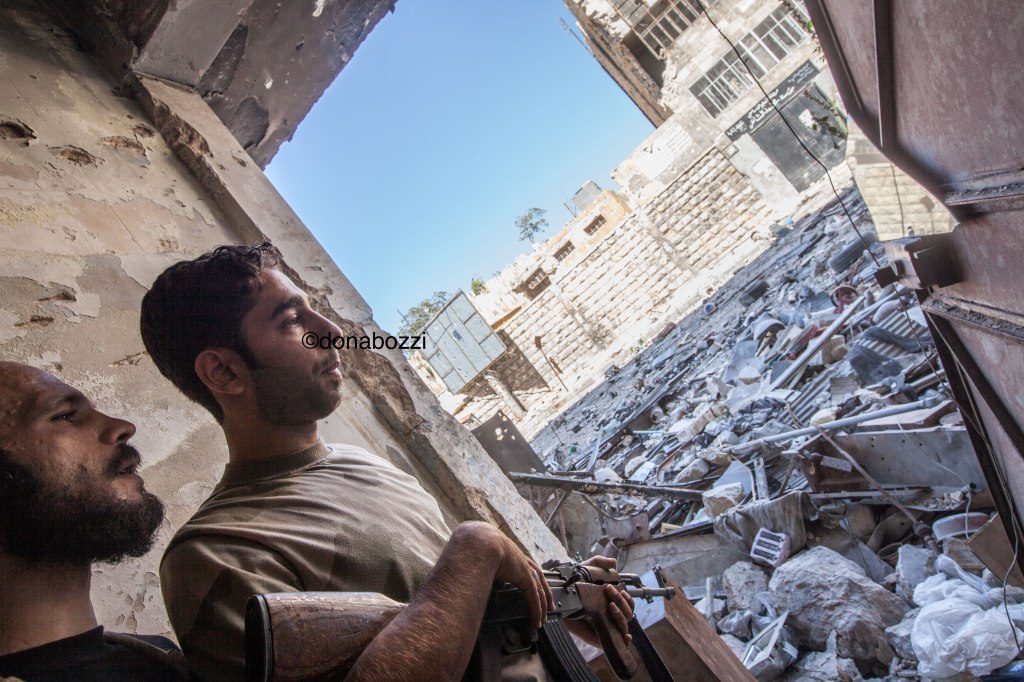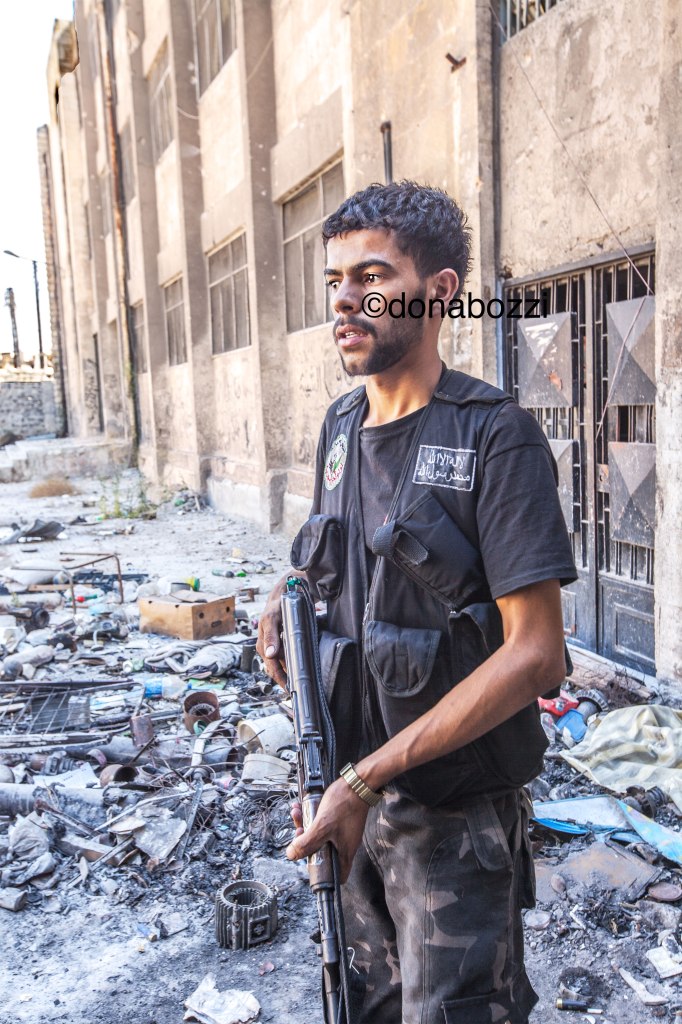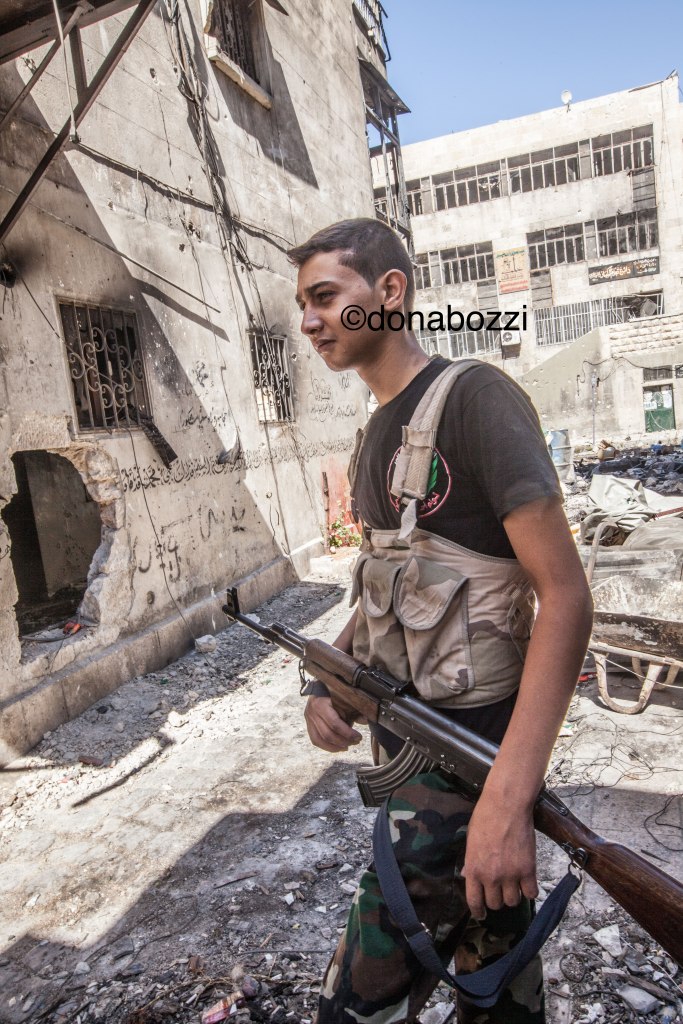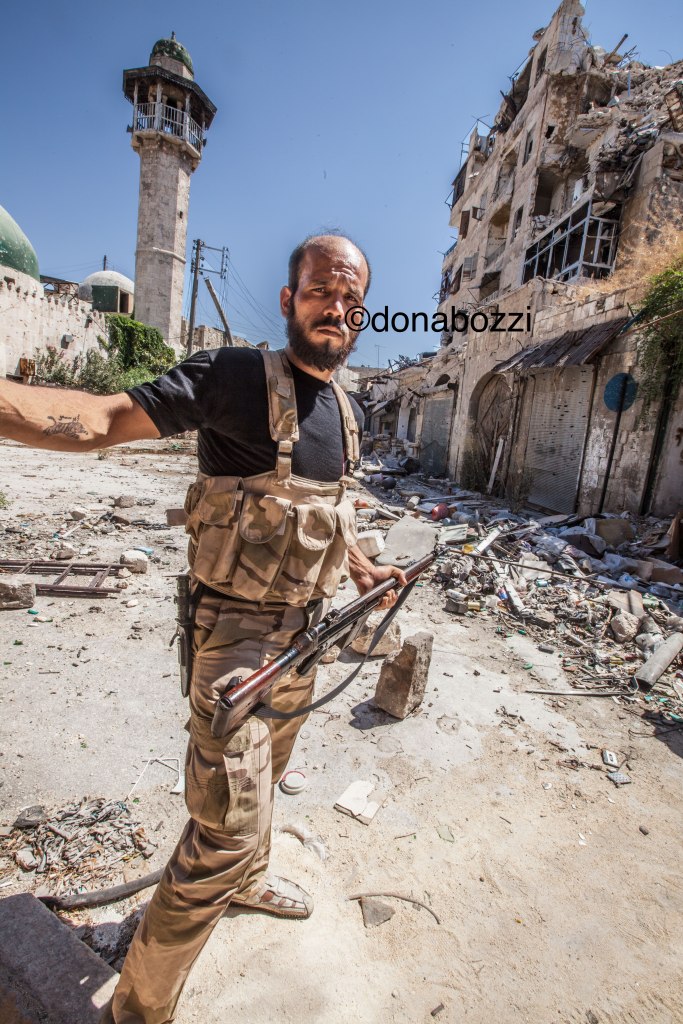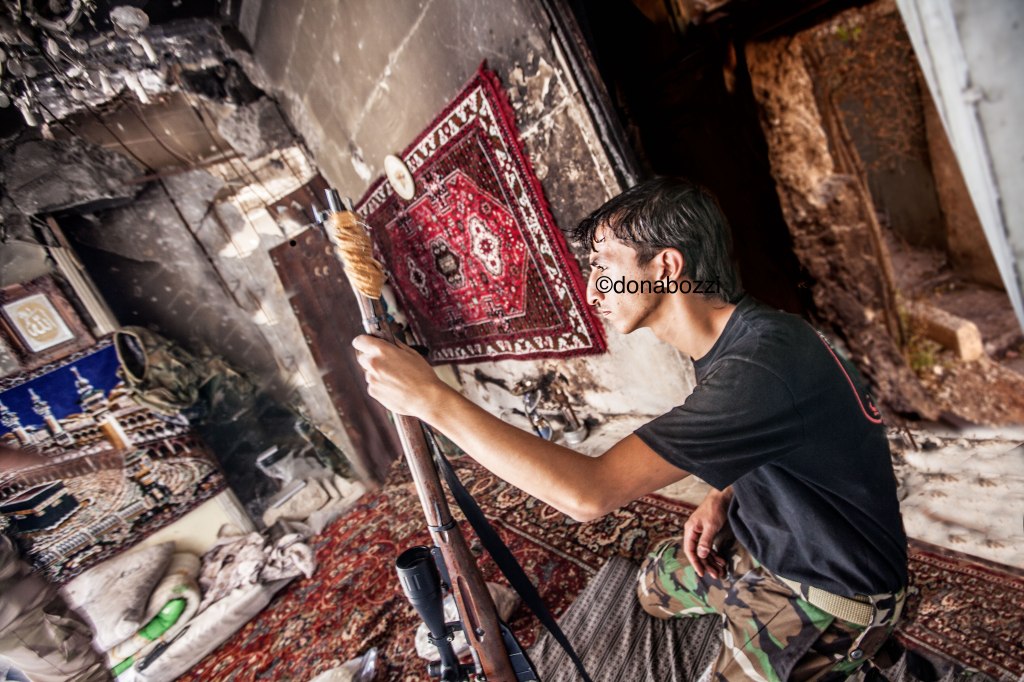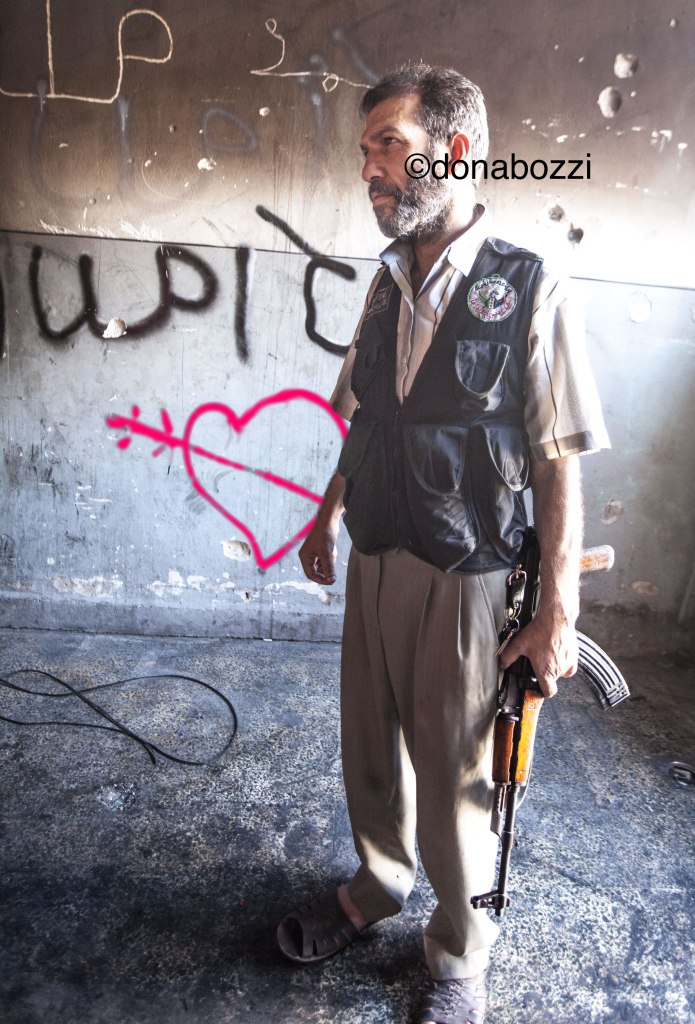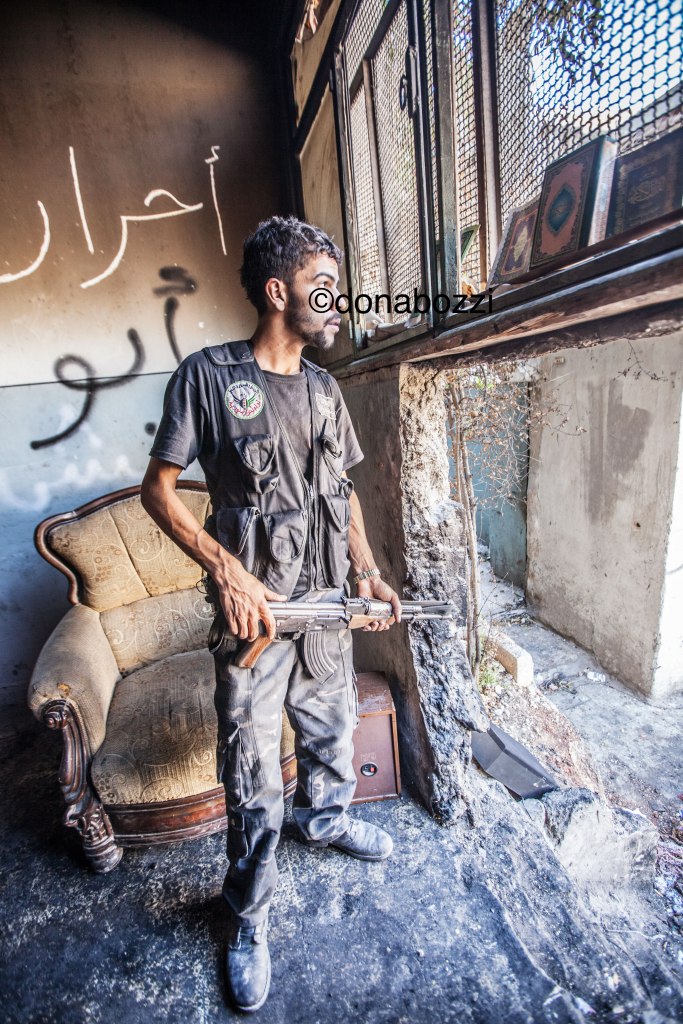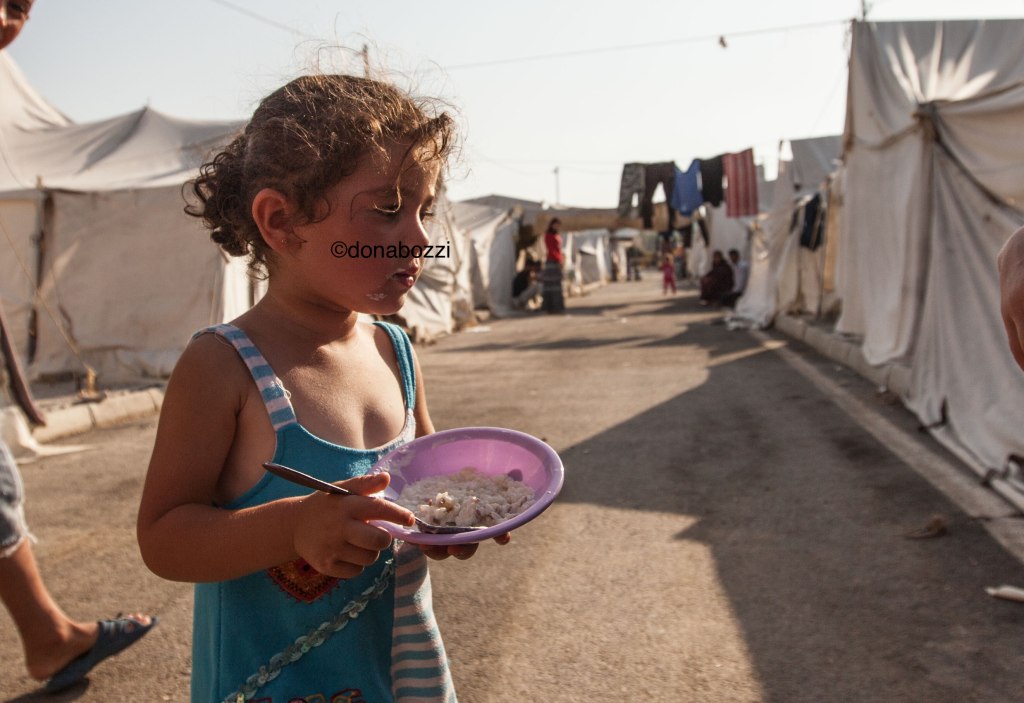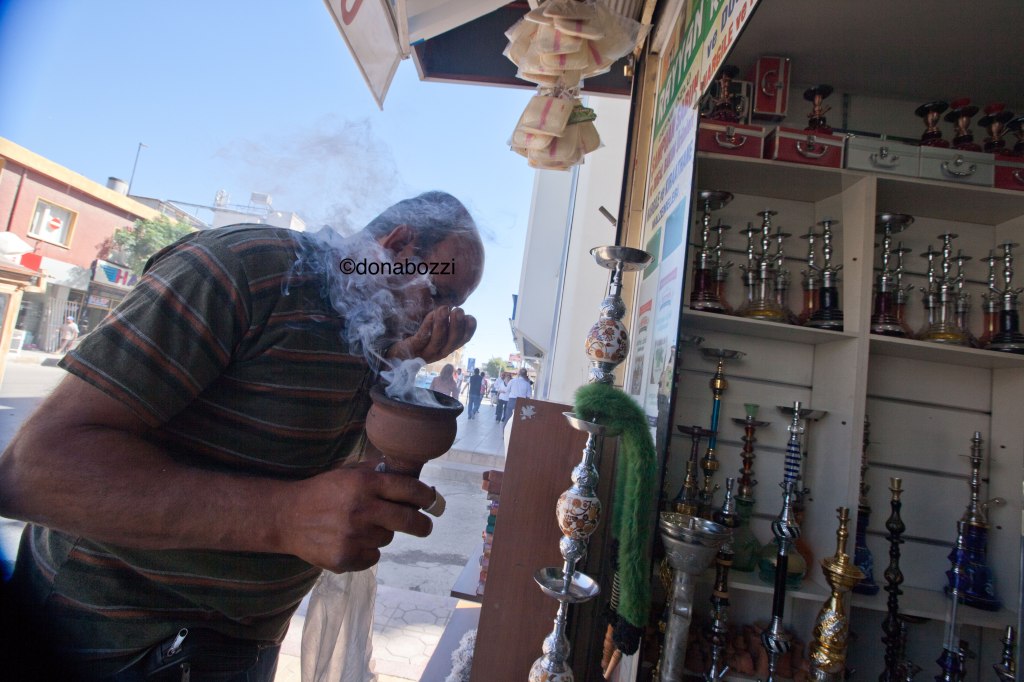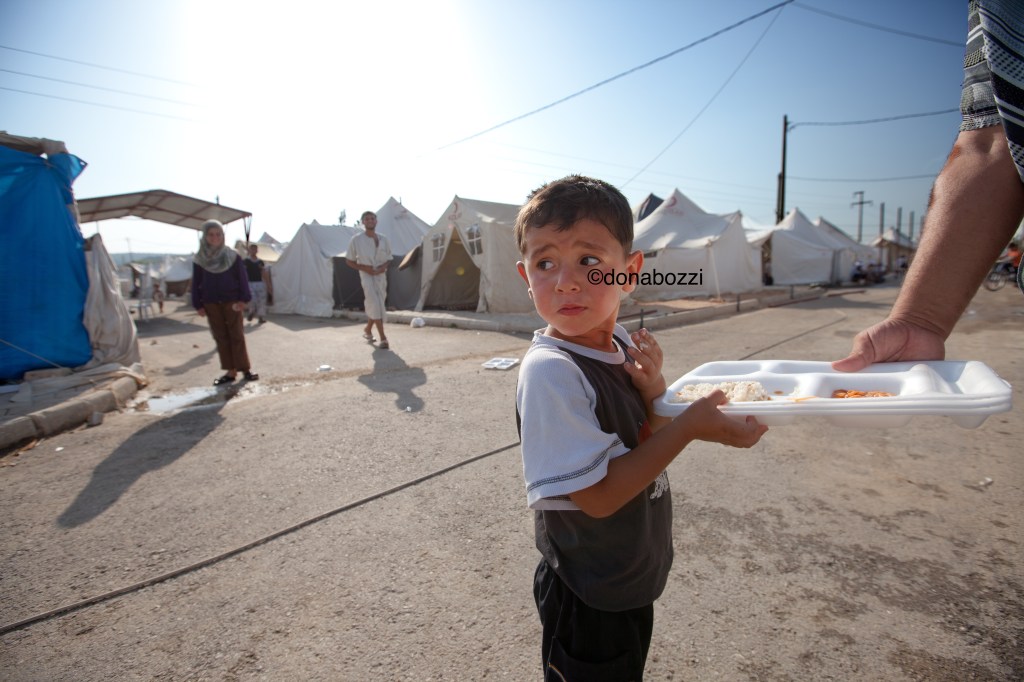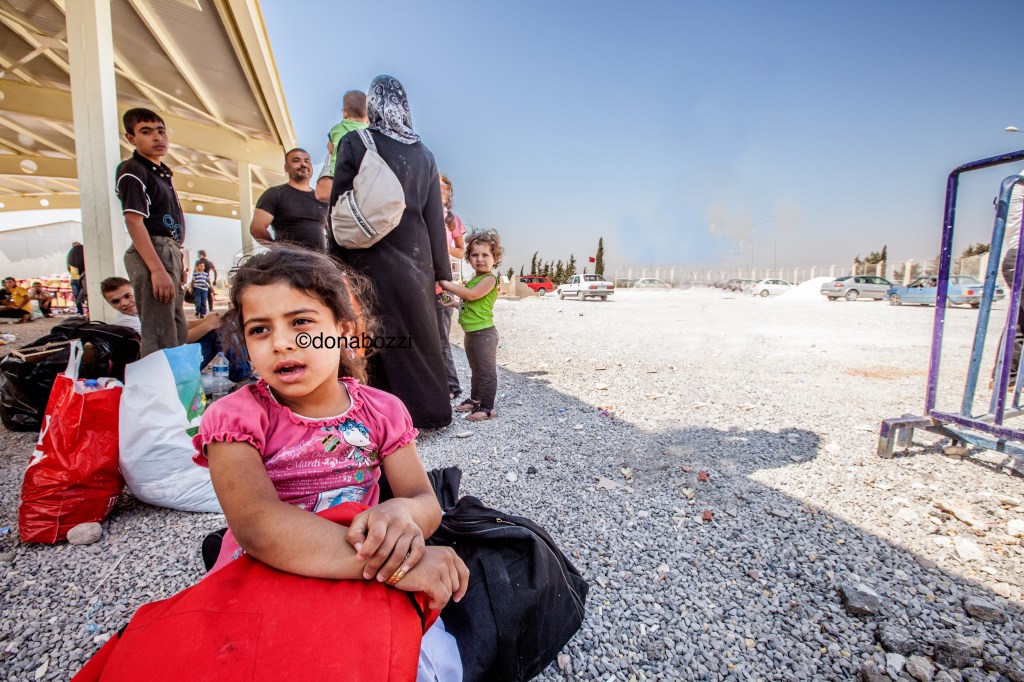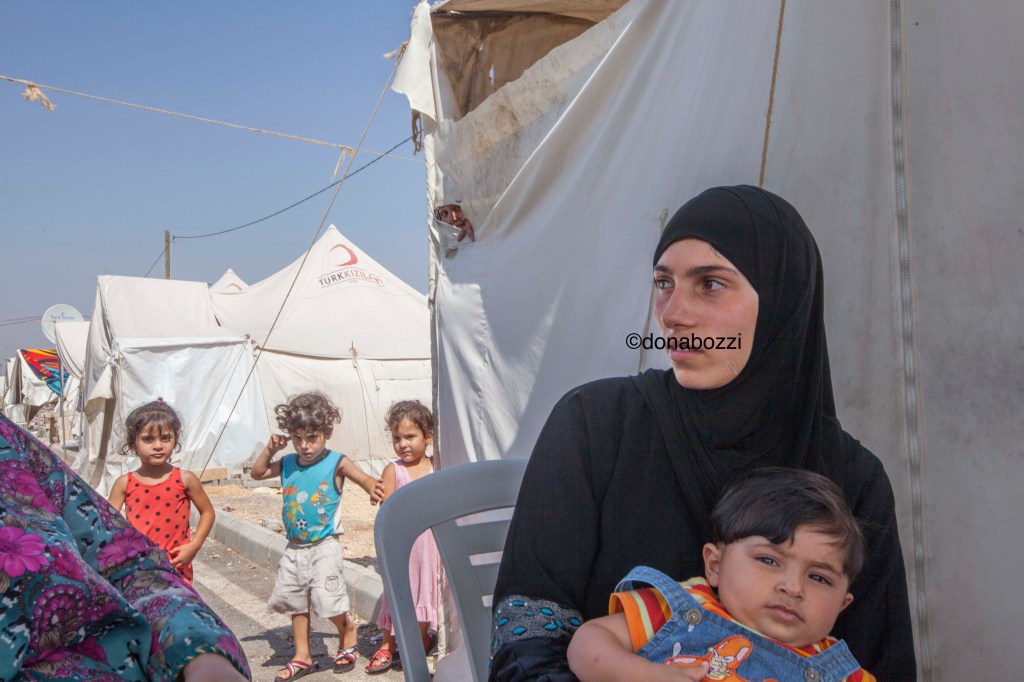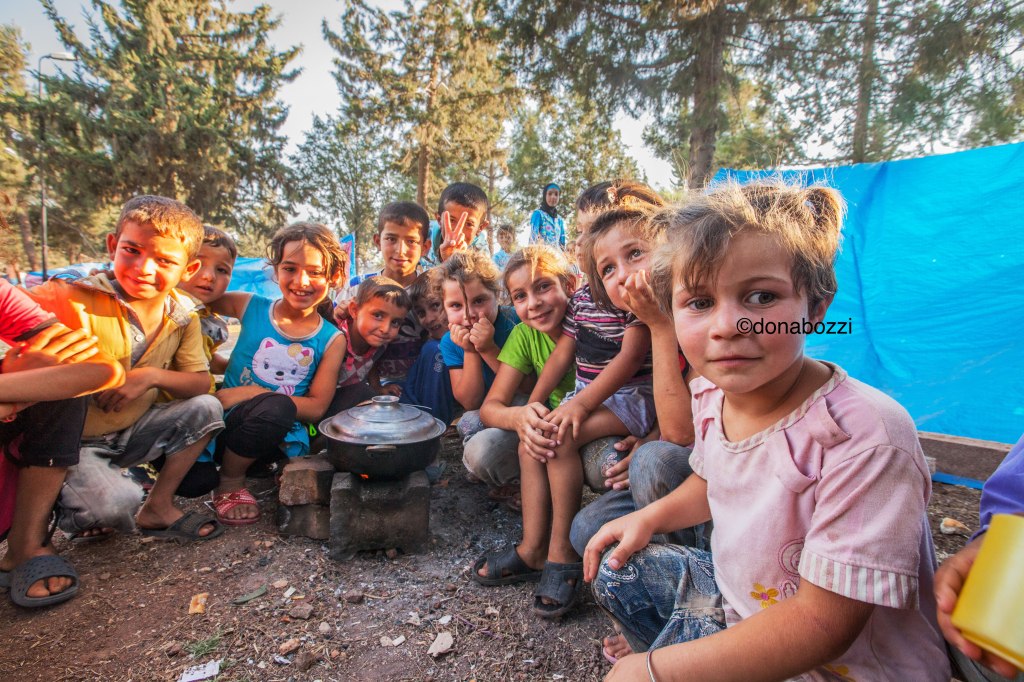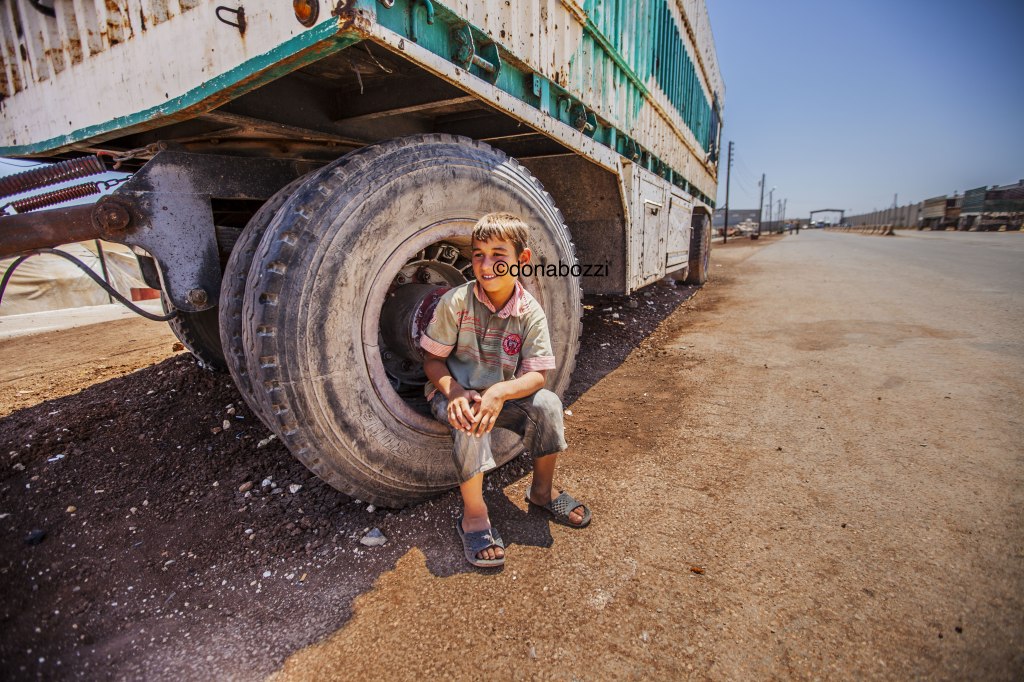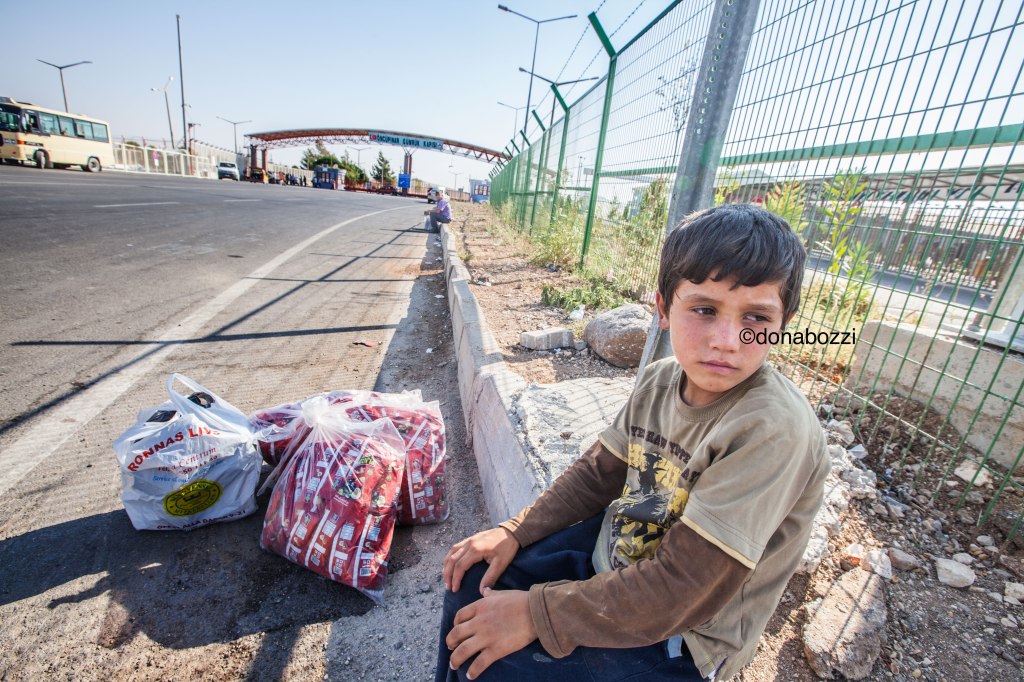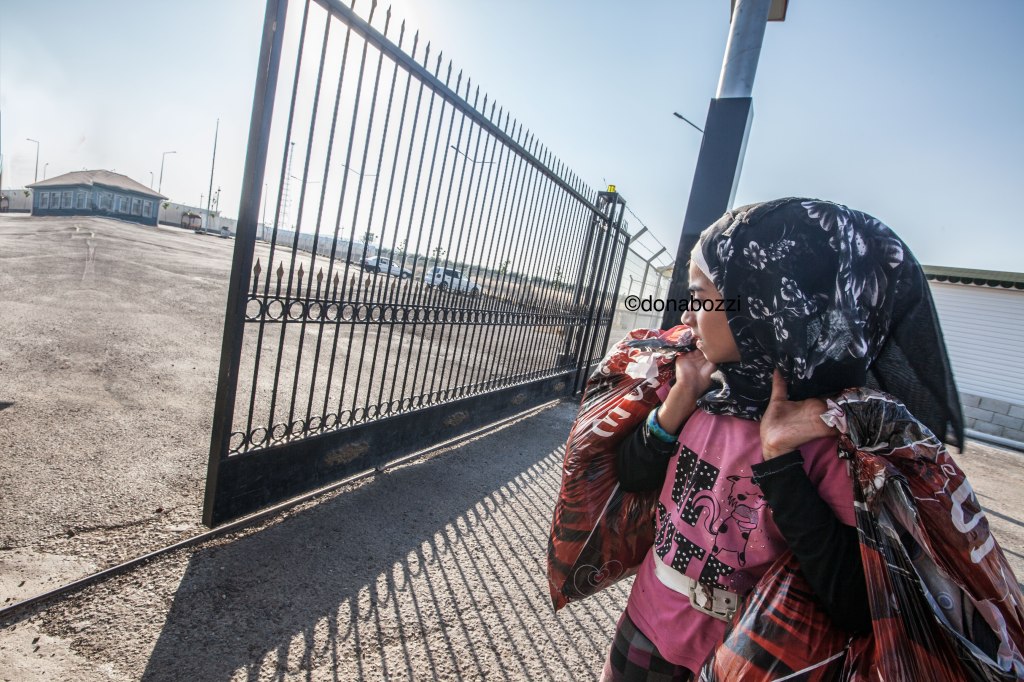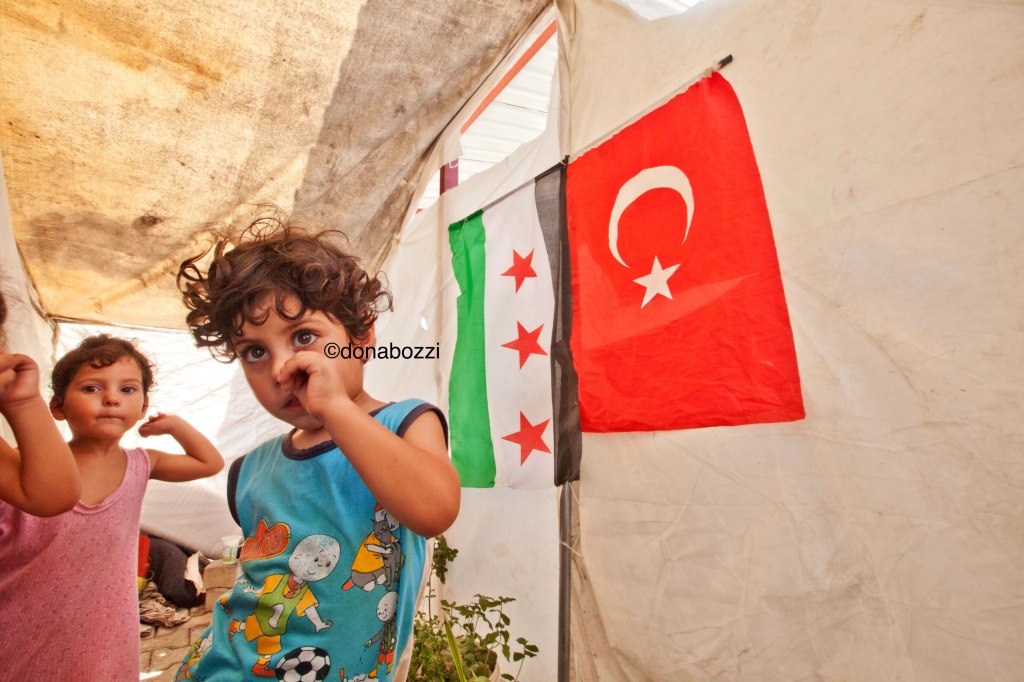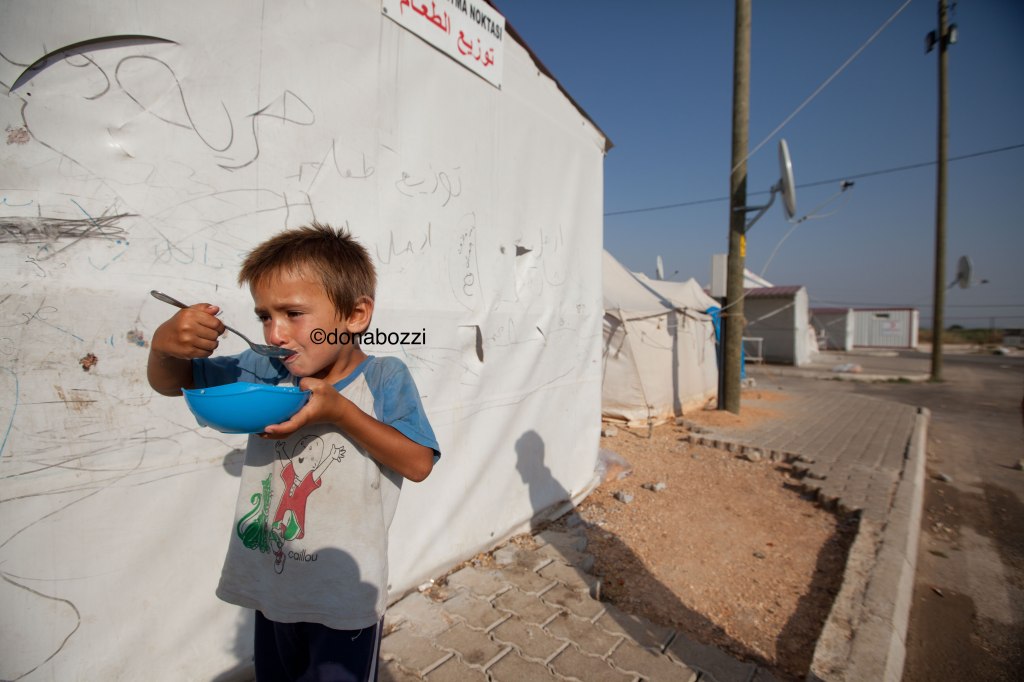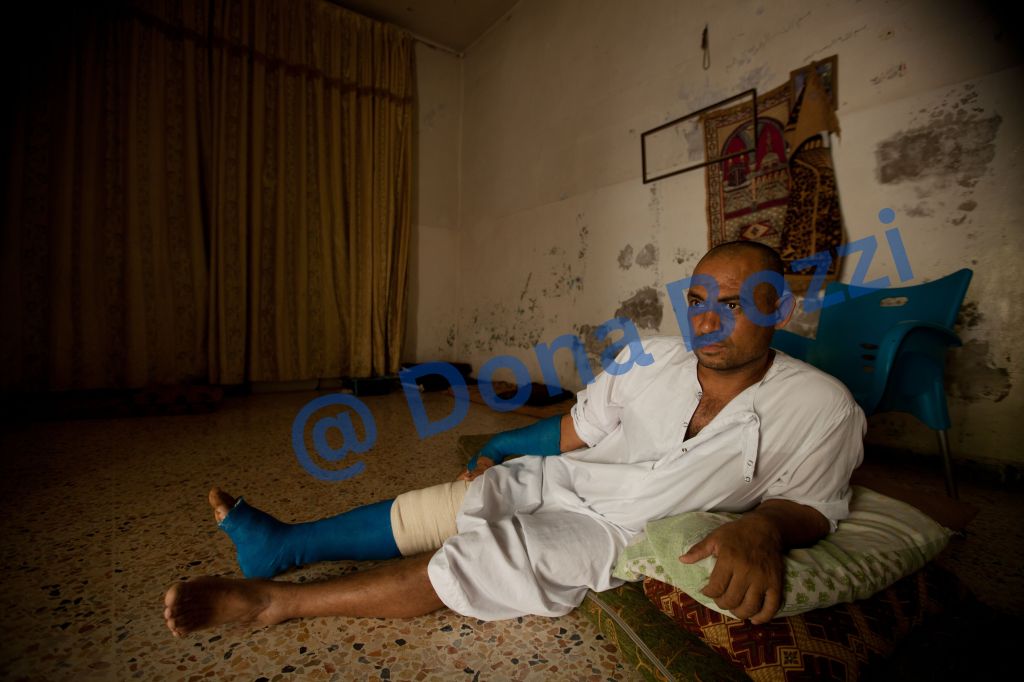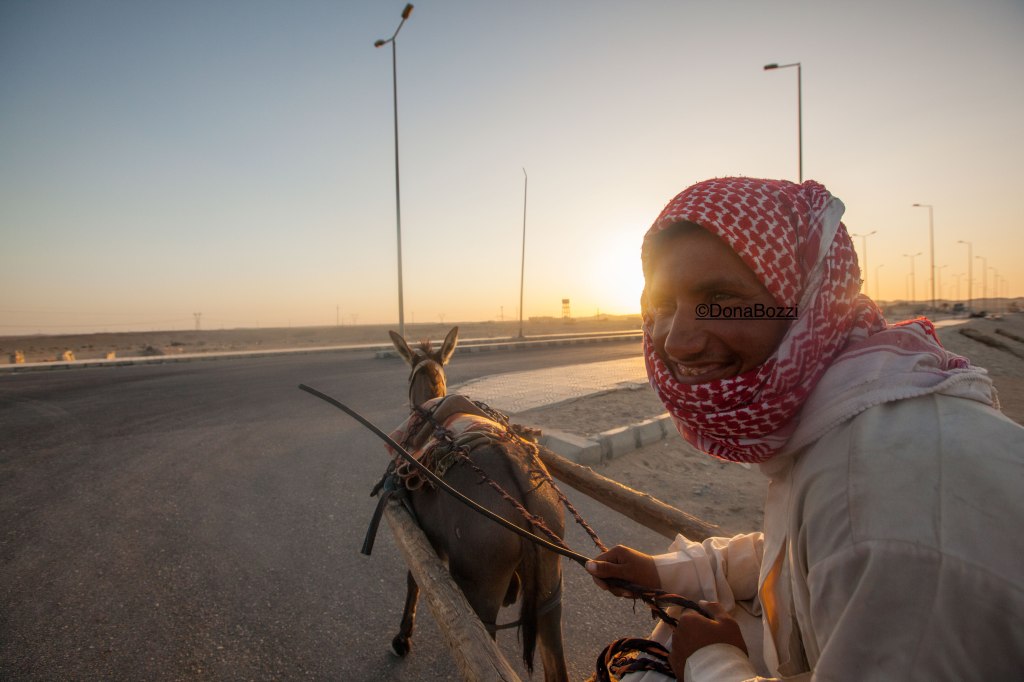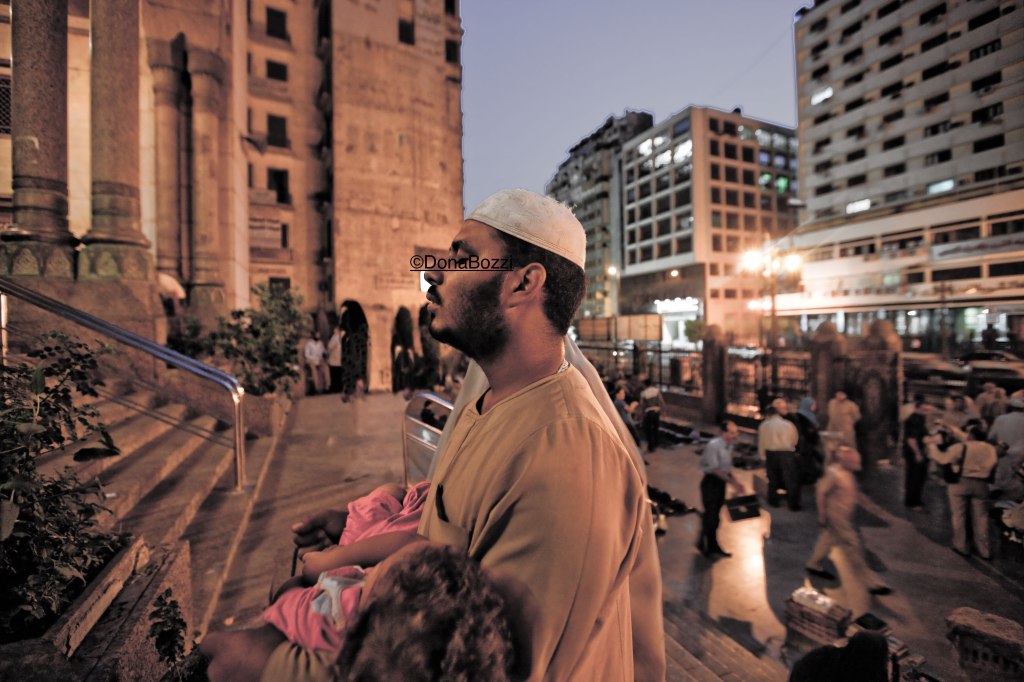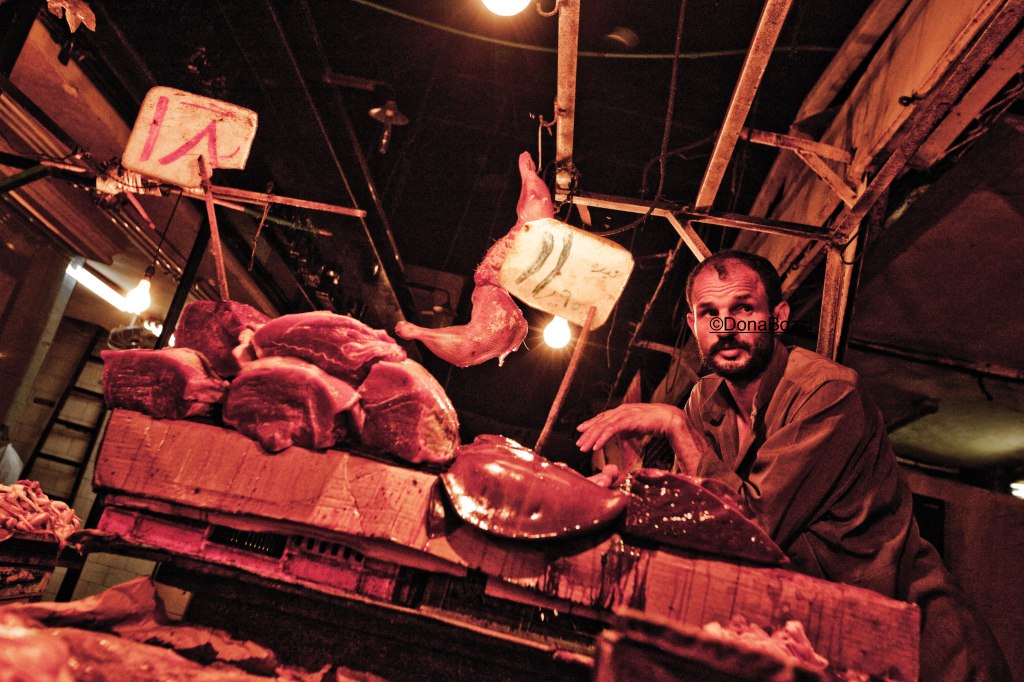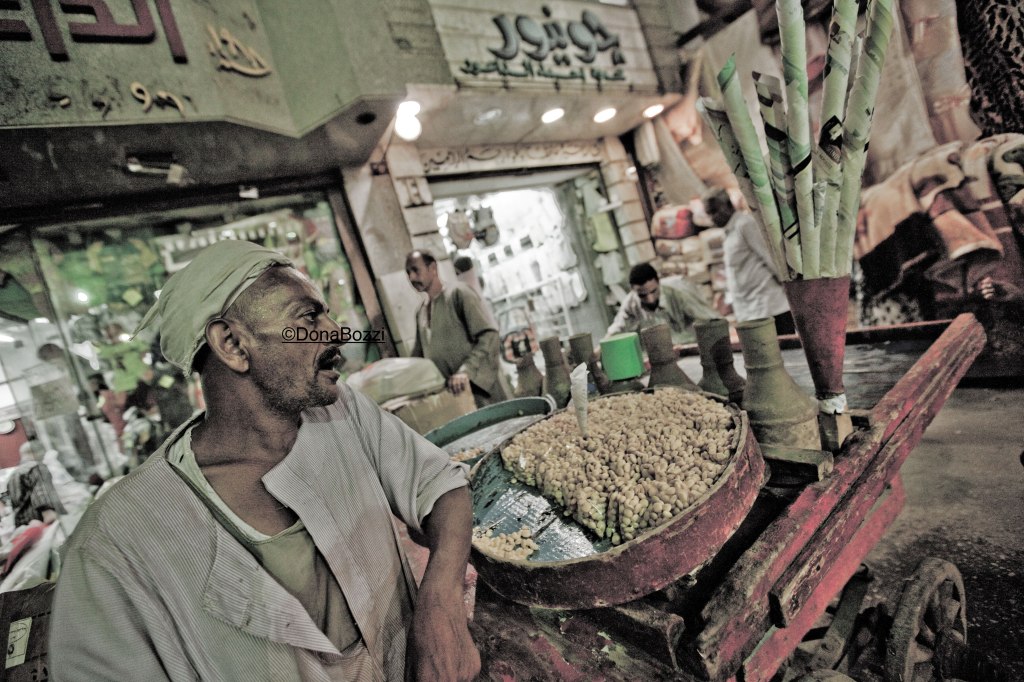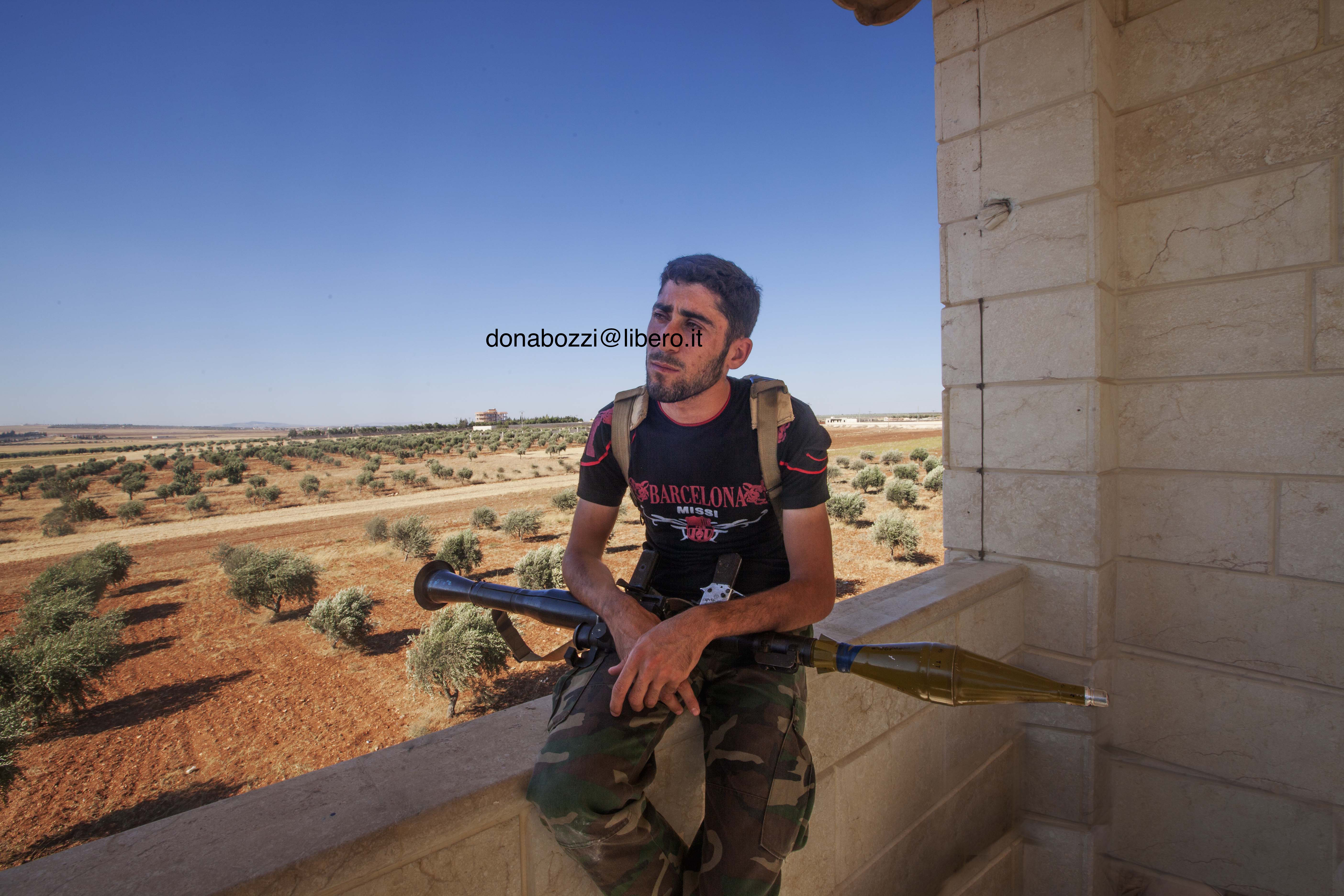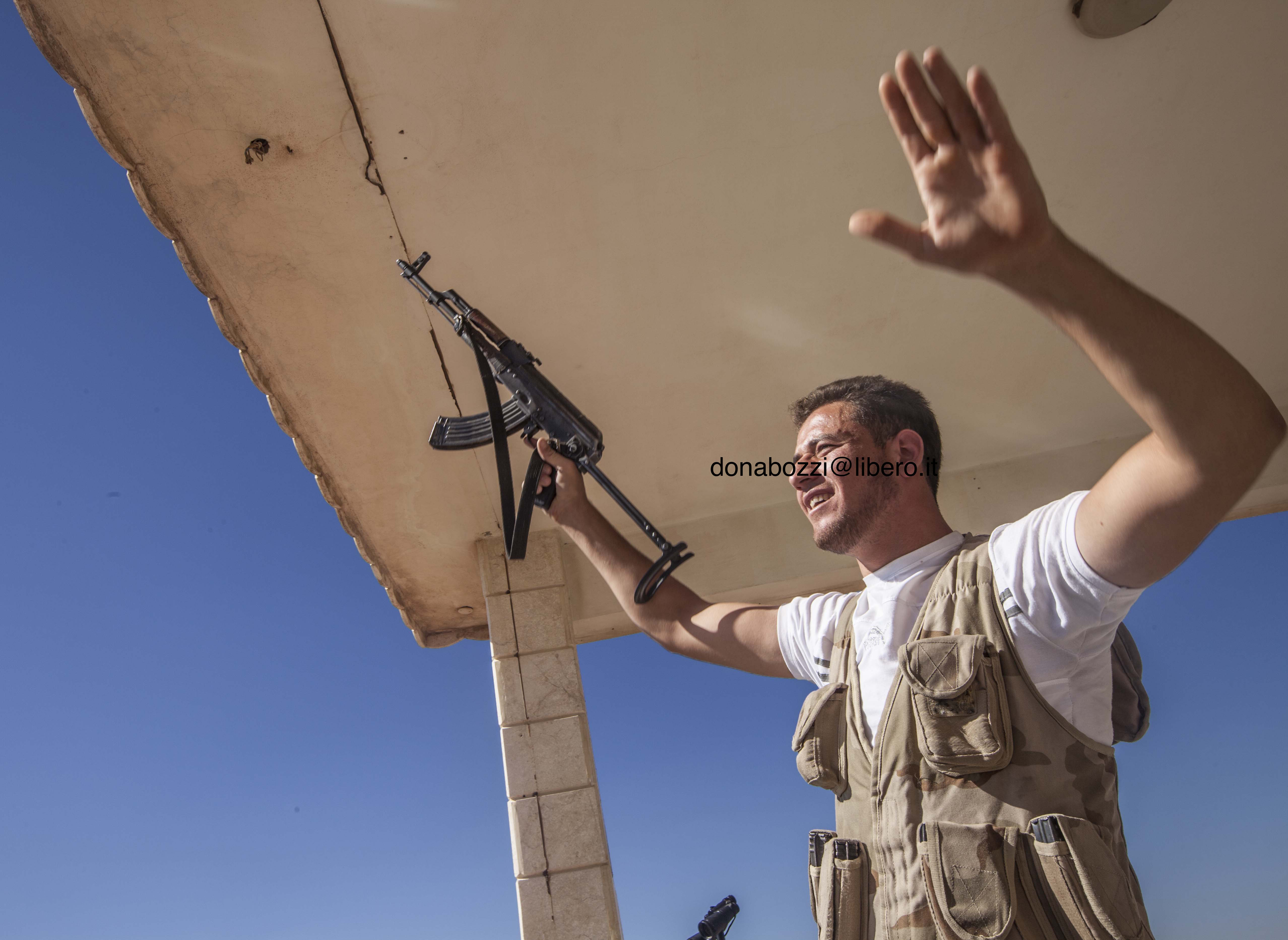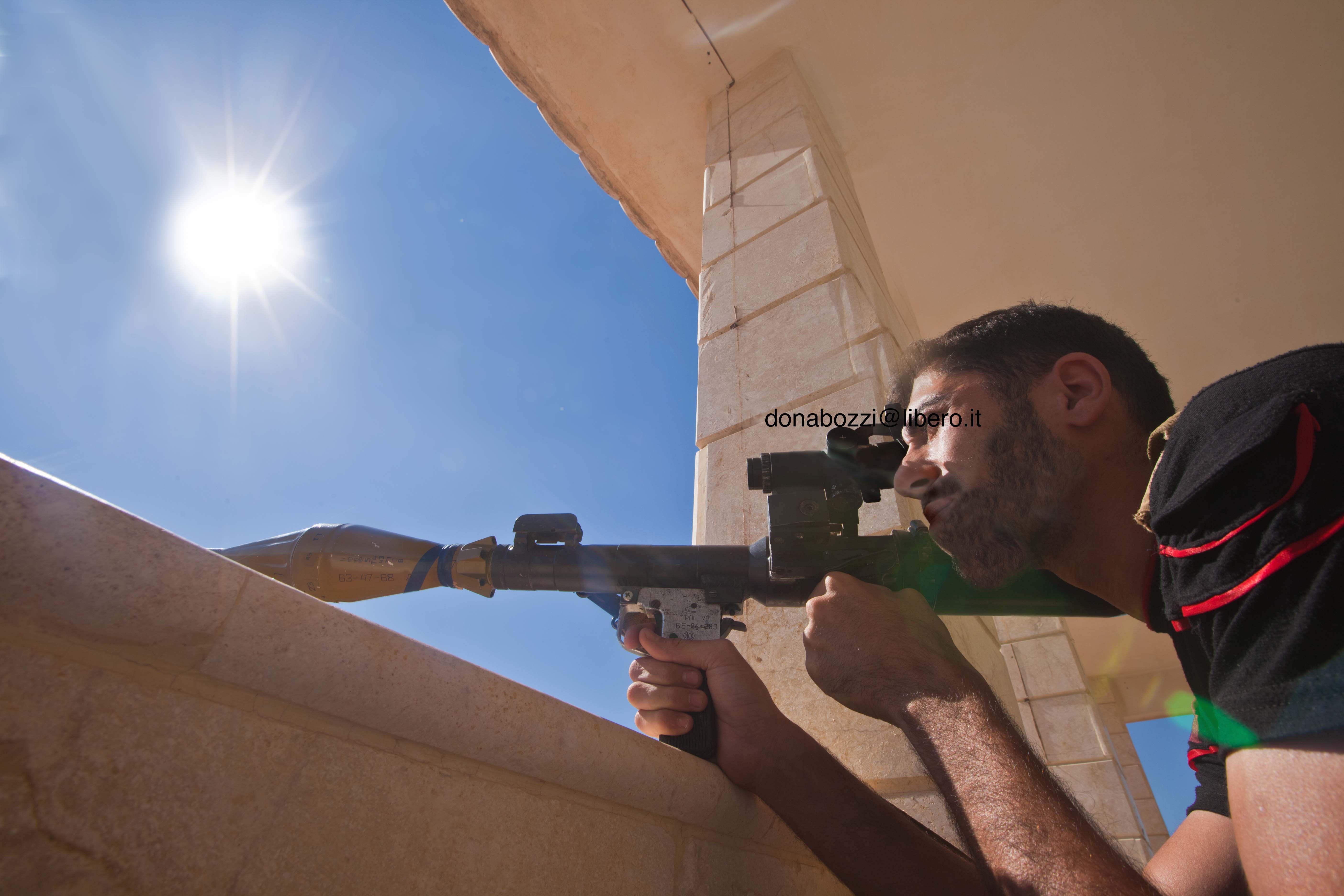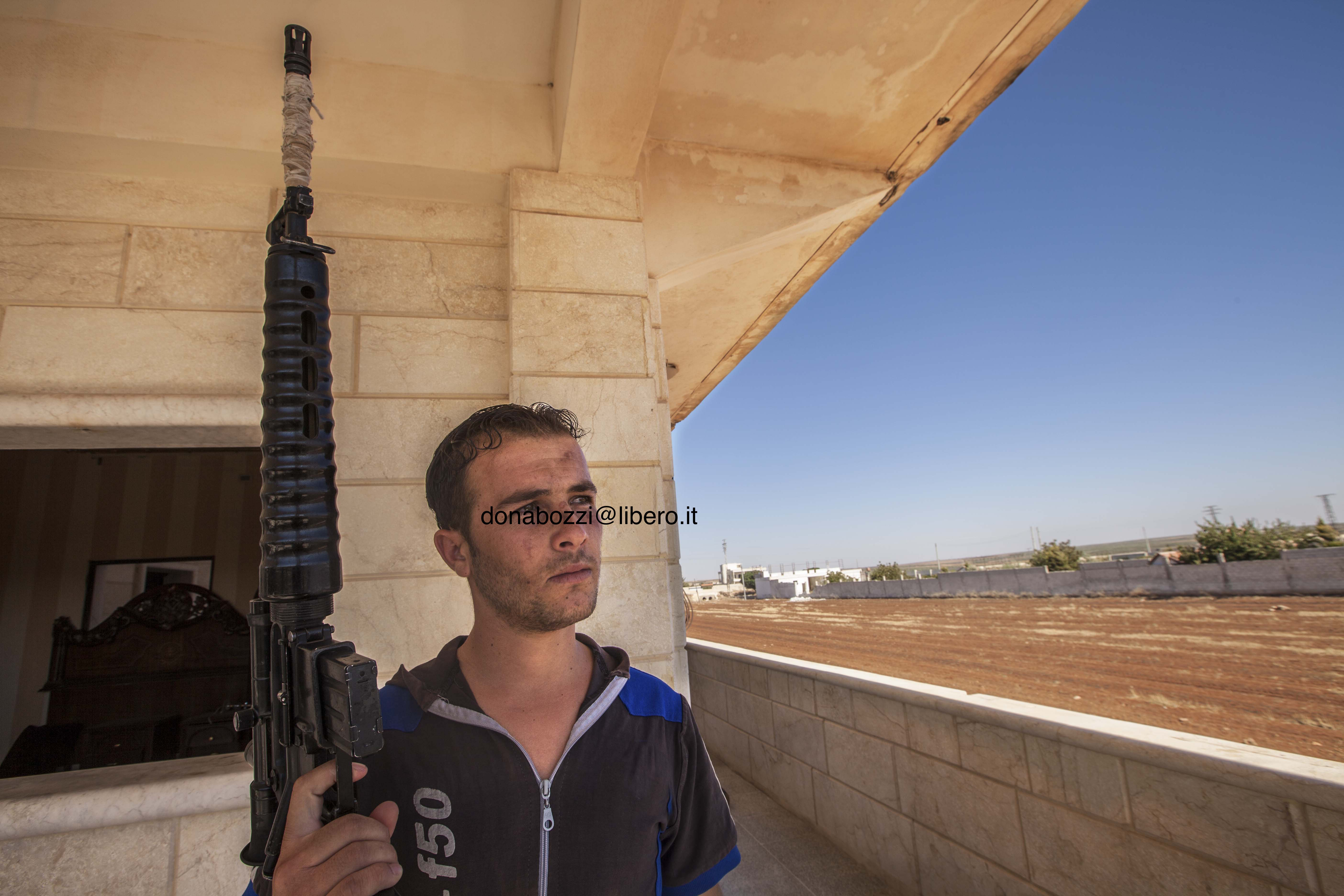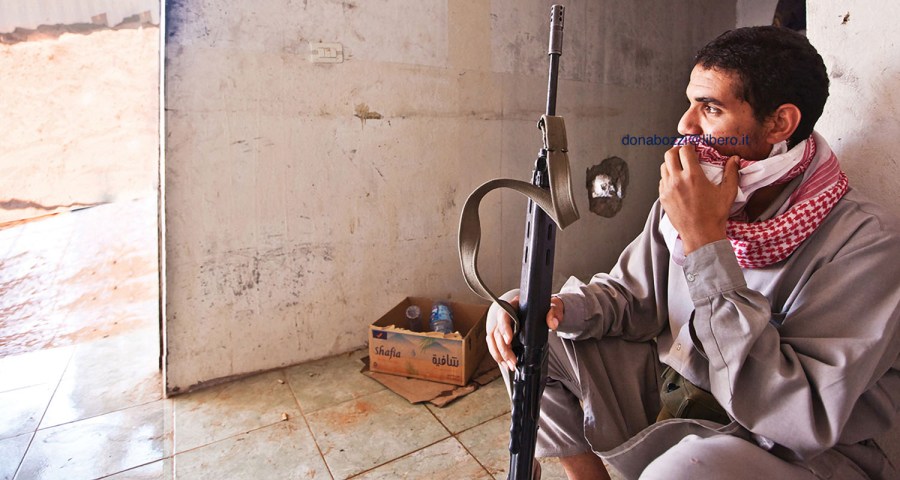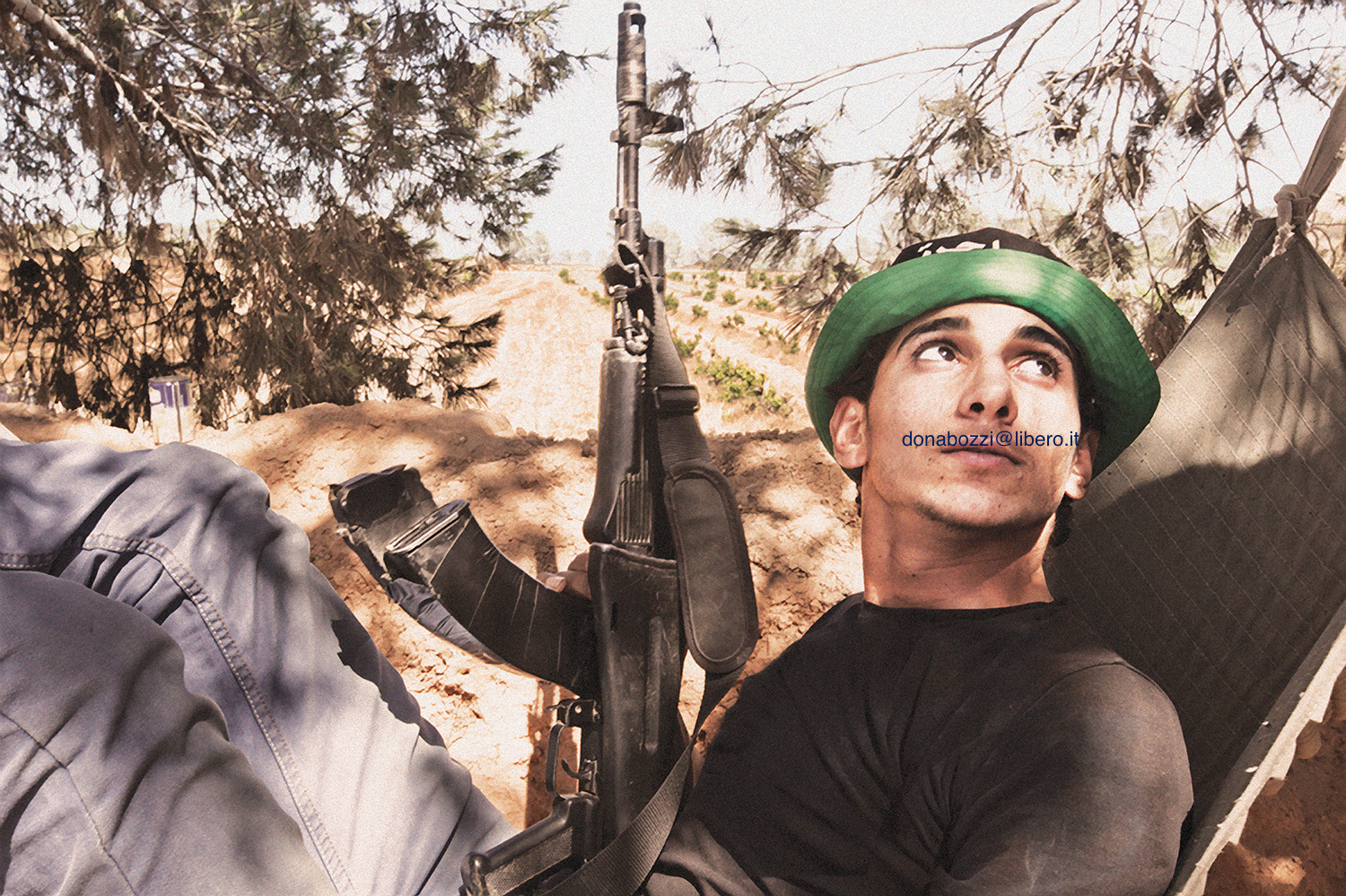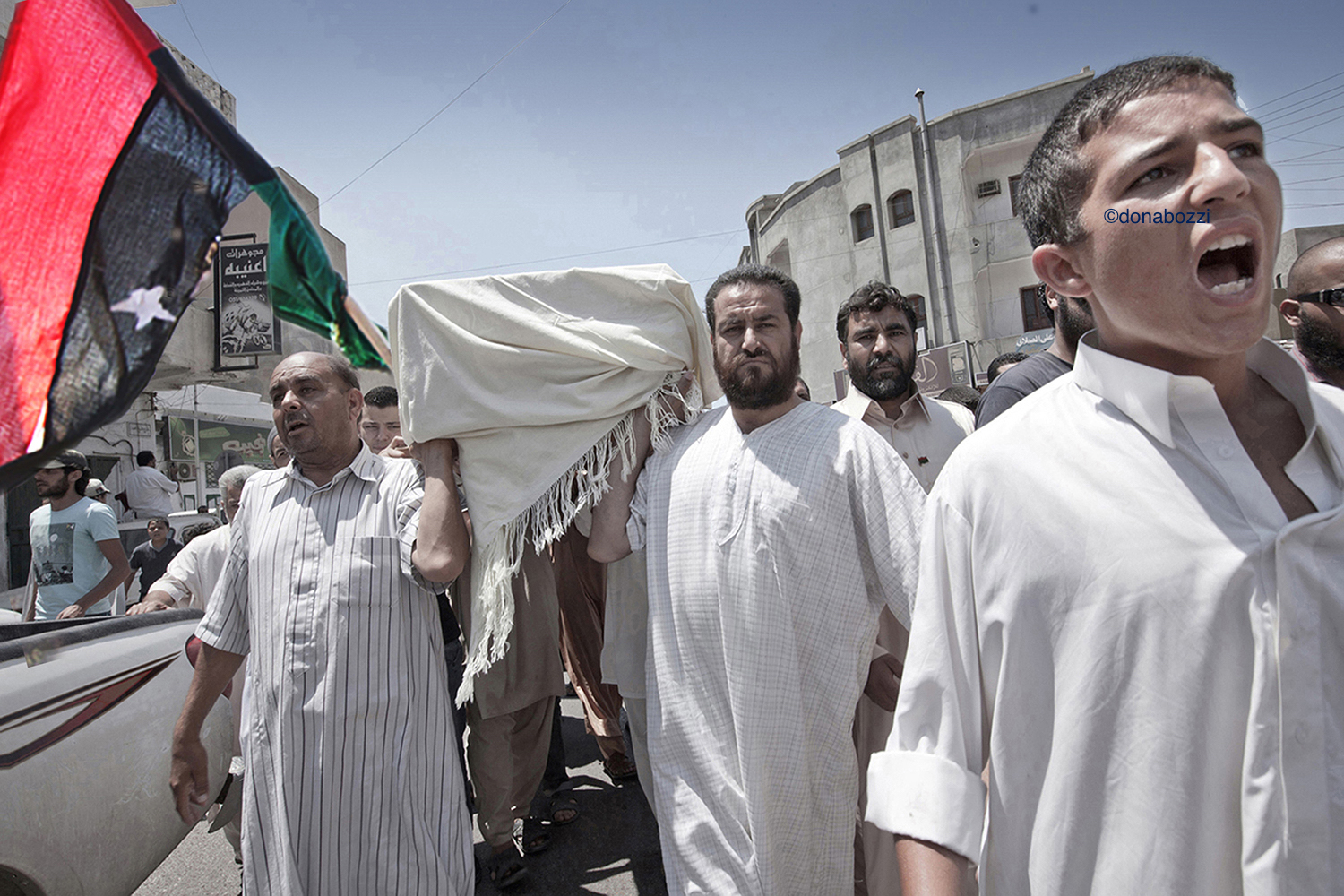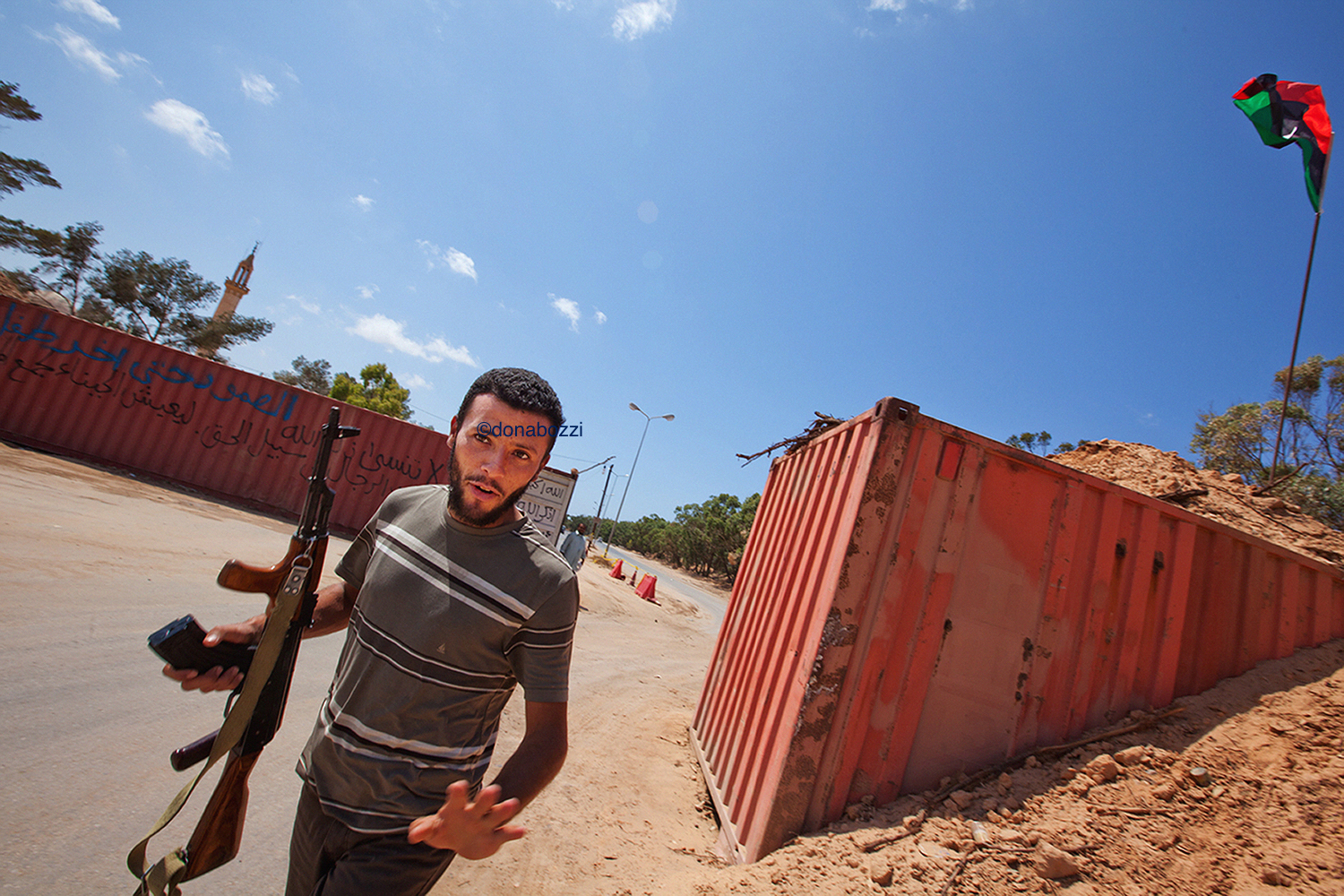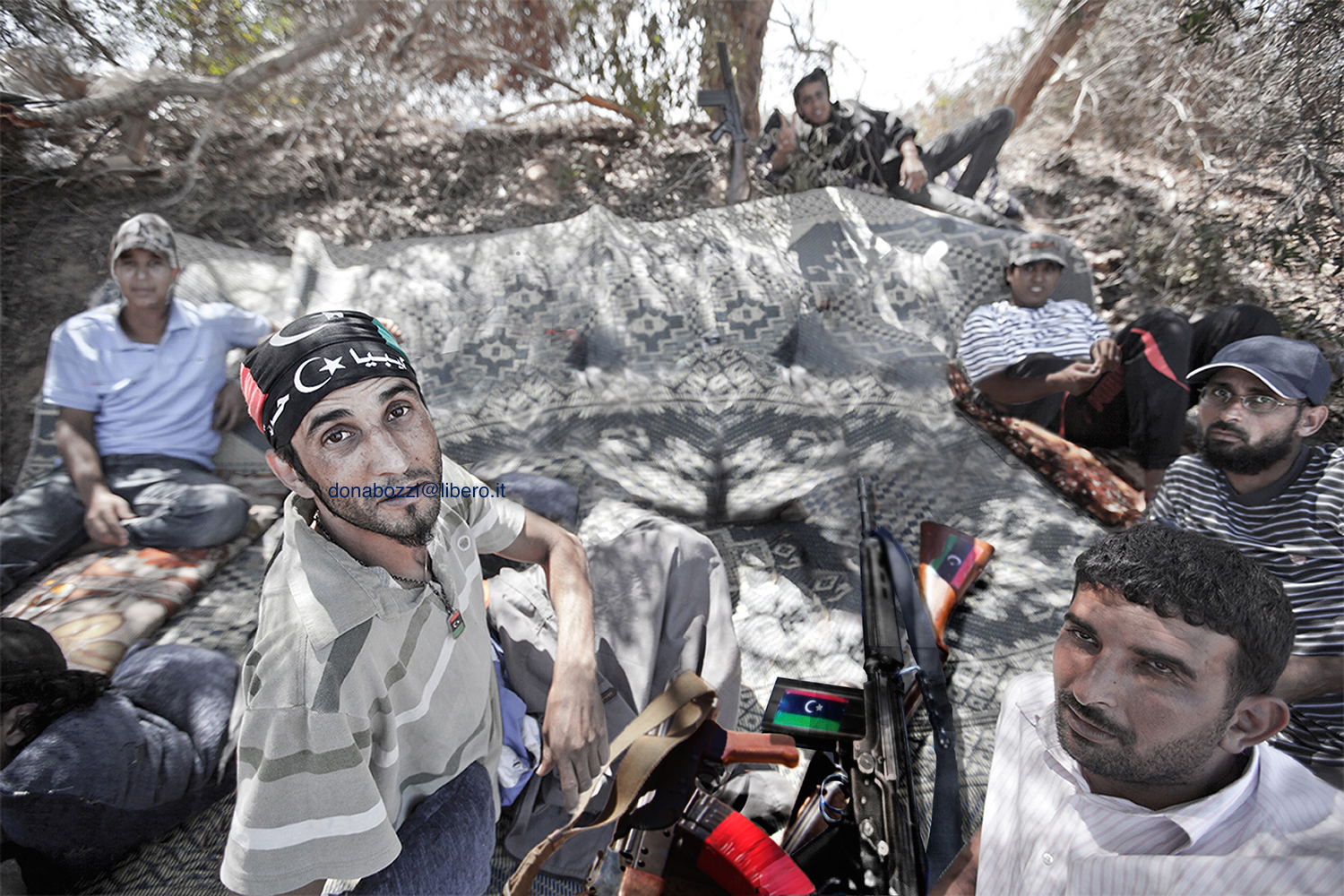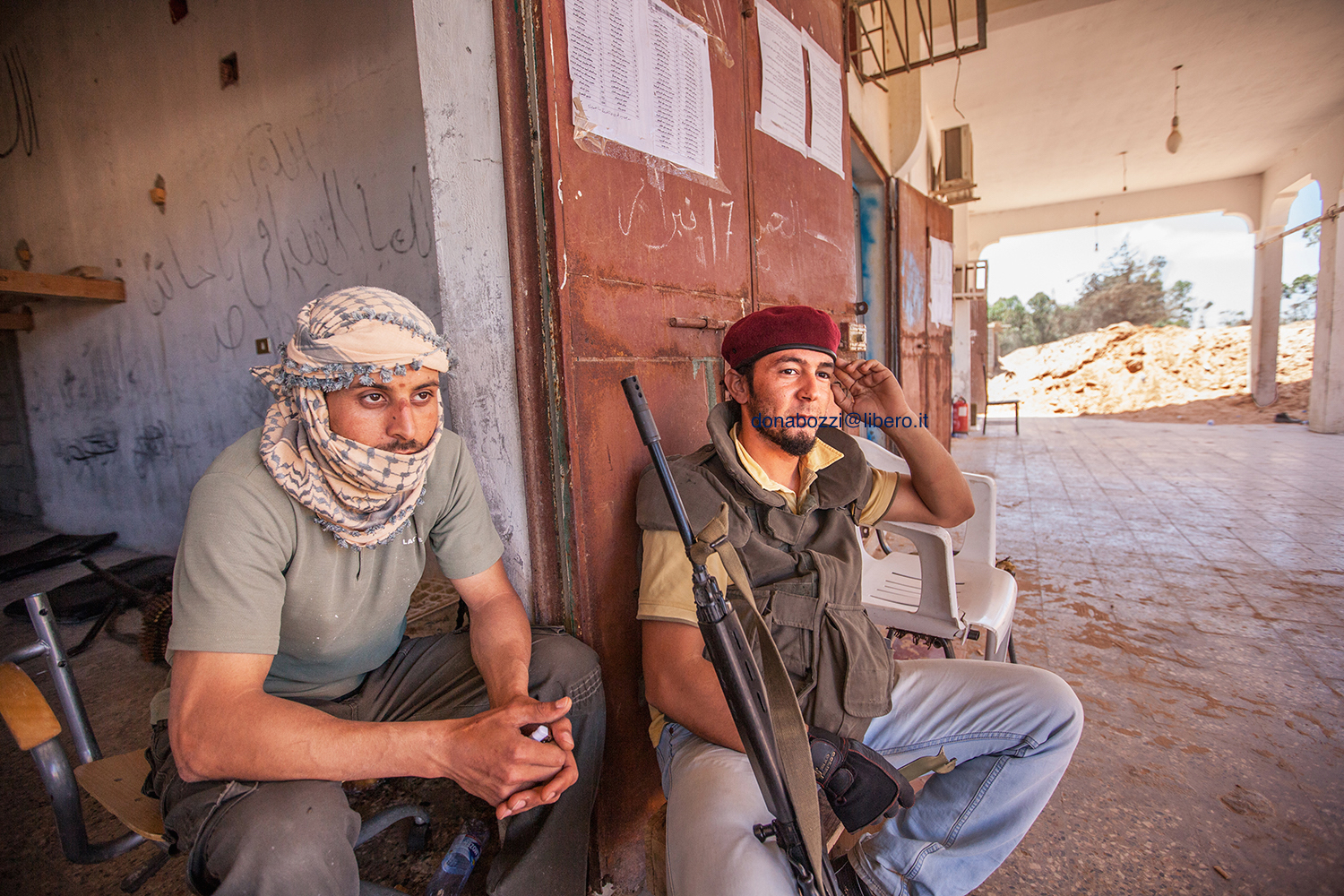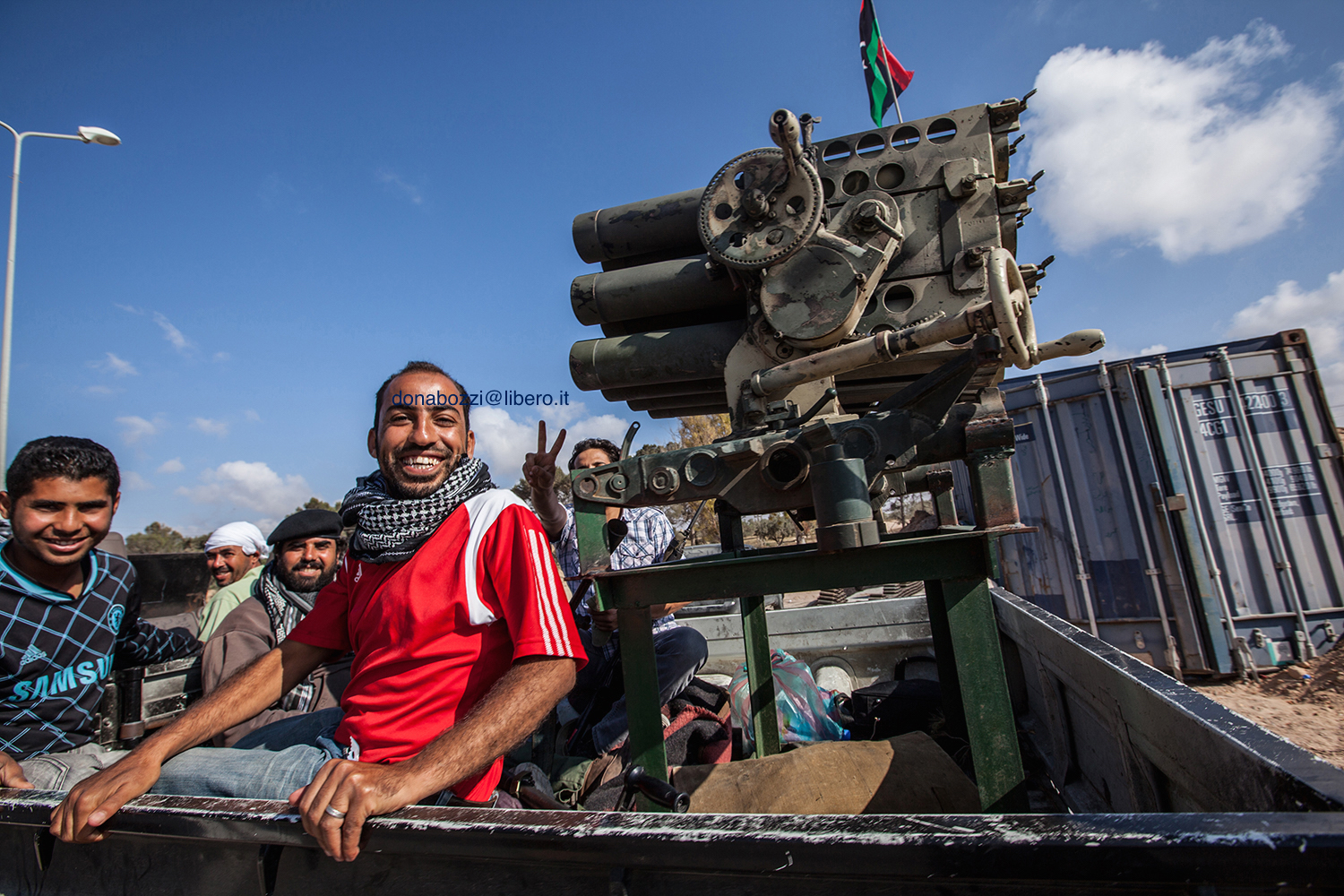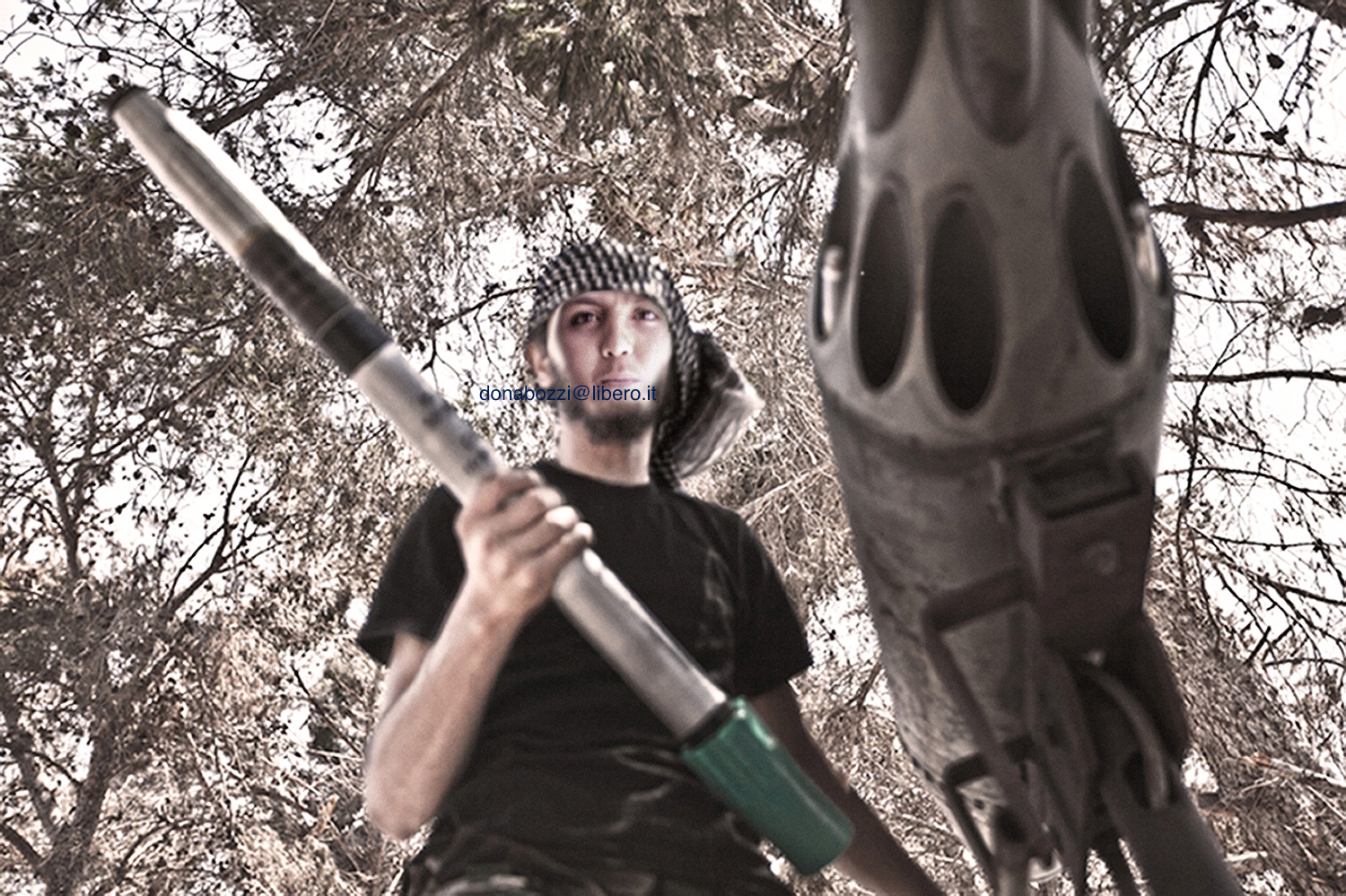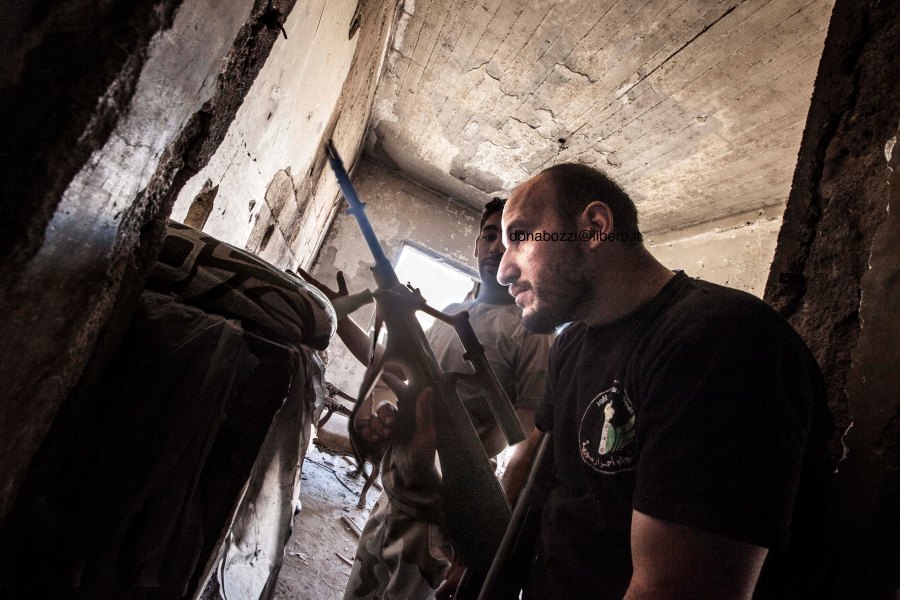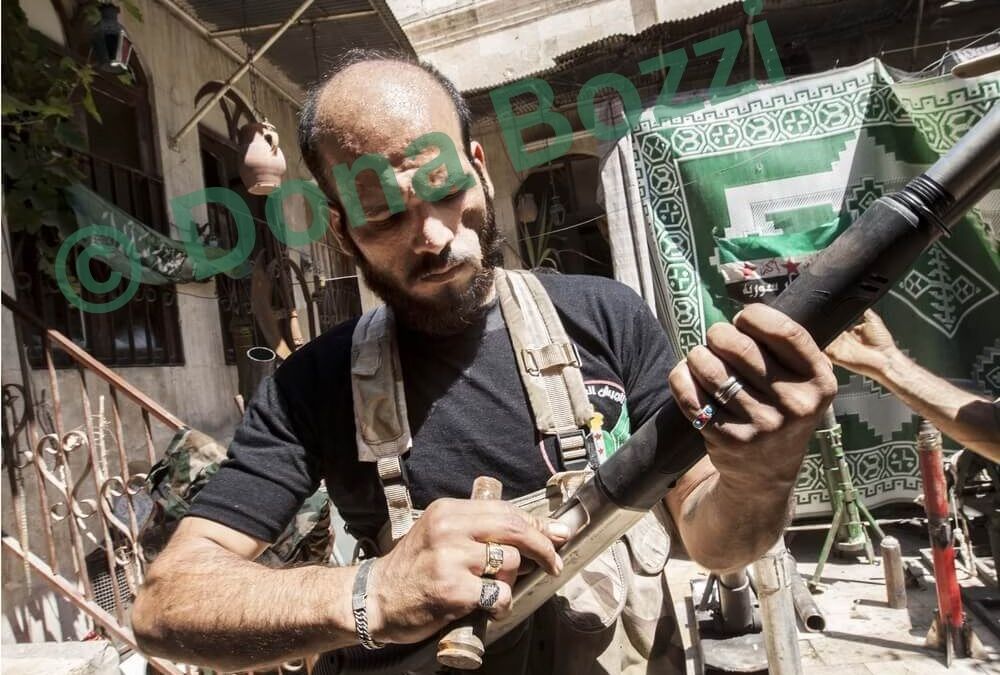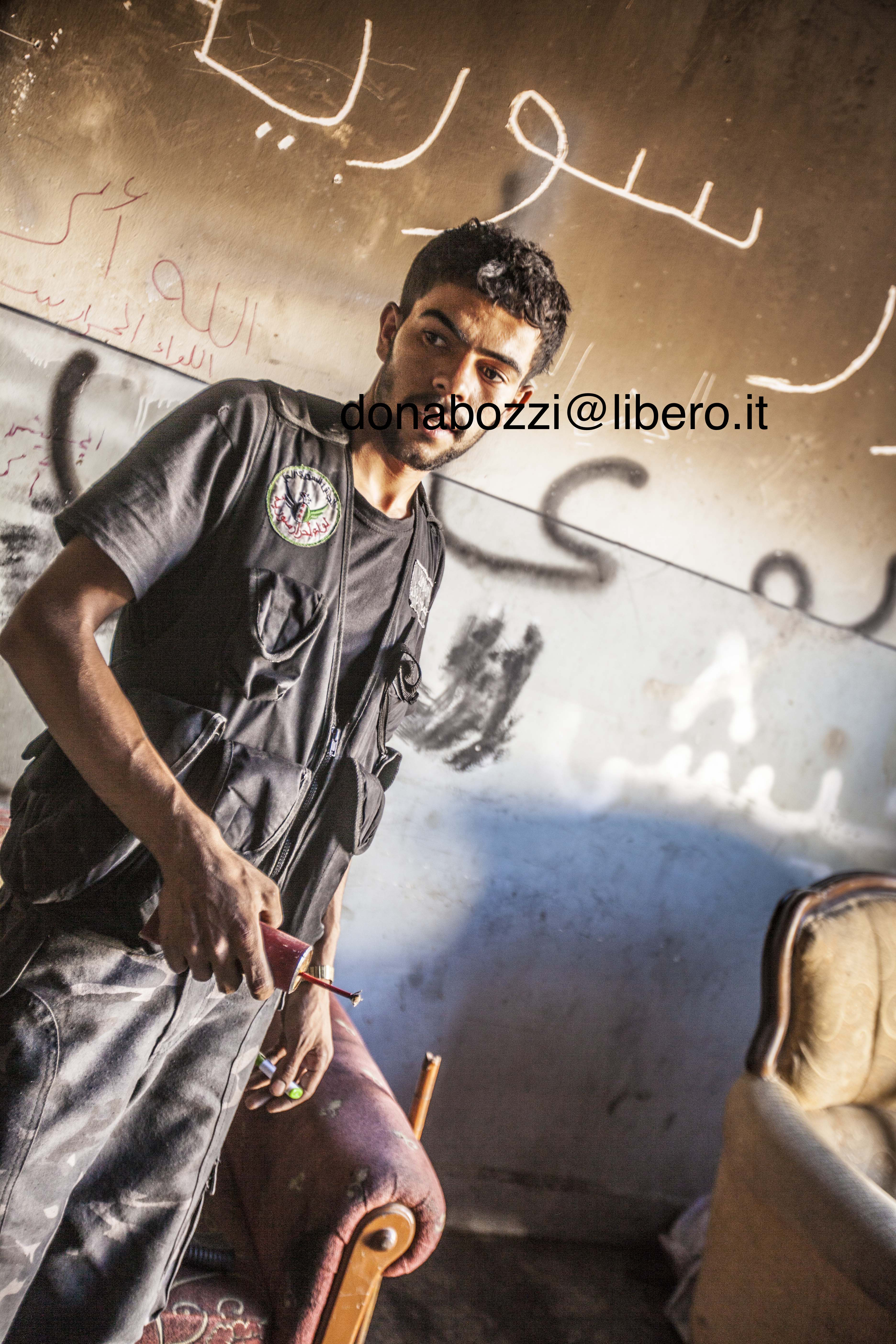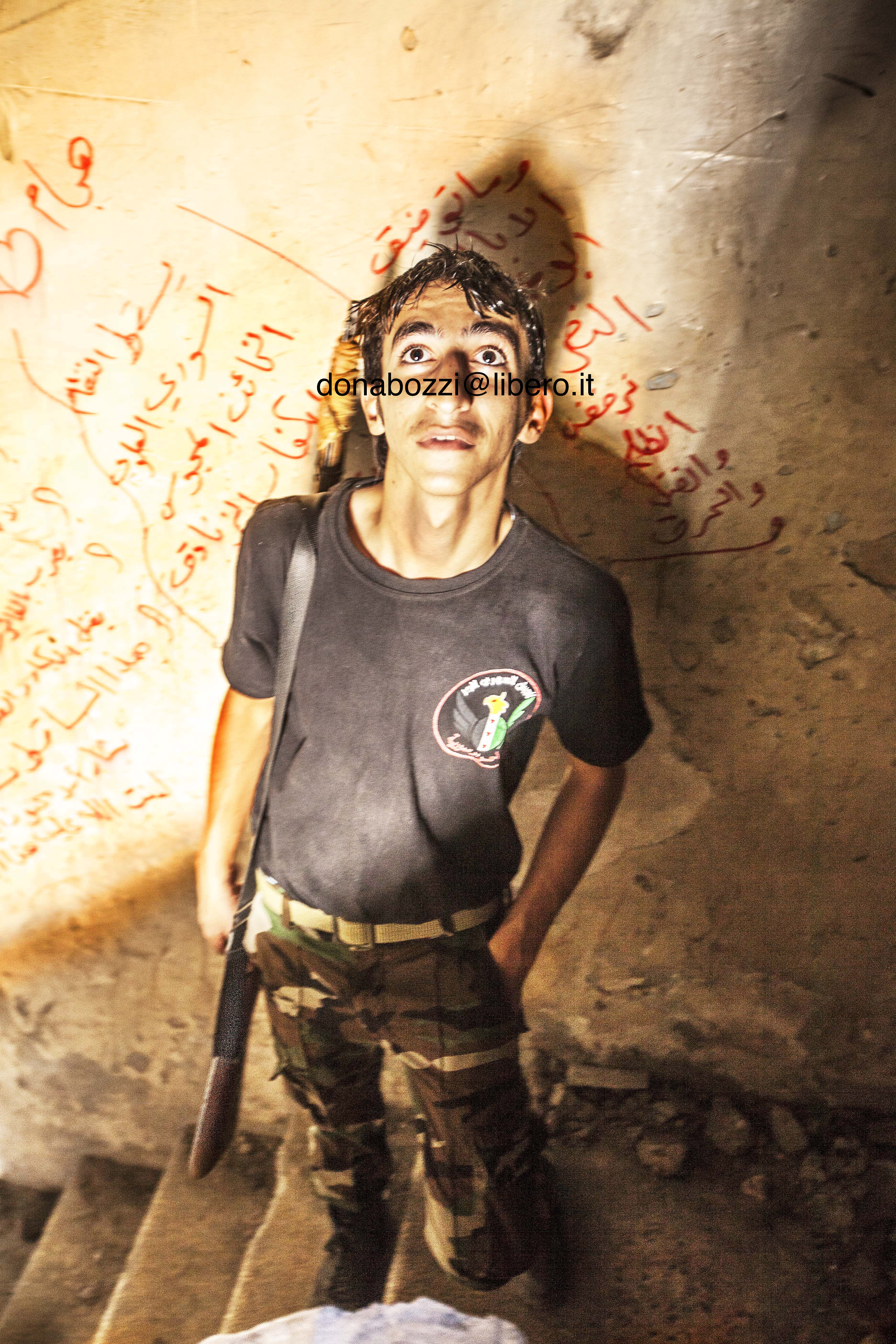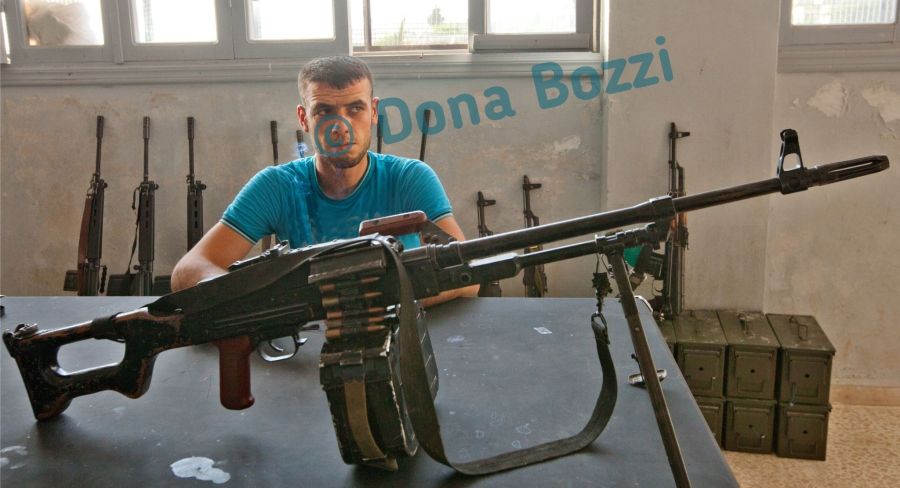
In Antakia there is no media center printing press passes and selling tickets to the war.
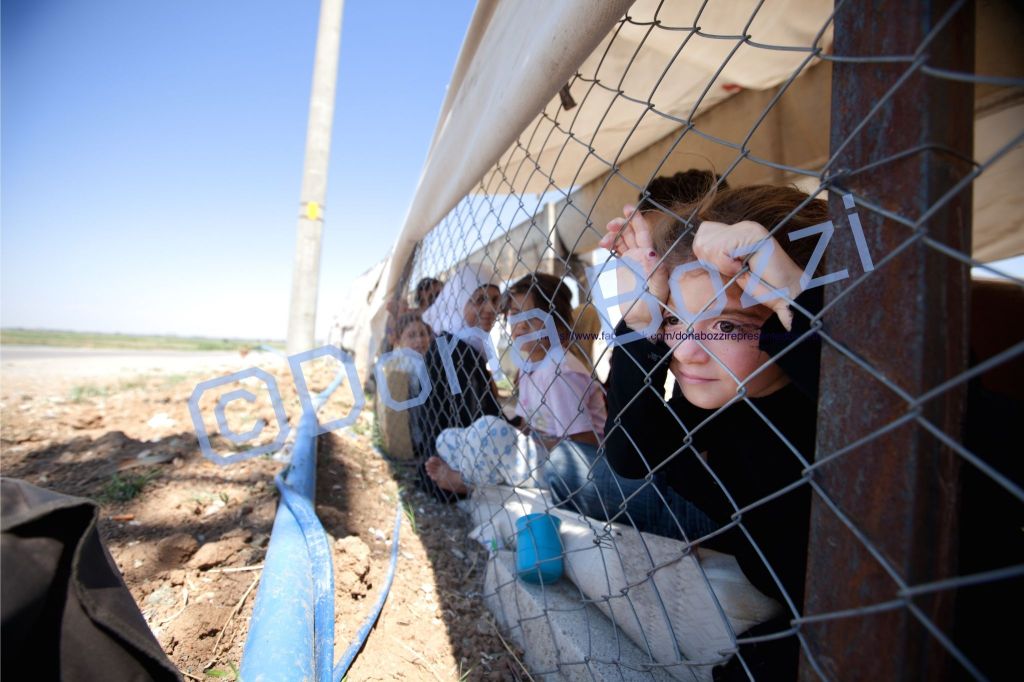
So we got our leads by stopping Syrians in the street, asking where are the thousands of refugees that Turkey hosts, and the names of villages and camps started bubbling up :Yadalagi, the Boshin camp, Todoledo. So we proceeded surreptitiously, through a breach in the barbed wire.
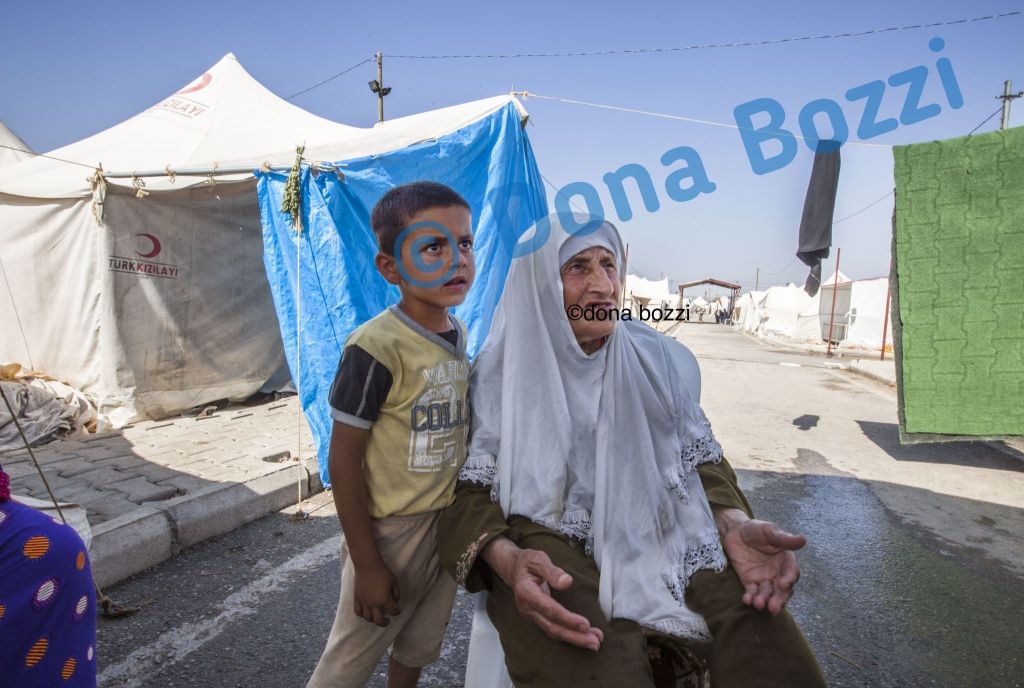
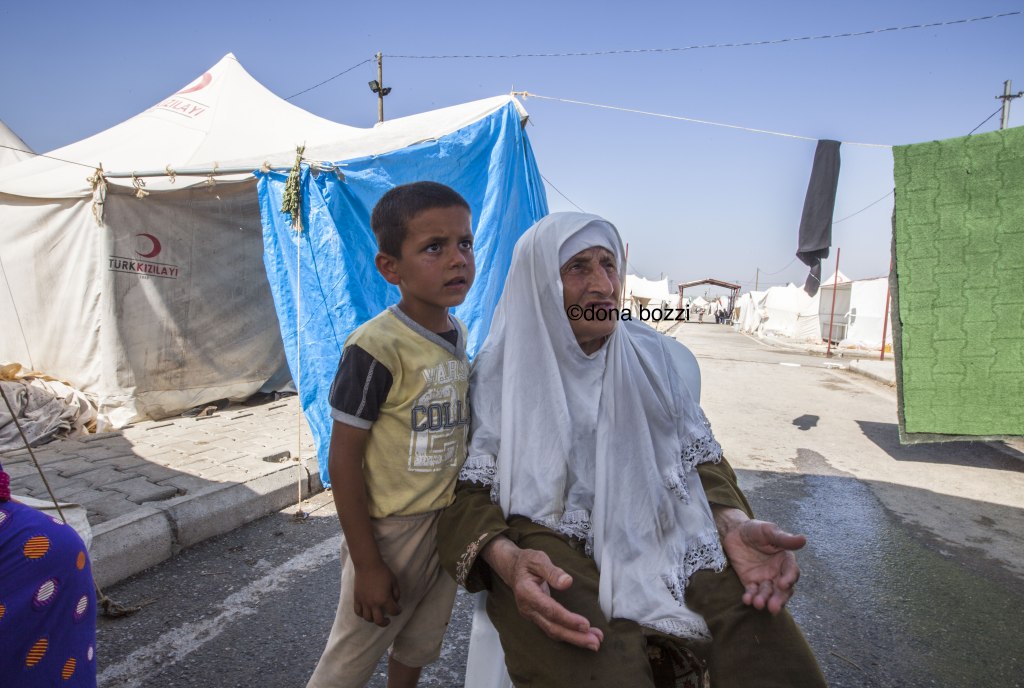
In the camp, Fahere Zerzore, 86 year old from Idlib with the attitude of a leader in her eyes, produced metaphorical gestures with her hands: she lifted them up in front of her belly, closing a circle as if to indicate a pregnant woman. Then she lifted her arm, and vigorously dropped her virtually armed fist to rip her body.
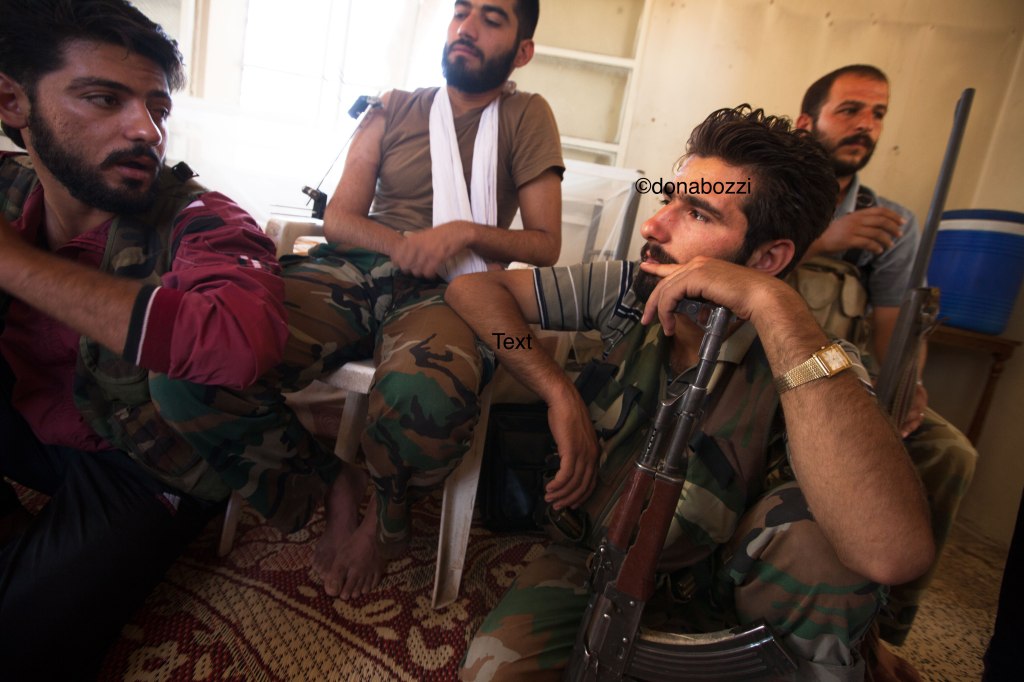
A FSA incarnation finally popped up, in the semblance of Abu Ammar, his nome de guerre, all he agreed to give. We met him in a store, calling out for a translator who would procure us a pillow, to sleep on the back seat of the smugglers’ car trafficking us into the Syria night. Abu is a Syrian expat from Atlanta, Georgia, like in a Misrata redux, where Libyan expats to London would come back to help their brothers, by throwing rpg from the Dafnyina front line,into Gadhafi held Zlitan.
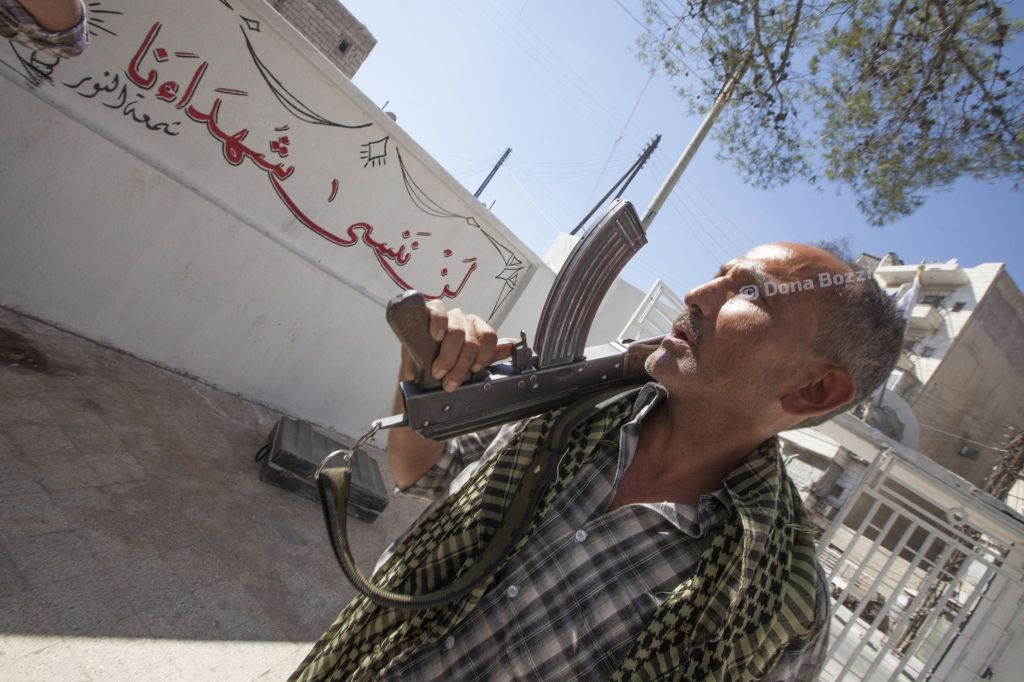
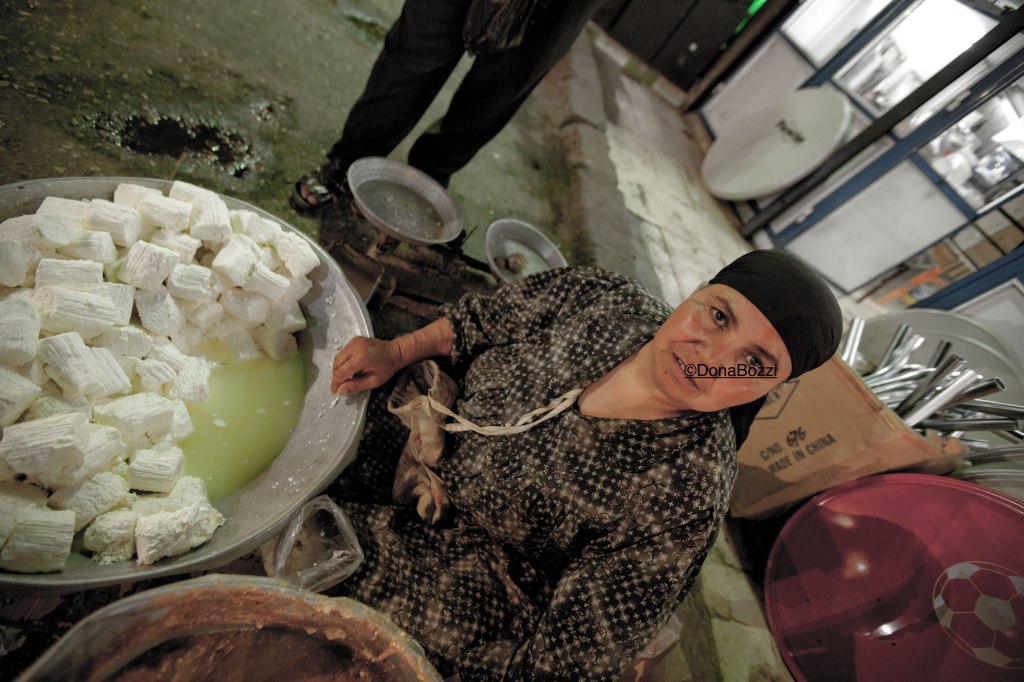
He procured us a lift to Bereniaz, the last Turkish village before a smugglers’ crossing. We spent the night at the house of Abu Fahed,the first liaison of Abu Ammar’s in Syria. Before going to bed, his wife dissolved friendly bacteria into the milk vat, from which the morning after she strained out our breakfast cheese. Then she showed us the bathroom, anywhere out in the olive grooves. We spent the night on the porch of Fahed’s farm, under a useless mosquito cloth hovering over our bed, awaked now and then by sleepless Fahed working the phone across the “border”, as our illegal crossing was approaching.
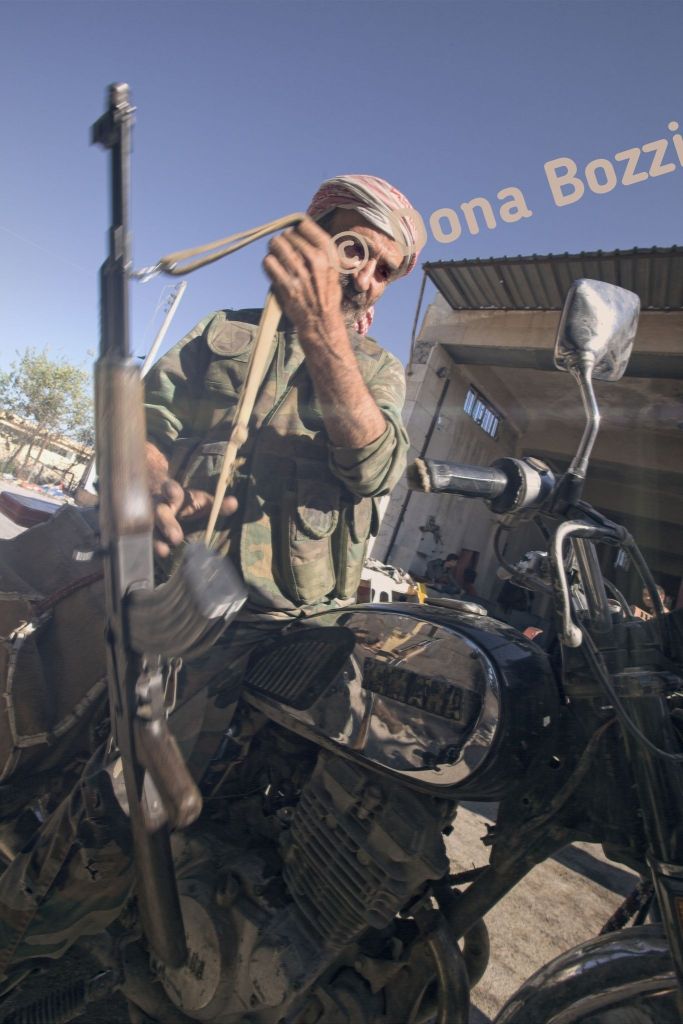
At the break of down, Abu Saleh and Muhammed, the interpreter, came from the other side to pick us up, and took us into Syria, holding our hands across a two mile-span of muddy no man’s land. In the meantime, a few Syrian motorcycles riding the opposite way, carried a few Syrians across the border, while the Turkish guards turned more than one blind eye from their watchtowers.
ATMEH
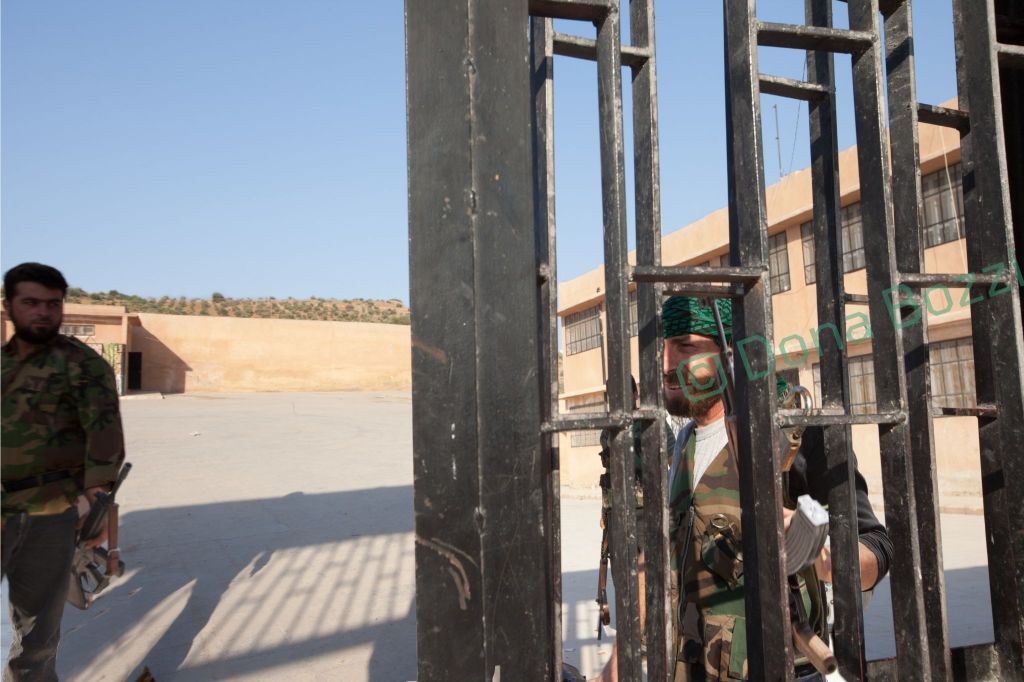
Abu Saleh, who turned out to be our designated host, was the second liaison of Abu Ammar’s in Syria, who was pulling the strings for us in Antakya throughout our trip: as far as dress code, he was ruthless: a black coat, long enough to stumble on it, on top of heat absorbing skins, not a hair wisp was allowed to show.
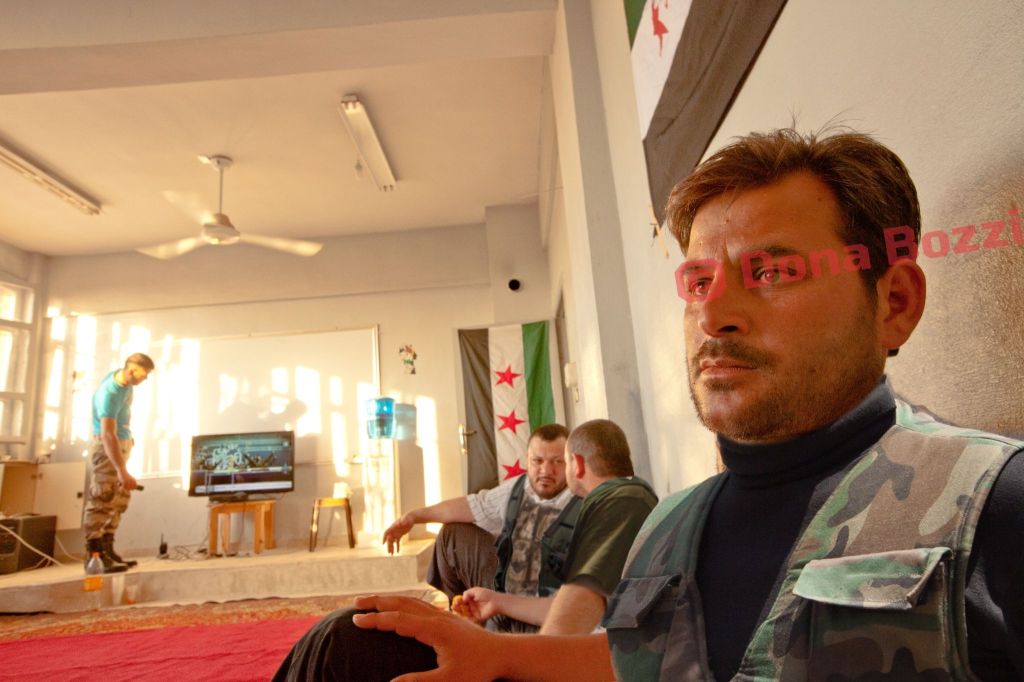
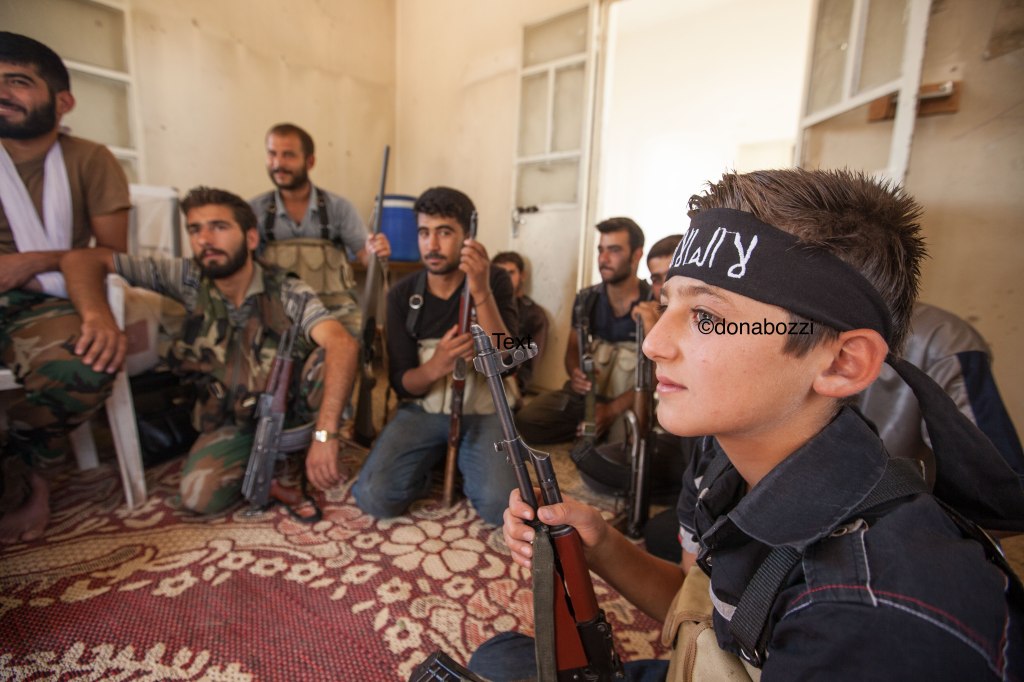
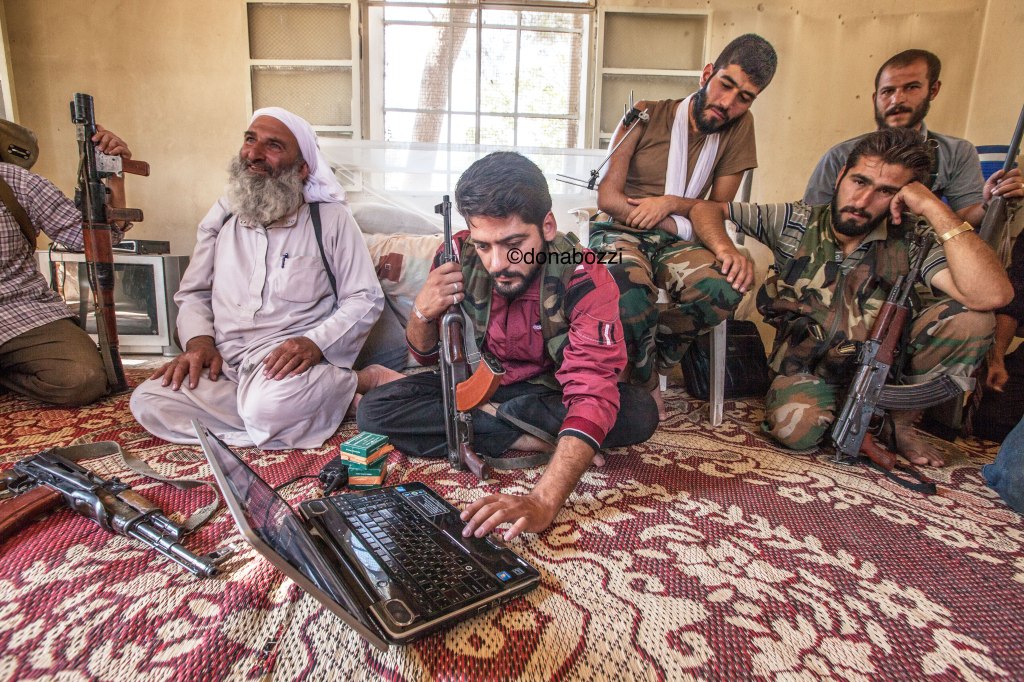
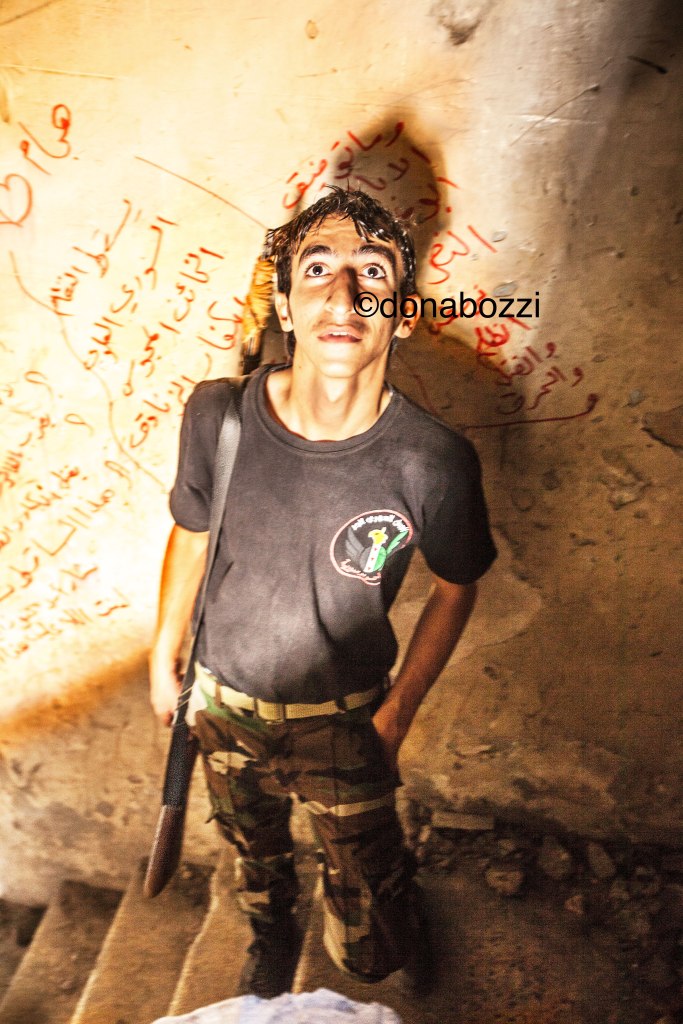
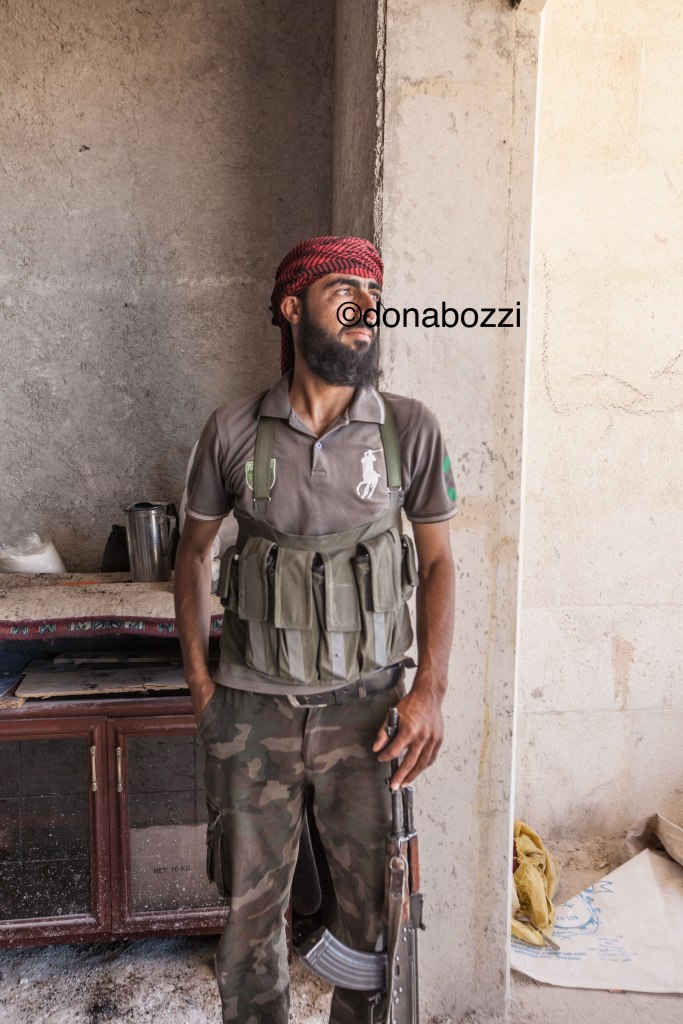
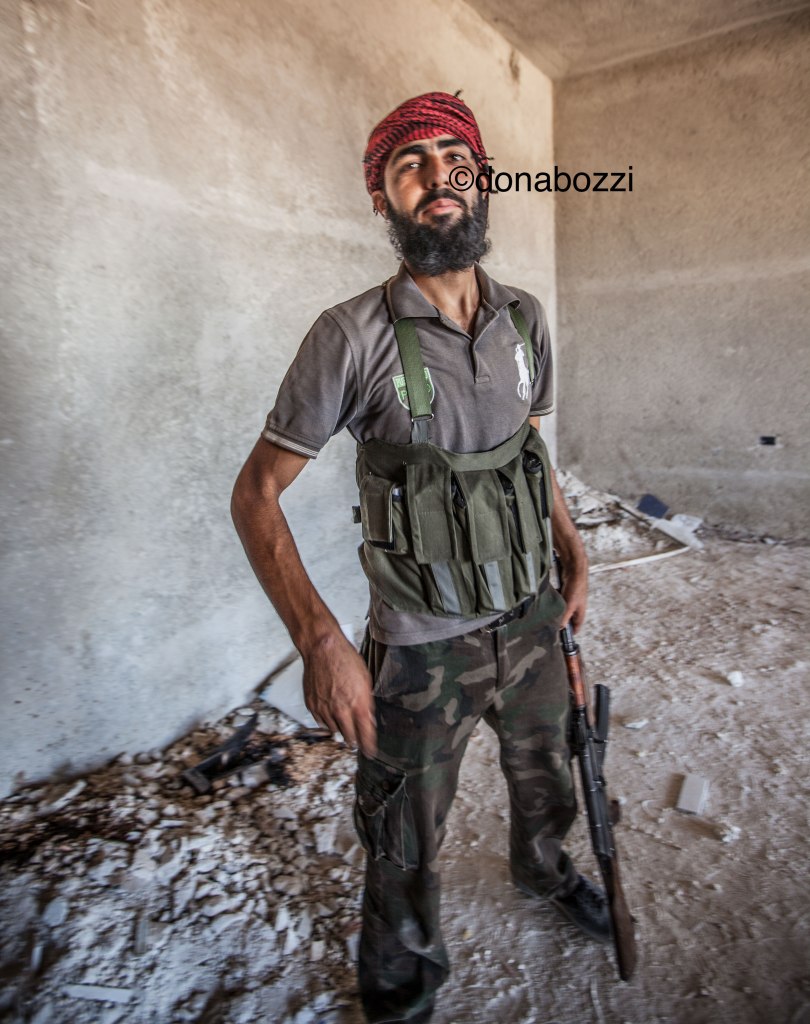
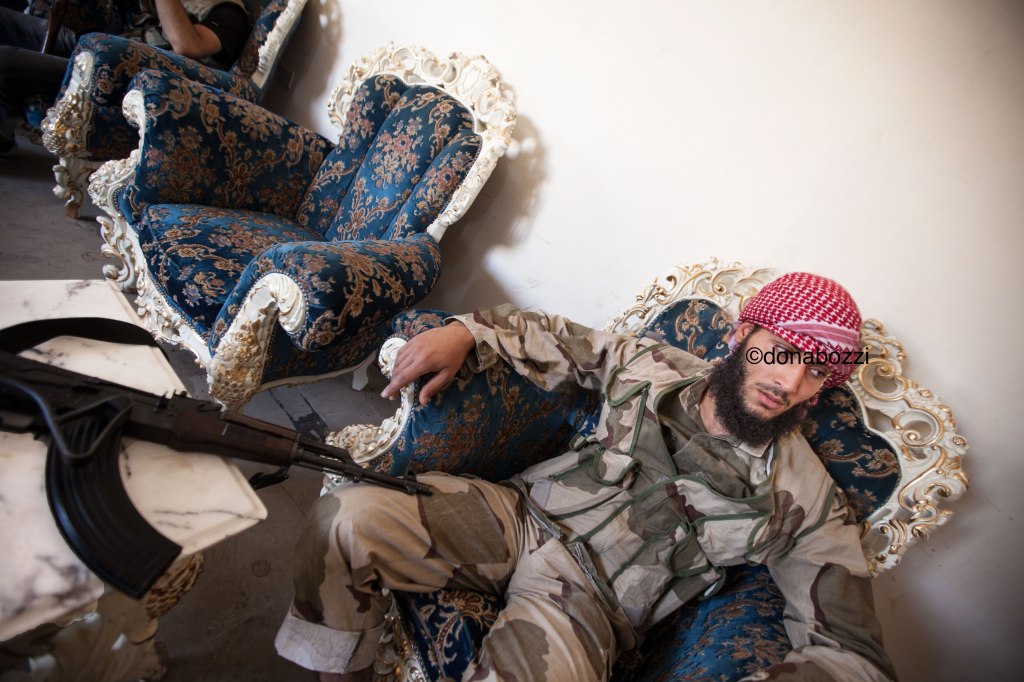
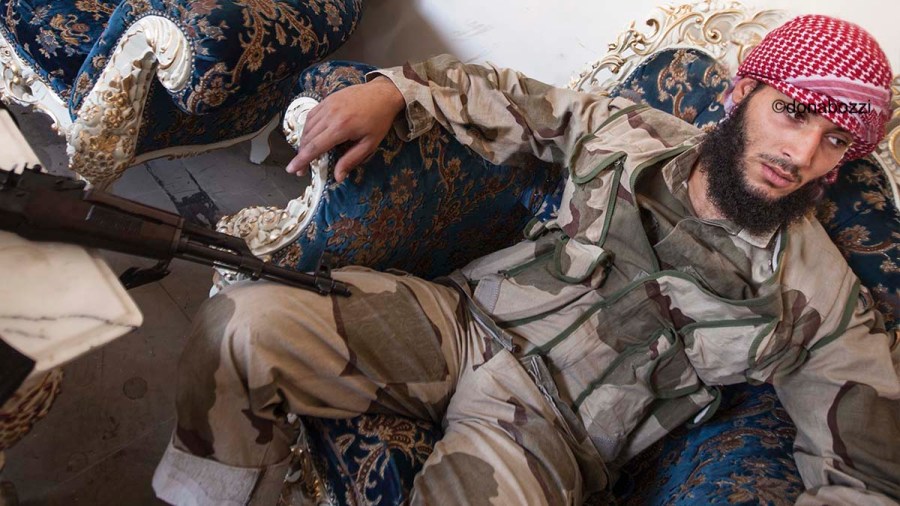
For us, he opened the gate of the FSA head quarters, and took us to visit the FSA operation rooms: the disgruntled young men, in their quote-t shirts, didn’t look willing to blow themselves up for the jihad.
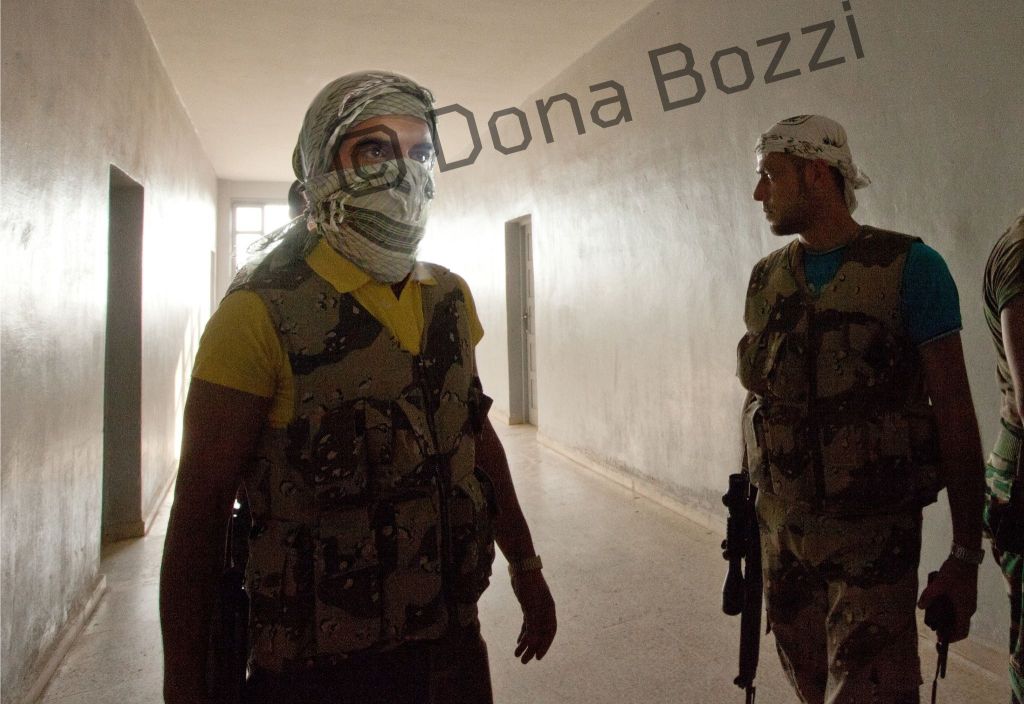
After only 2 days, Mujahid, the third liason of Abu Ommar’s since we crossed the border, came to pick us up and took us to Meadia,(not to be confused with Madaya, although you won’t find Meadia on the map). Veering alternately to the right and left, for four hours, for a 300 miles – span of sickening zig zags, deep down into Homs without us even knowing. After Binnish, we gave up remembering the names. Our security, a pistol on the dashboard, and a few “no Bashar here”, reiterated now and then by Mujahid.
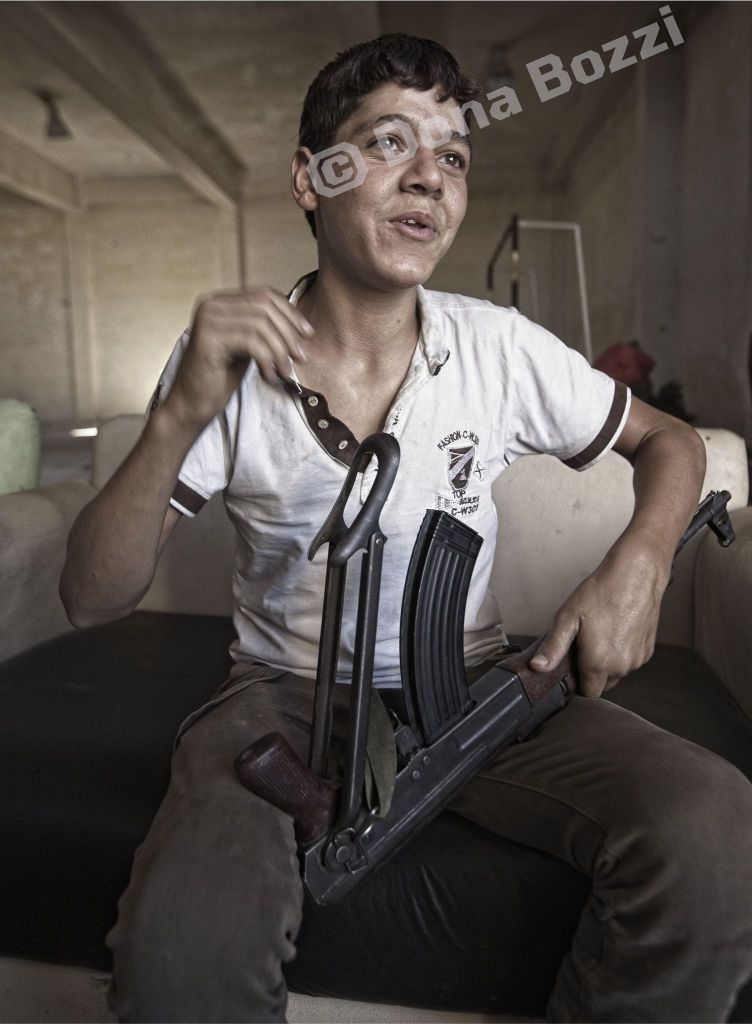
In Meadia, he’s the owner of an empty house and a wife, and seems to make a living out of shuttling journalists from Meadia to Homs, and back. The bare floors woud get covered later in the day with multiple sofa cushions, enough to sleep a mischievous gang of 7 kids, busy during the day with burning tyres, trying to get smoke into the regime pilots’s eyes.
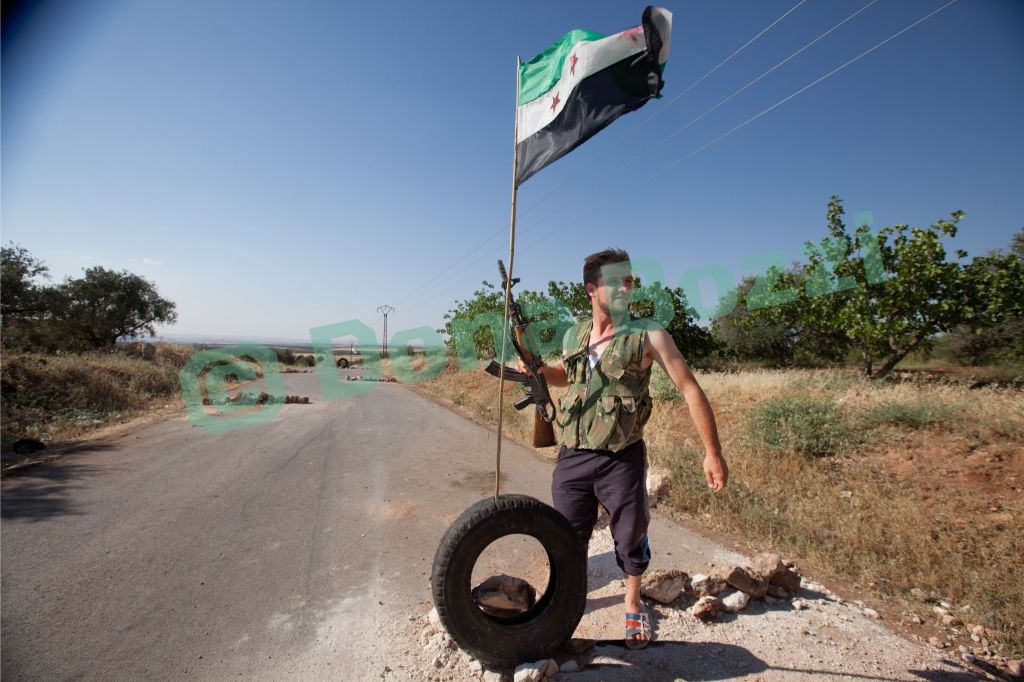
From Meadia we drove to Kfrezeta. Mohammed’s friends’ told stories of houses burned by the regime with white phosphorous, ethnically cleansing the Sunnis’ houses and their contents. They show us pictures of charred human flesh, diaphanous irises popping out like organic marbles; like in every revolution, the spared from death are eager to show the victims to the visitors, and demand their losses to go viral for the world to see.
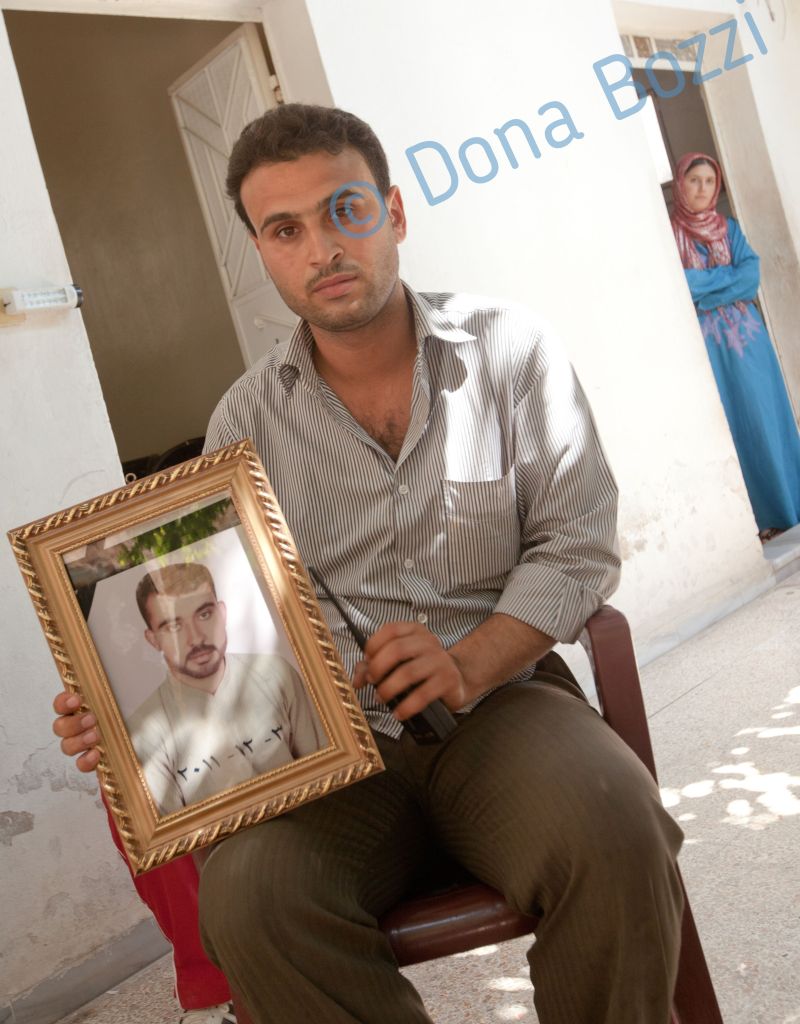
Our host decided that we would be better off in Khan Sheikhoun, a bigger city with, in a previous era, a higher standard of living then Kfr-zeta.
Khan Sheik Houn
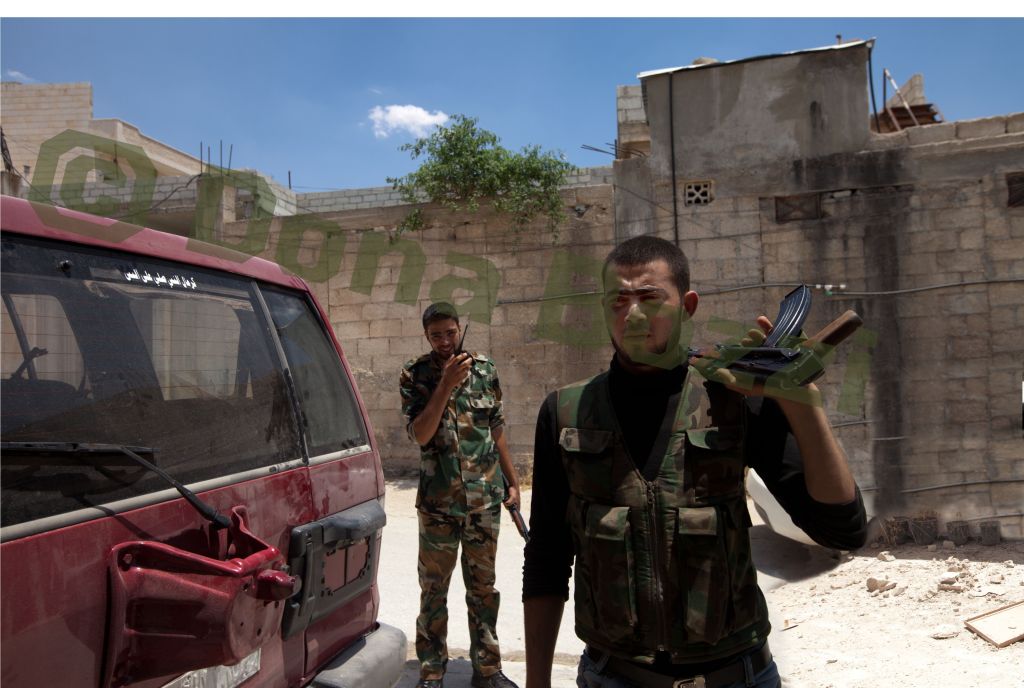
On the dirt road, we pulled over at the scene of an execution. Our friends requested pictures,fortunately we were spared the ethics,the camera batteries being uncharged due to power rationing. Zuher, the interpreter, explained that they generally identify the SAA check points via the executed bodies,left rotting along the road. I don’t know why for some reasons getting killed didn’t seem possible at that particular moment, as if we could have remained unflappable and proved to popping up Bashar forces that we were war tourists.
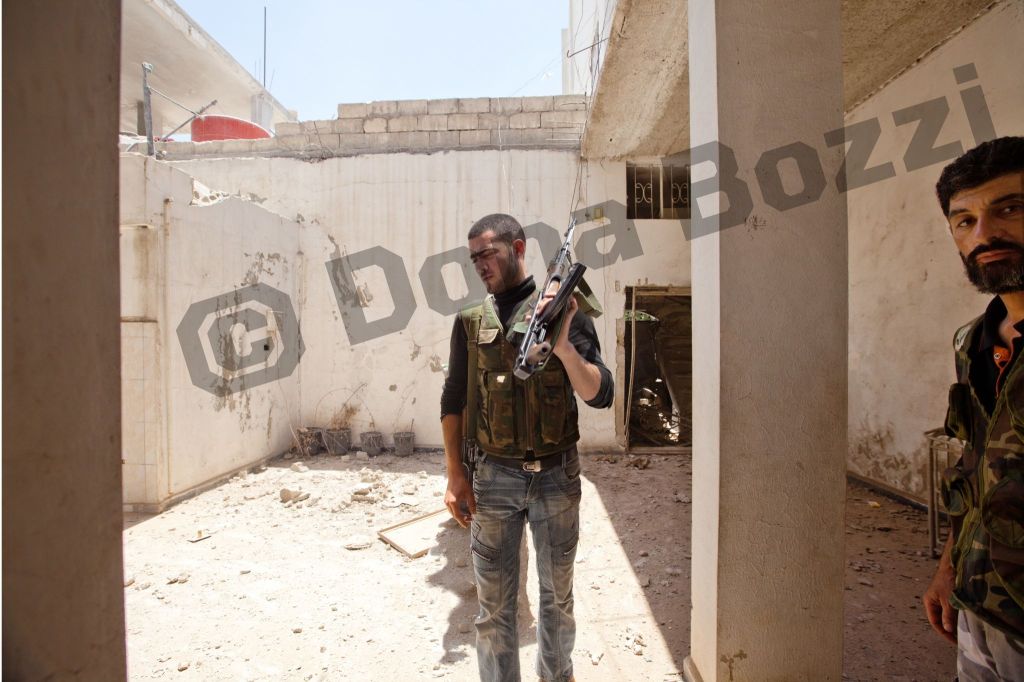
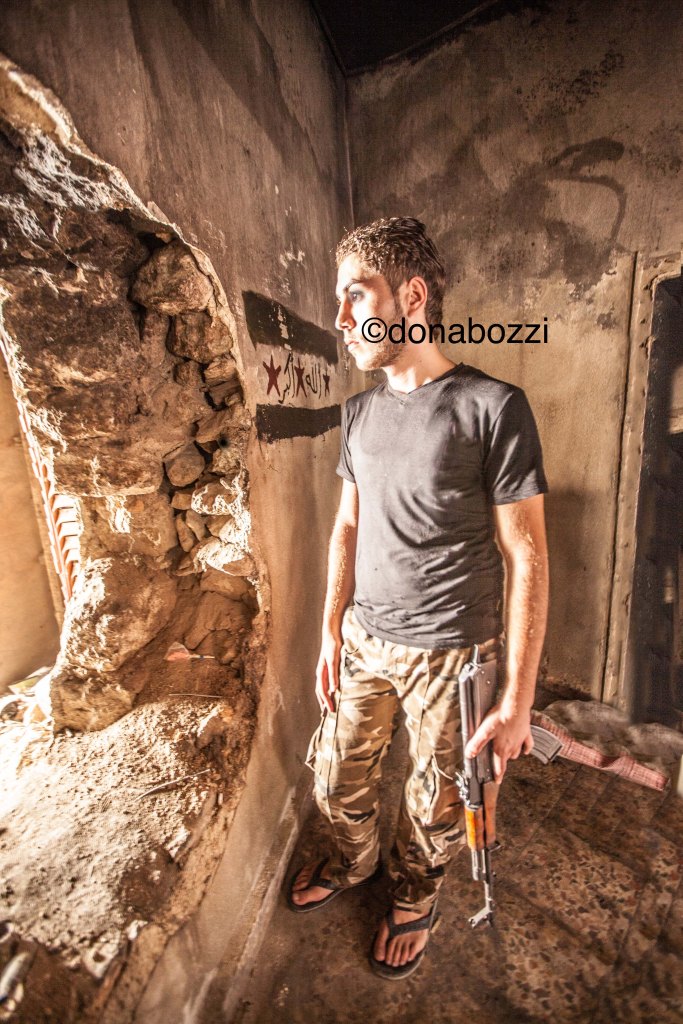
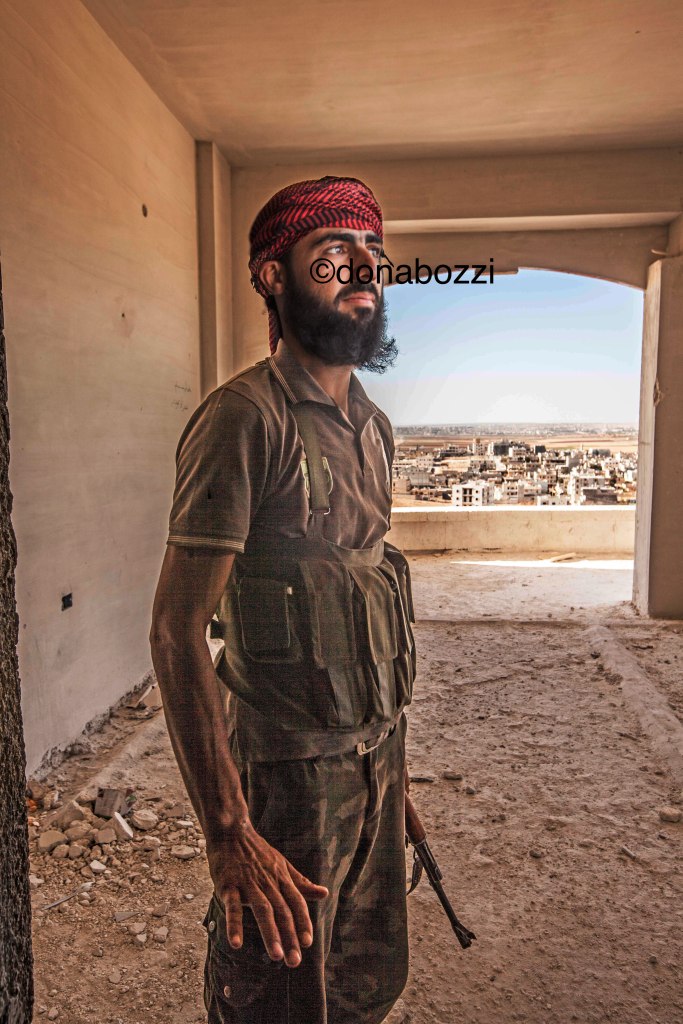
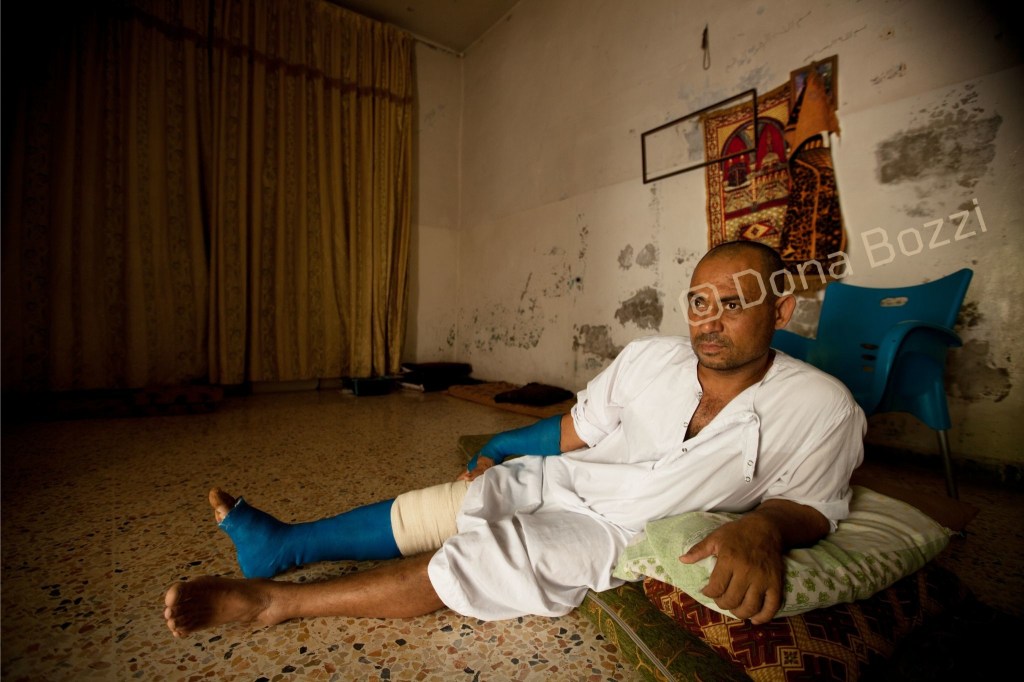
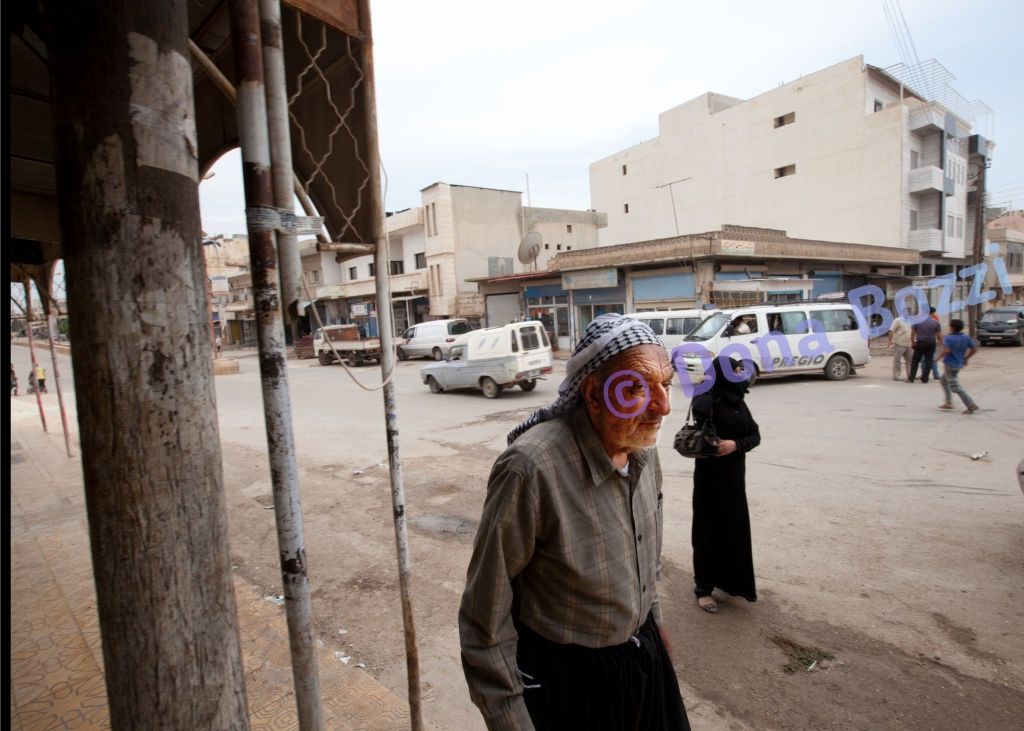
Captain Foud Qotiny, and Anas Hassao, of the FSA in Khan Sheikhoun, wore the reassuring coat of arms with the two stars on the Syrian shield, plus one, reassuring us of their identity politics with the opposition. They guaranteed our security throughout the day, by shifts, from the shelled buildings to the souk, where the strong smell of zatar remained from a previous era, which we dubbed “Syrian oregano”, from the familiar albeit amplified smell. From Captain Foud gratitude, it looked as if Khan Sheikhoun had been bypassed by journalists: seeking moral compensation from our camera screen, he took us to the destroyed buildings, the houses of the wounded.
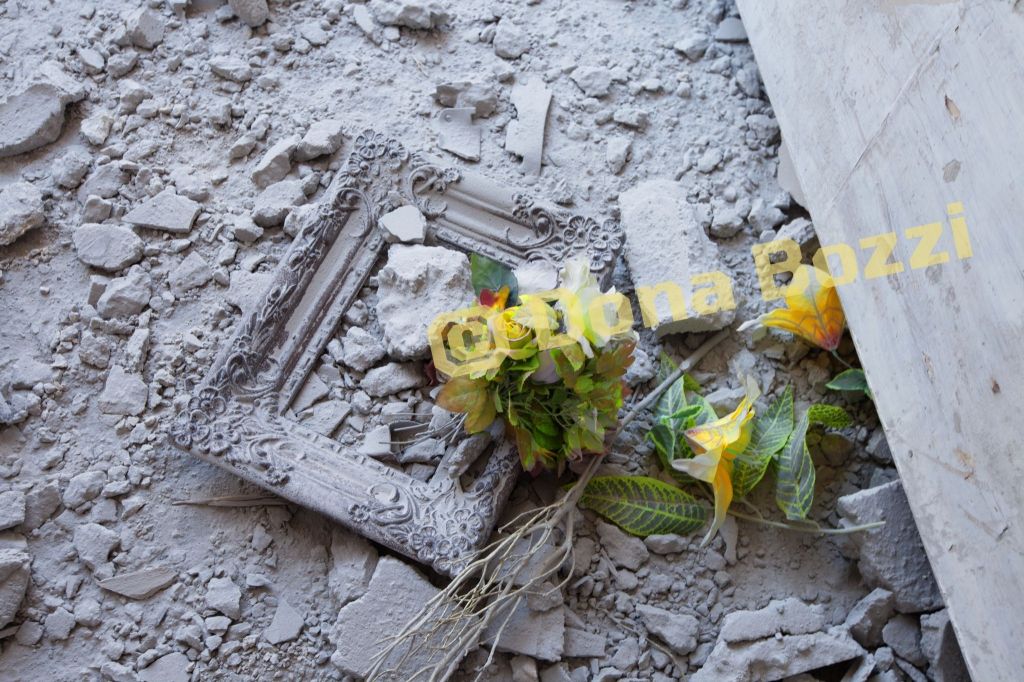
While hopping from one trembling stone to another in the remains of a gutted house, suddenly Hany Souci, Anas’s brother, whispered: “speed, speed!”, as if he was trying to push us out of the field of view of a telescopic iris. Later that day, the FSA rebels showed us a 14,5 mm bullet coming from a BMT tank, which had killed a Sunni of Syria, exactly in the area where we had carried out the inspection.
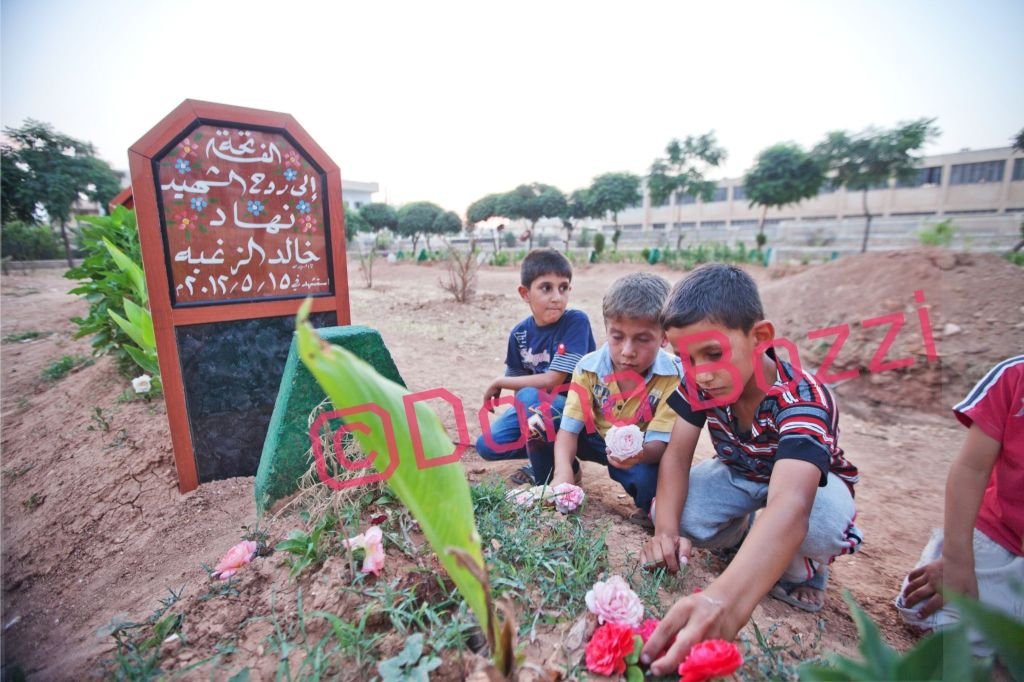
At twilight, they took us to the Shouhada Khan Sheikhoun cemetery, the monument to the martyrs of 15 05 2012, when 50 residents were killed in one day by a regime air strike. Three children, unaccompanied, knew exactly what to do: they croached down, laid flowers on the bare earth, then stood up and turned their palms upwards, in prayer, until the awkward eye contact happened through the lens.D isturbed by our encroachment on their privacy, they left, and so we did, Feeling like vultures circling on a funeral
From Zhena and her daughters we learned to give up the soap and how to eat from hunger: one night Zhena cooked what we dubbed sweet spaghetti, basically noodles and sugar; with a stern face, she asked us if we liked it, as if the sweetener was the most natural replacement for tomato sauce. Sharing their misery, it was sort of being fed cake by the regime when starving.
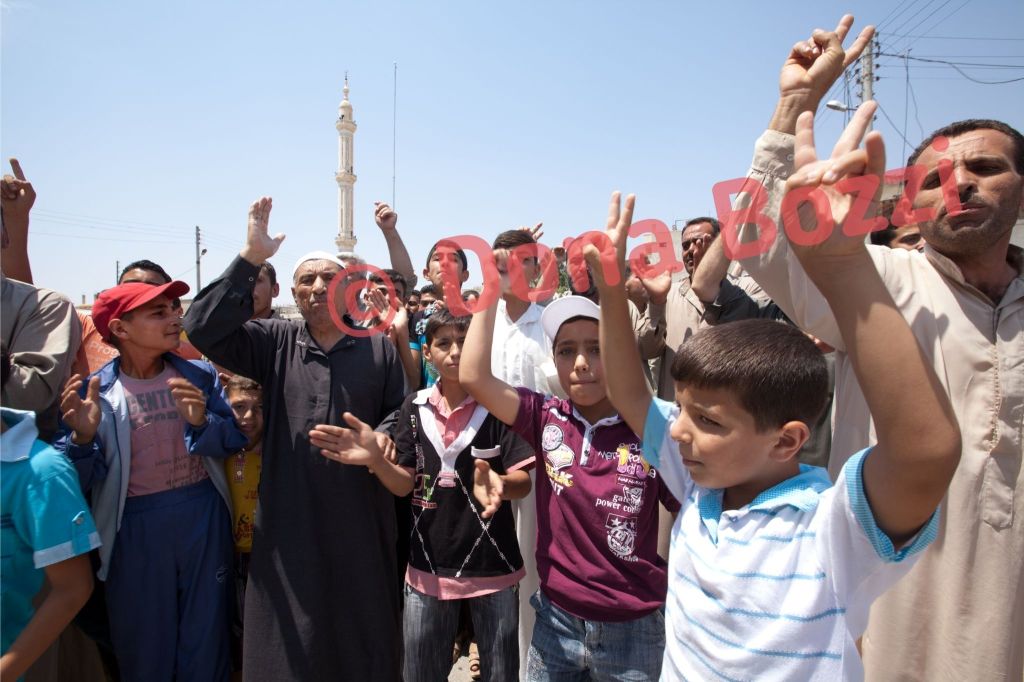
friday, traditionally demonstration day in rebel held cities,such as Khan Sheik Houn. Our friends warned us that the shabiha snipers might be wholesale shooting at demonstrators from the rooftops: so our eyes raked the opposite roofline searching for a silhouette that didn’t belong, but the light was blinding, so we adopted the Sarajevo trick: running with wobbly legs and skipping earth beats to the town square; the protesters had no banner, just their arms raised, their clenched fists.
Back at home, Hany for the second time in two days, suddenly wispered to us: ”speed, speed!”: we were ordered to pack up and leave. The heads up came from Abu Ammar, again calling the shots from Instanbul. Bashar’s army was about to surround the city, we had to get out immediately. We jumped in the car, Foud at the wheel, Hany in the front. In the back, on each side of us, a man with a gun. The non lethal assistance promised by the US to the opposition must have been in the mail, in that captain Foud Qotiny, three stars and the hawk of Quraish on his shoulder, didn’t have a satellite phone, and had to pull over to ask the farmers about the shabiha’s positions. In two hour, we were back to start at Mujahid’s house in Meadia. As a fixer, he was still dodging katyusha rockets when shuttling journalists back and forth from Meadia to Atmeh.
As Black History Month begins, we honor the generations of Black New Yorkers who built this city into the “gorgeous mosaic” we call home. ⁰⁰Today, we reflect on the words of Mayor David Dinkins: our city’s first Black mayor (and a democratic socialist!). pic.twitter.com/xF3PqVostP
— New York Immigration Coalition (NYIC) (@thenyic) February 6, 2026
An angel in Devil’s shoes Salvation in the blues
u2
"
“Fuck ICE!” chants & a brass band performing “Which side are you on?” as hundreds march in Manhattan, NYC against ICE and in solidarity with Minneapolis. pic.twitter.com/2t6s8x45bT
I am a lover Tracking the silver foot-prints of the moon
Amy Lowell
After 47 years, street vendor reform has finally passed!
From NYC's tamaleras to halal carts, street vendors are an integral part of our city. Today @NYCCouncil advances their rights by making Intros 431, 408 and 1251 law. VENDOR POWER! 🌮🥙🗽 pic.twitter.com/qsAtUDJQ50
— New York Immigration Coalition (NYIC) (@thenyic) January 29, 2026
Take Harlem’s heartbeat, Make a drumbeat, Put it on a record, let it whirl,
Langstone HugHes
US Civil Rights Leader Jesse Jackson Dies Aged 84 – Black History Month 2026 https://t.co/N1Q30Fr4ri
— Mayor Zohran Kwame Mamdani (@NYCMayor) March 6, 2026
I walked in the street-lamps’flare; We watched the world go home that night In a flood through Union Square.
Sara Teasdale 1911
The NYC Human Rights Law protects equality for all, regardless of gender, in the workplace, housing, and public spaces. This #WomensHistoryMonth, CCHR celebrates the achievements of women and reaffirms our commitment to standing against discrimination in every corner of our city. pic.twitter.com/raGMLz91HQ
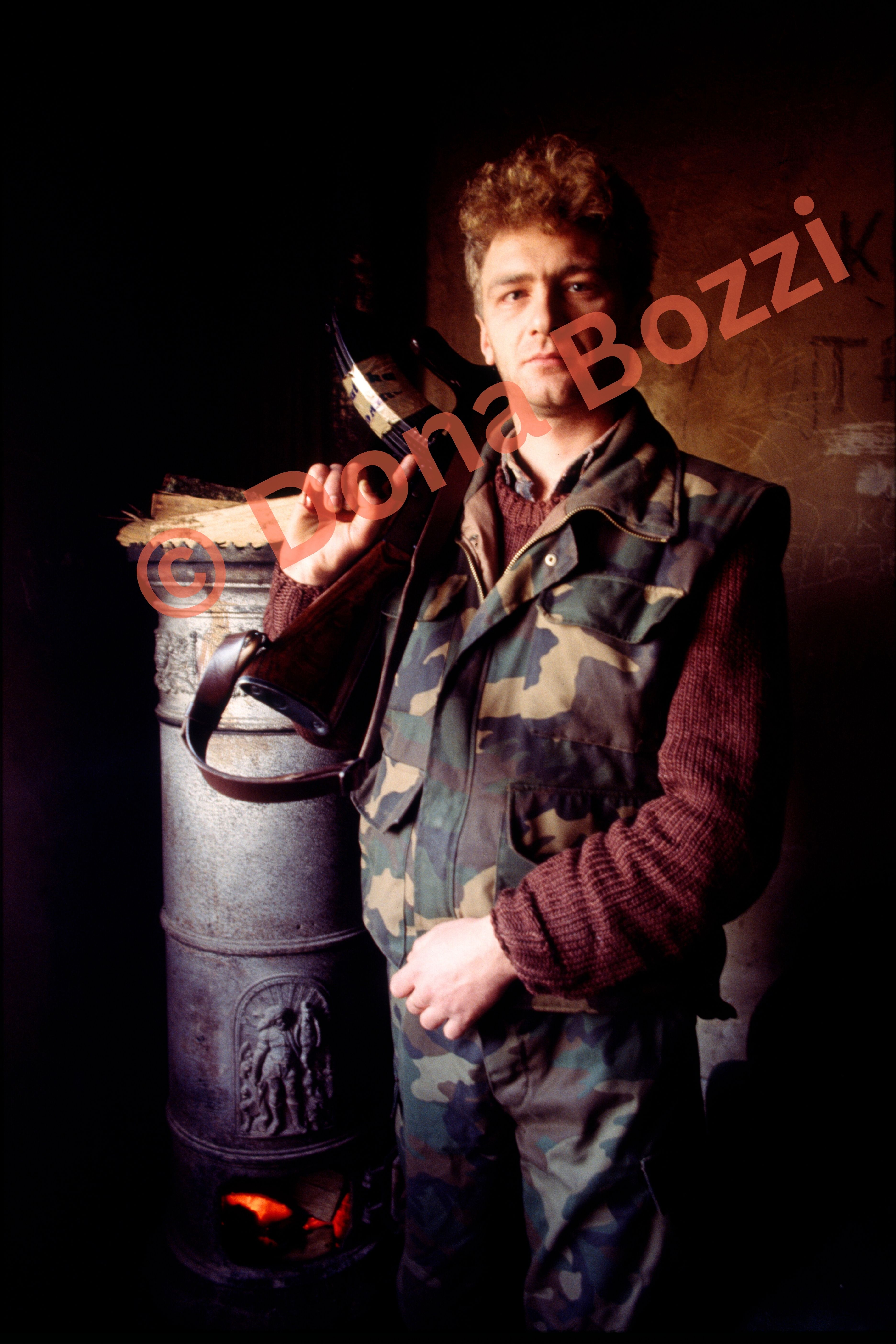
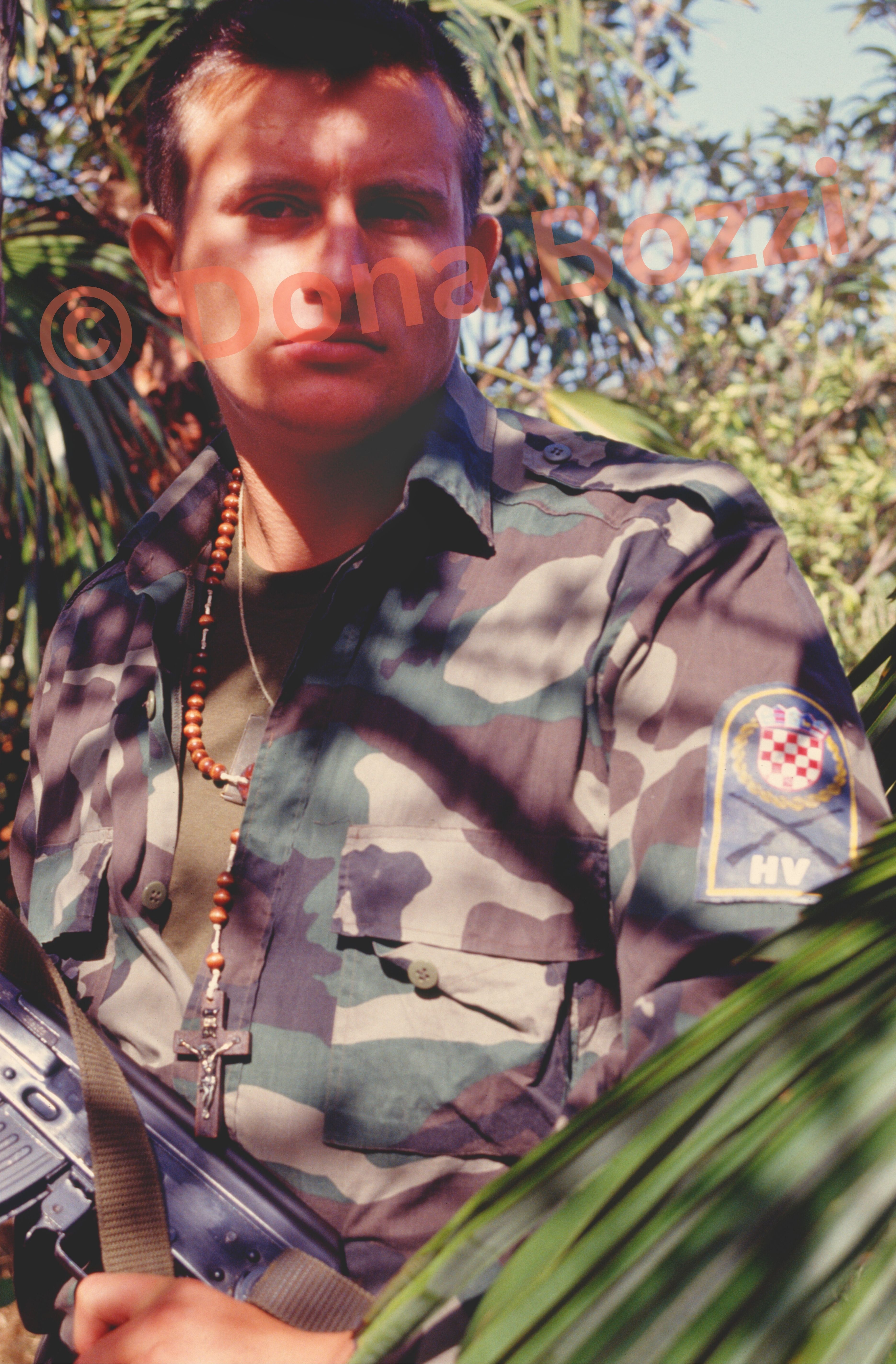
Karlovac,Croatia, Croatian soldier on guard duty,March 30 1992Karlovac,Croatia,02 April 1992, Croatian soldier on guard duty
Karlovac,Croatia,Croatian Soldier on guard duty,April 02 1992
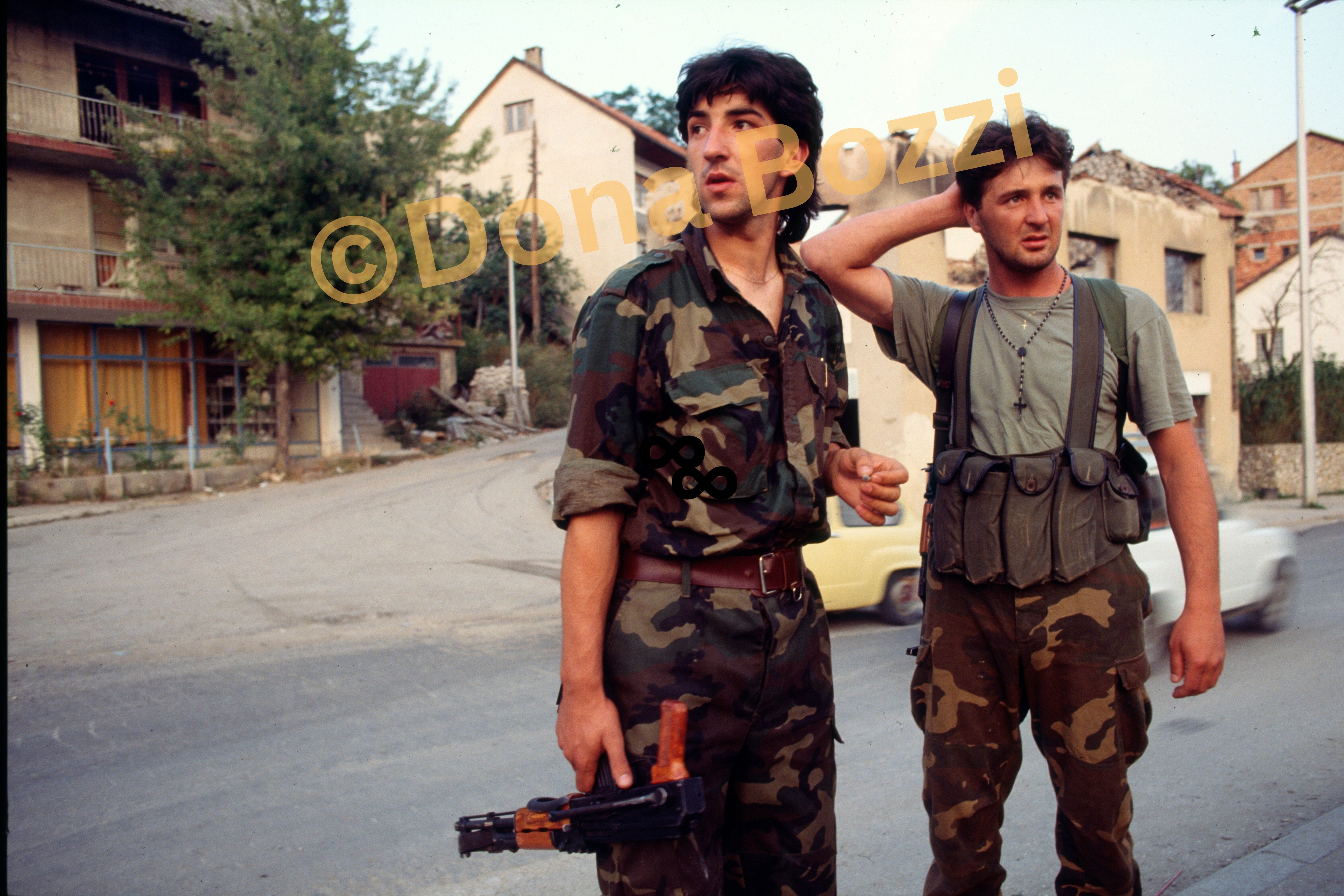
Mostar,Bosnia, April 03 1992, Croatian soldiers guard the city against the Yugoslav People’s Army,who defended Serbian autonomous regions in Bosnia.Croats are traditionally strongly catholic.
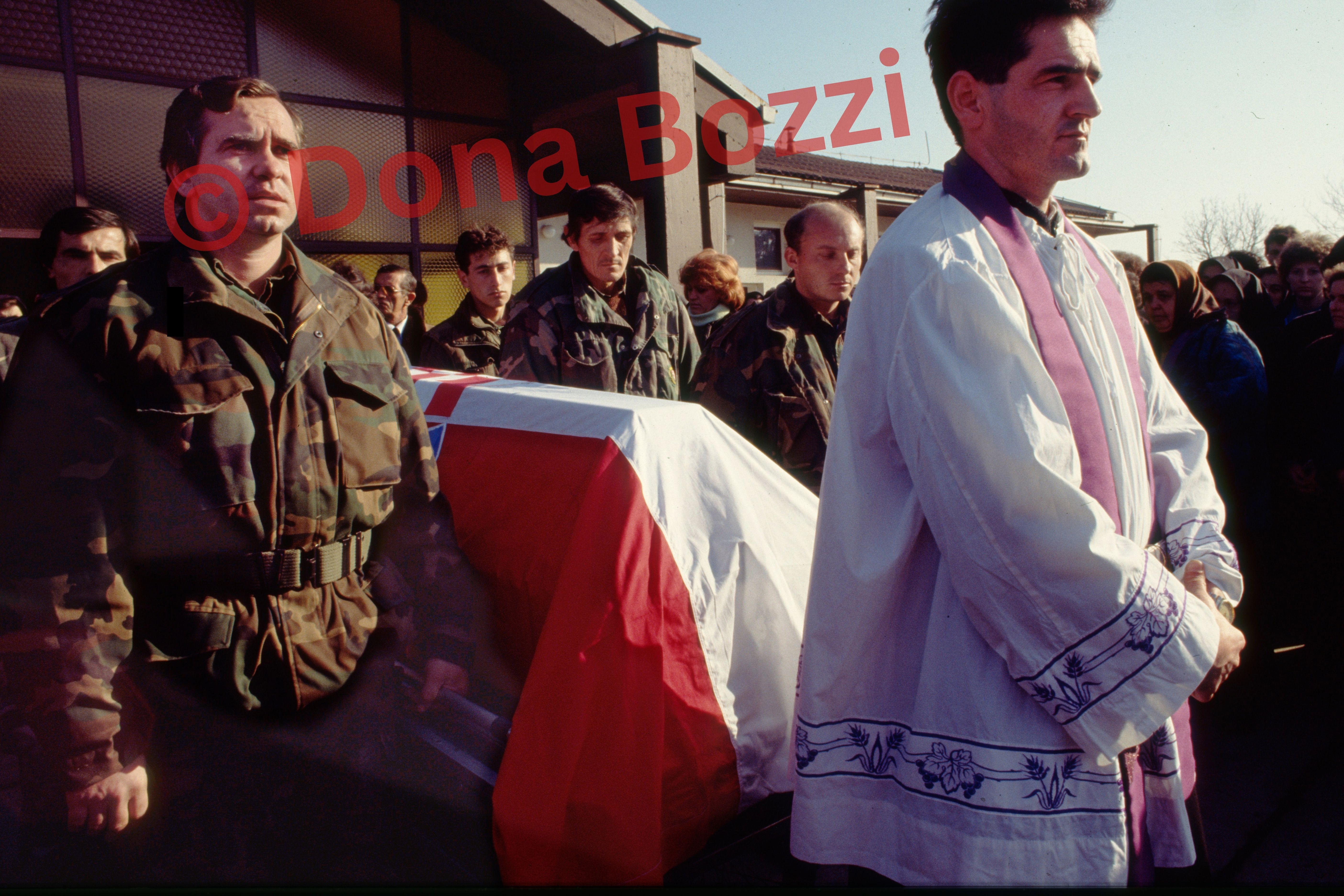
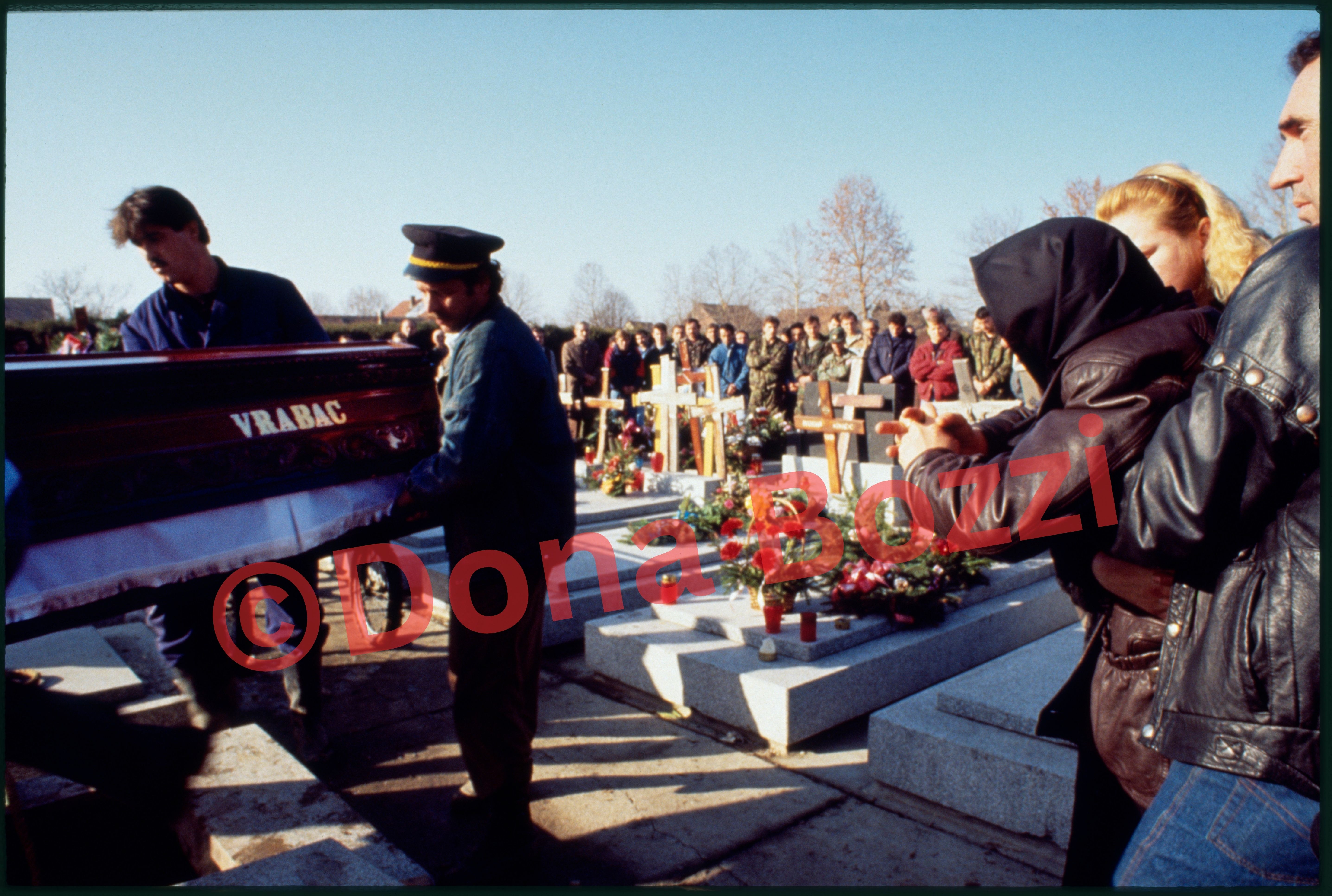
Karlovac,Croatia, April 04 1992,funeral of a Croatian soldier.In 1992 Croatian forces were fighting Serbian-backed militias in Croatia who controlled parts of Croatian territory.
Karlovac,Croatia,April 4 1992, funeral of a Croatian soldier. In 1992 Croatian forces were fighting Serbian-backed militias in Croatia who controlled parts of Croatian territory.
Karlovac,Croatia, April 4 1992,funeral of a Croatian soldier.In 1992 Croatian forces were fighting Serbian-backed militias in Croatia who controlled parts of Croatian territory.
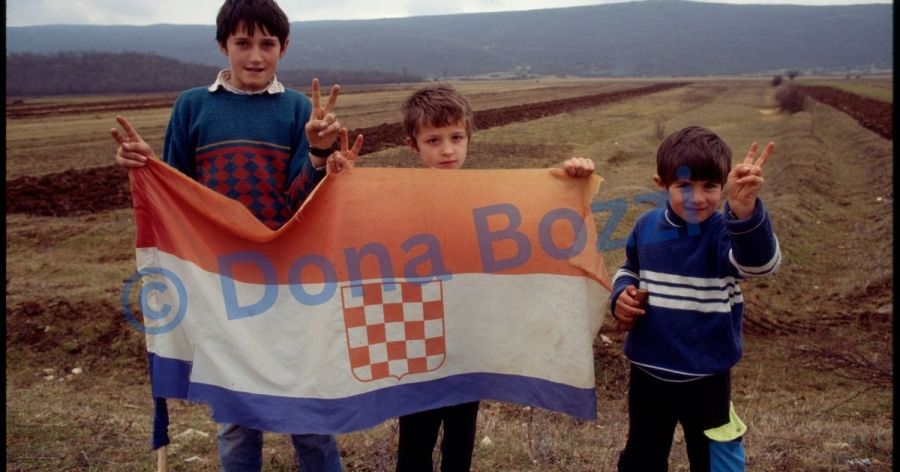
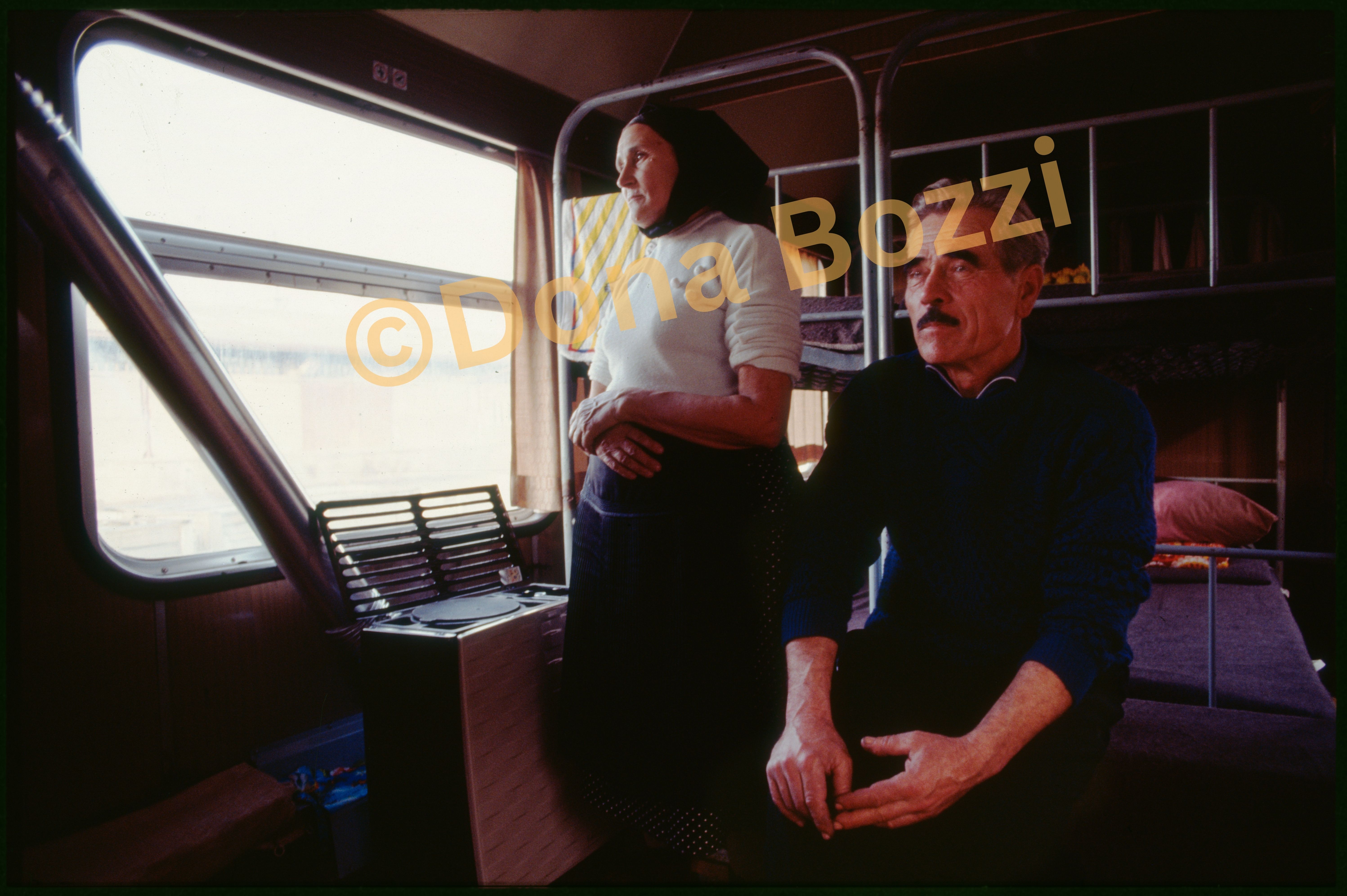
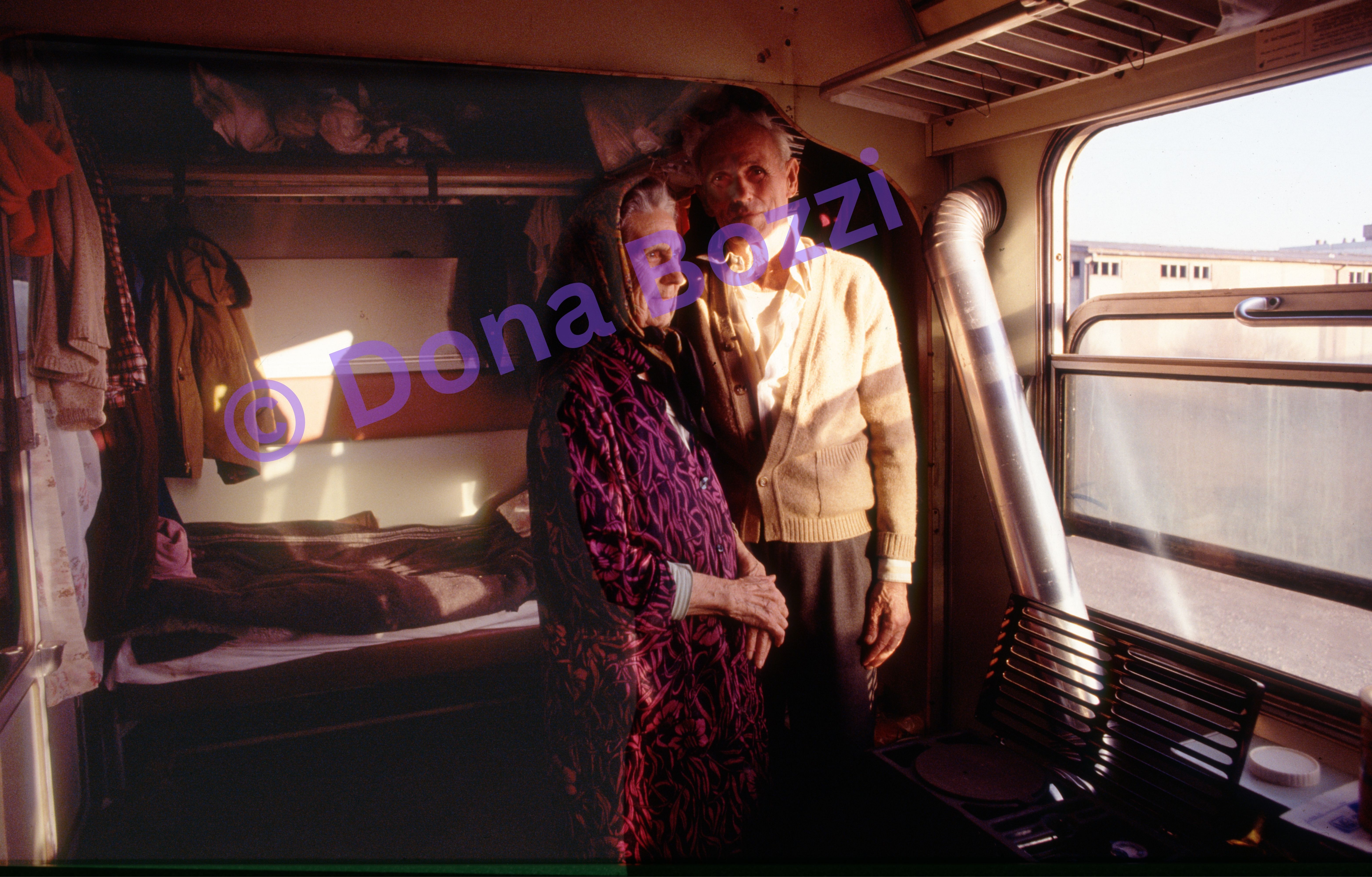
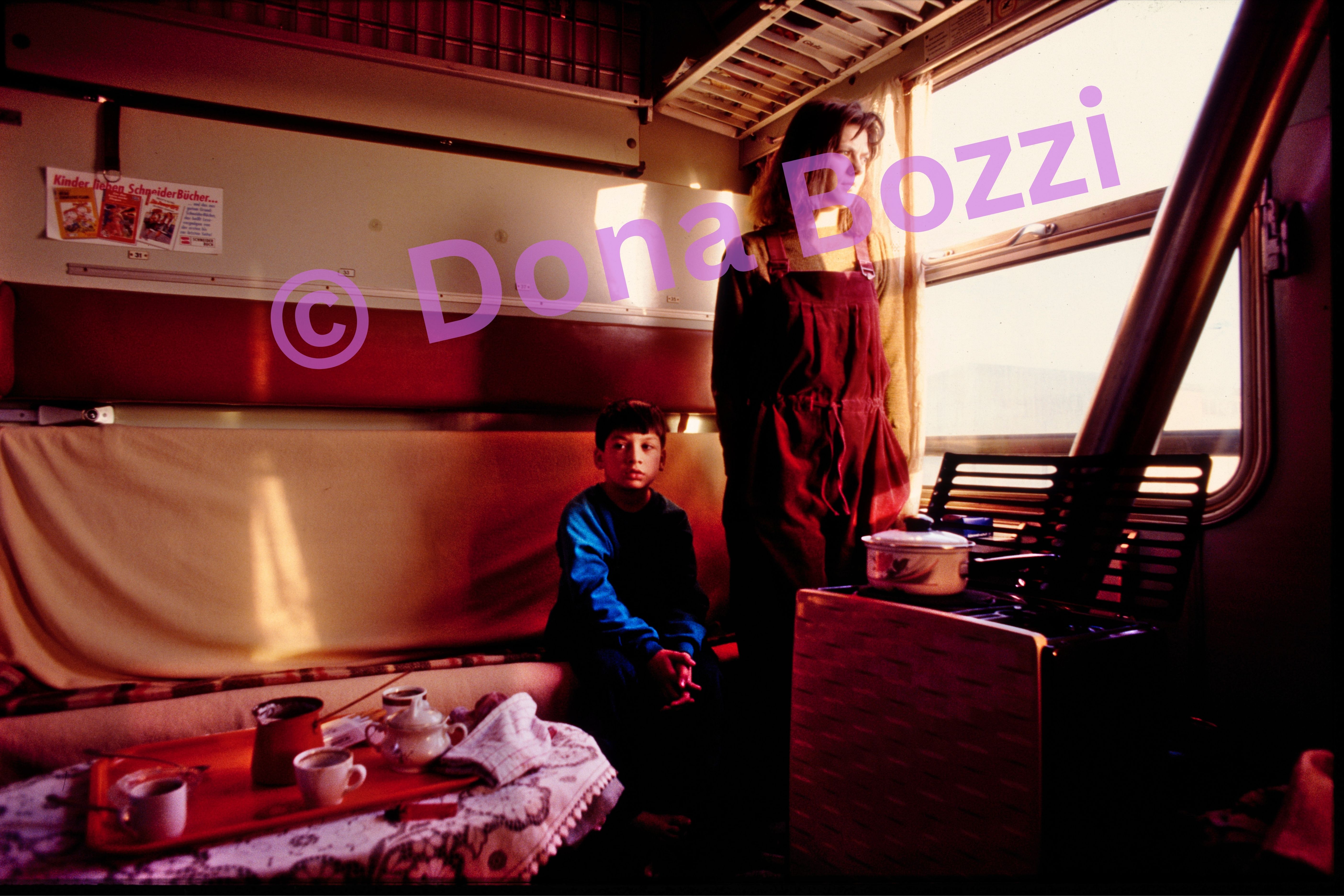
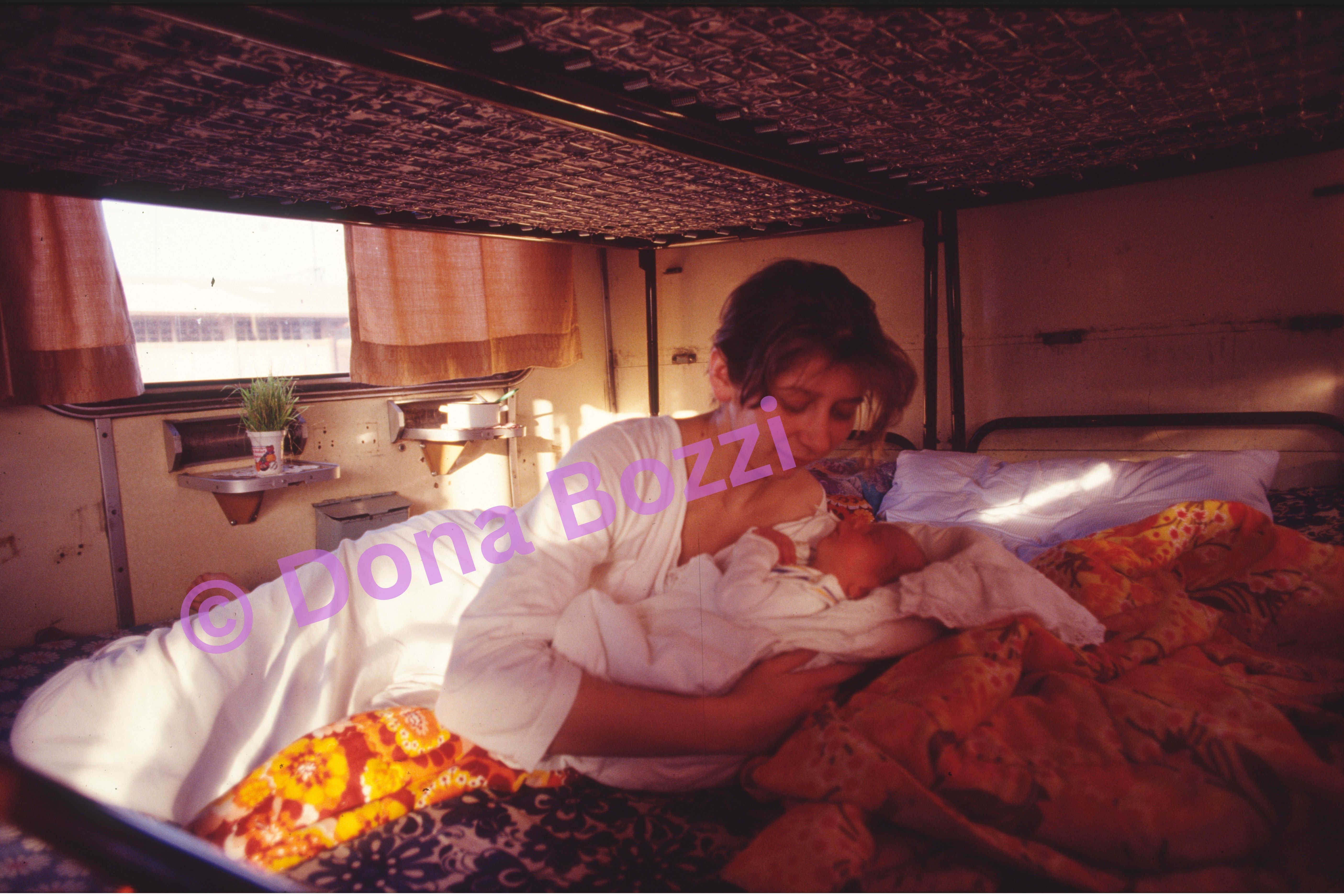
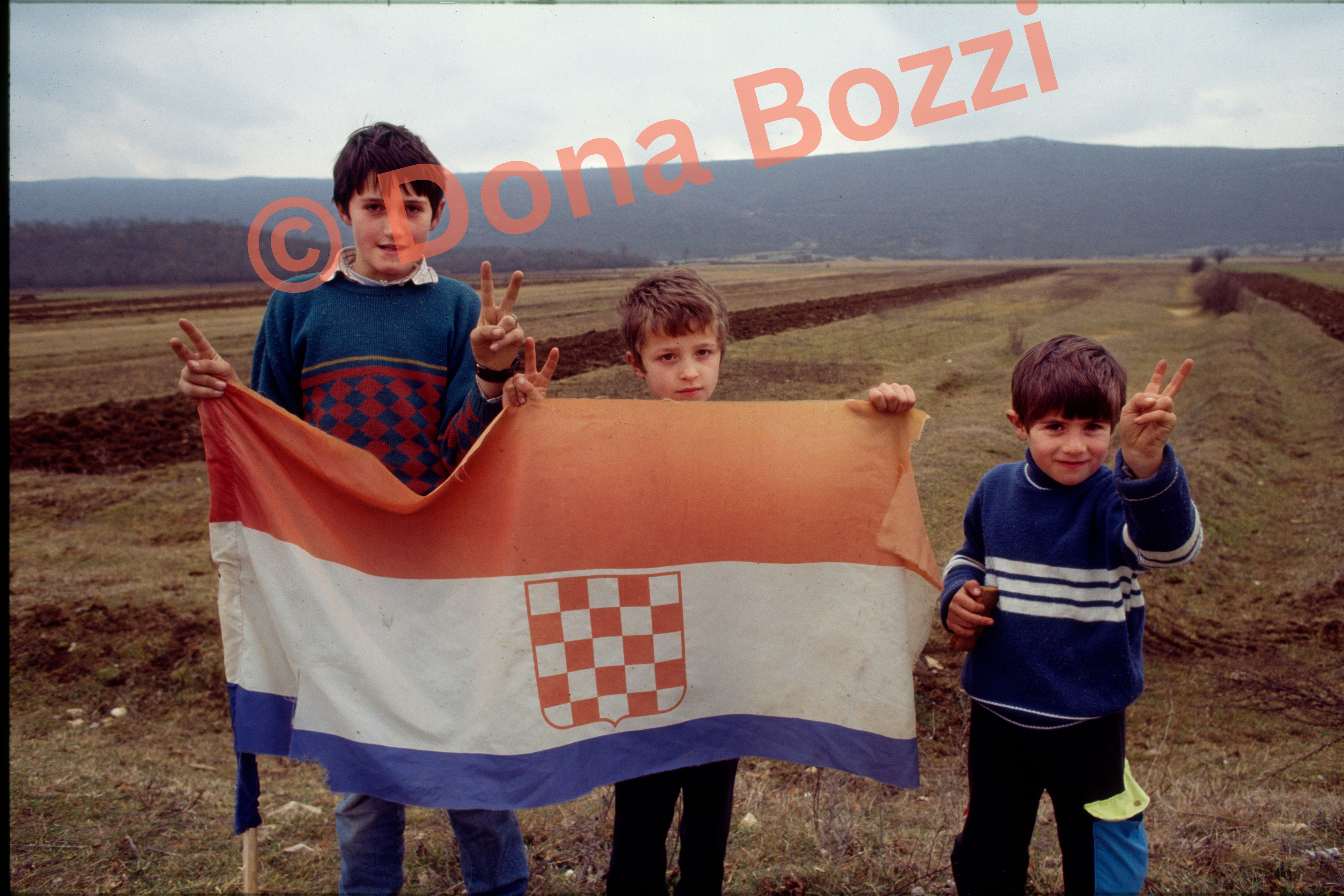
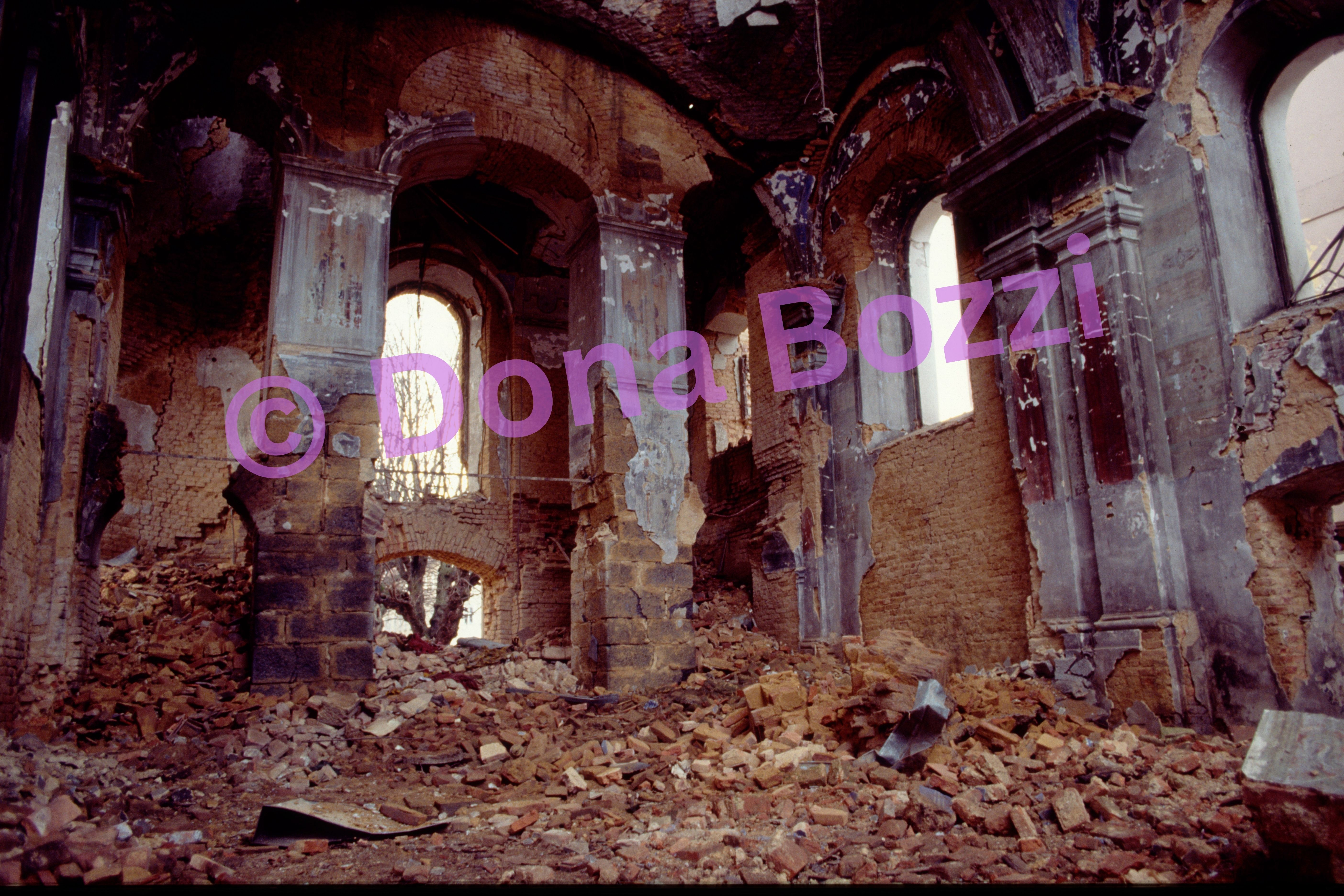
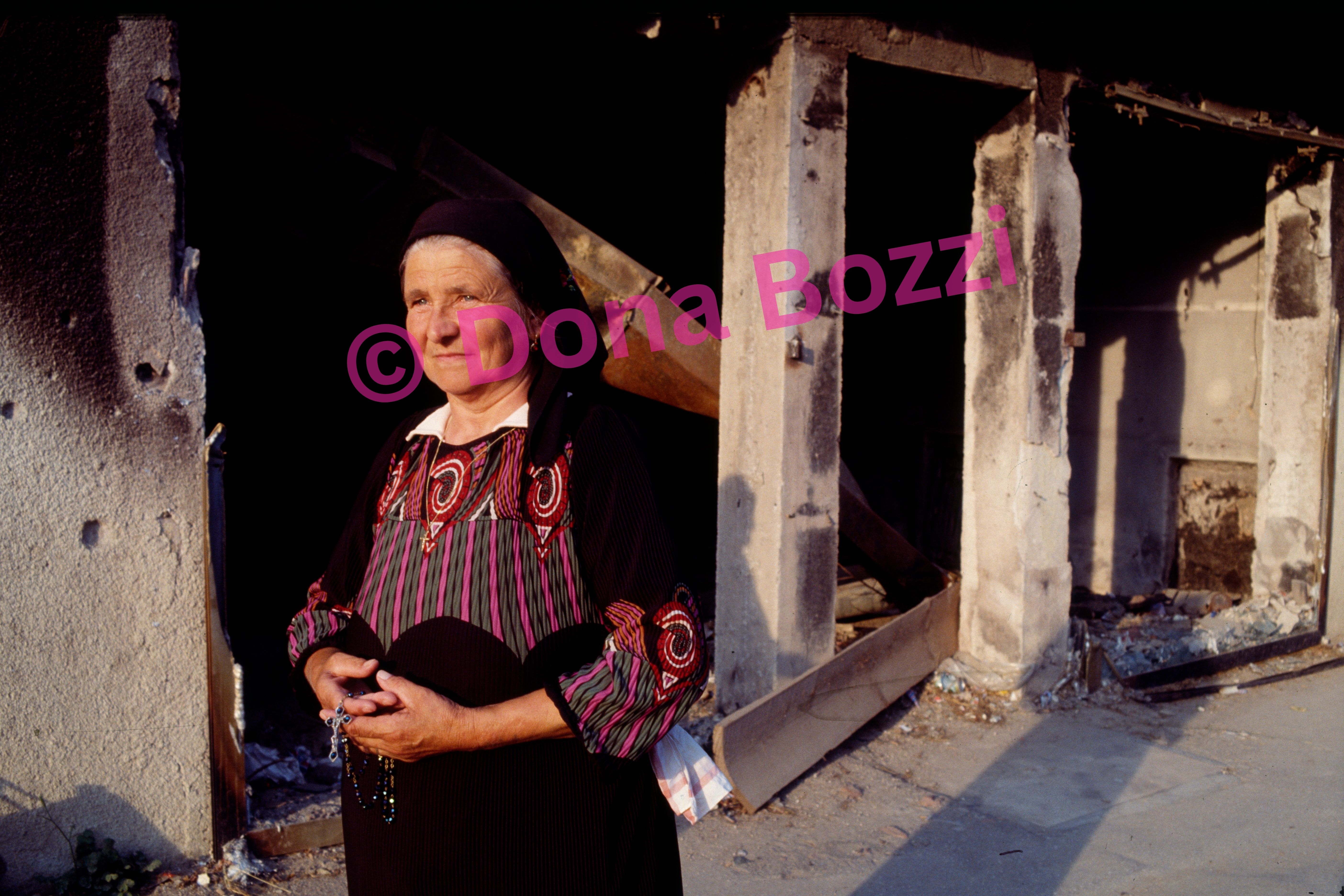
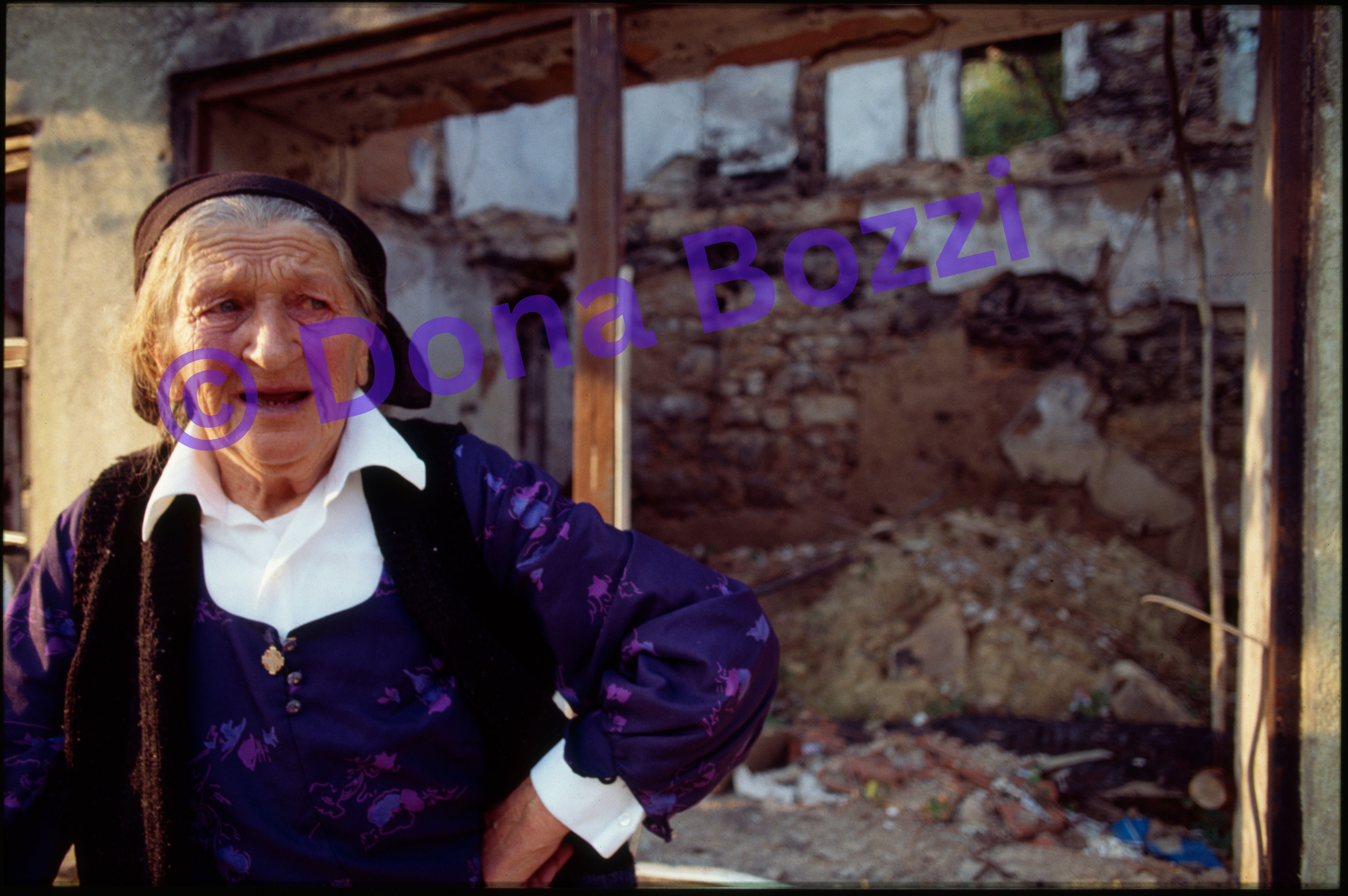
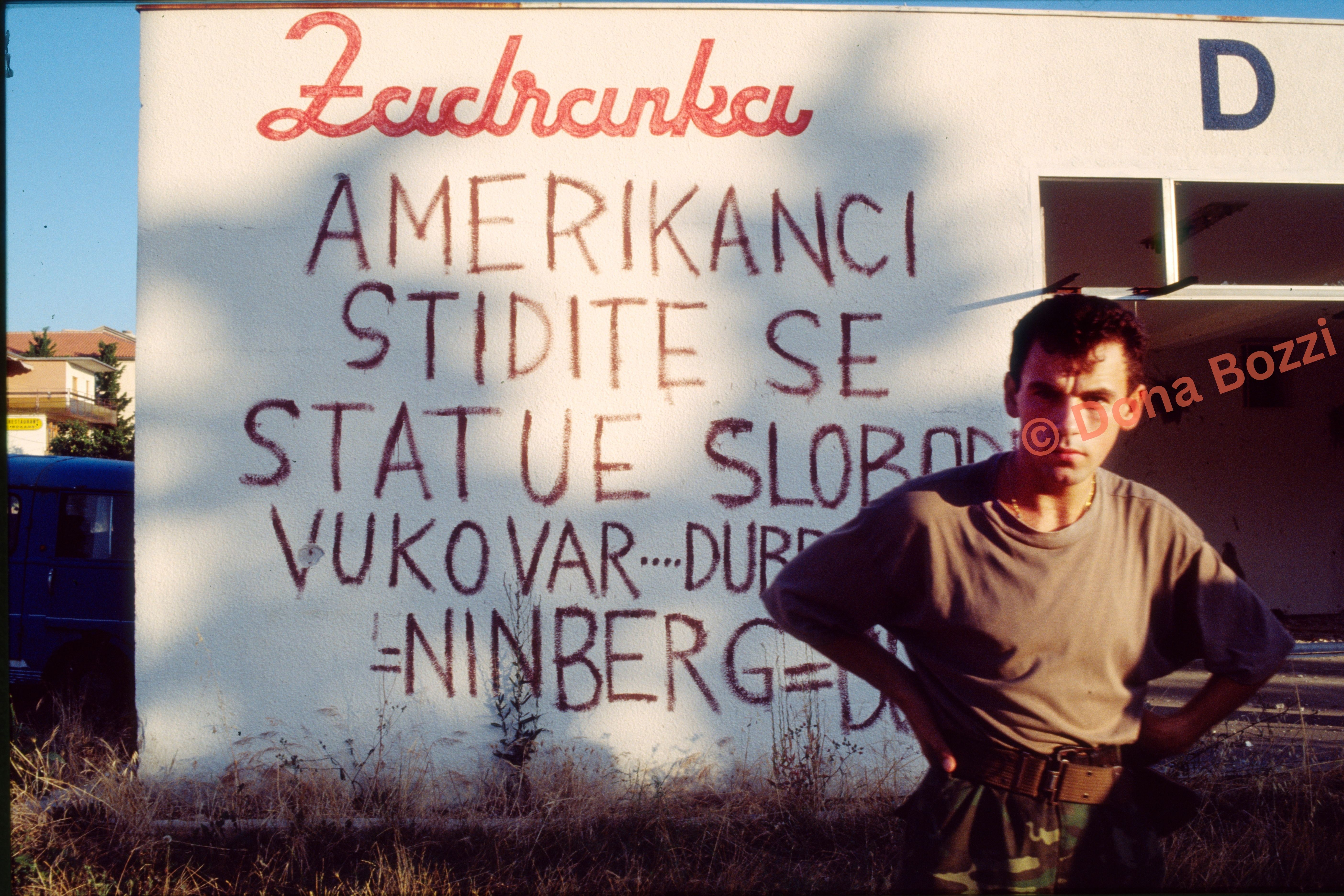
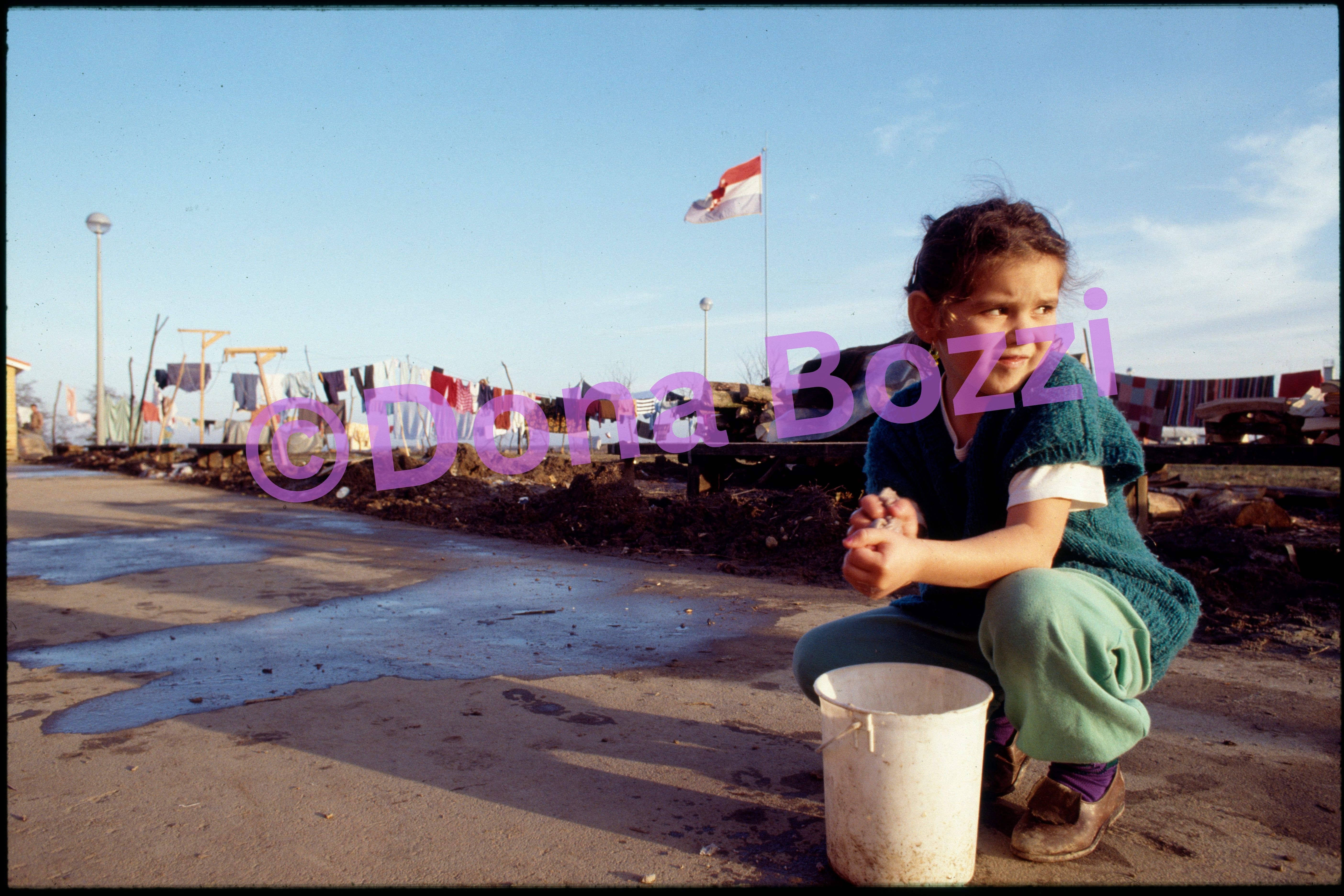
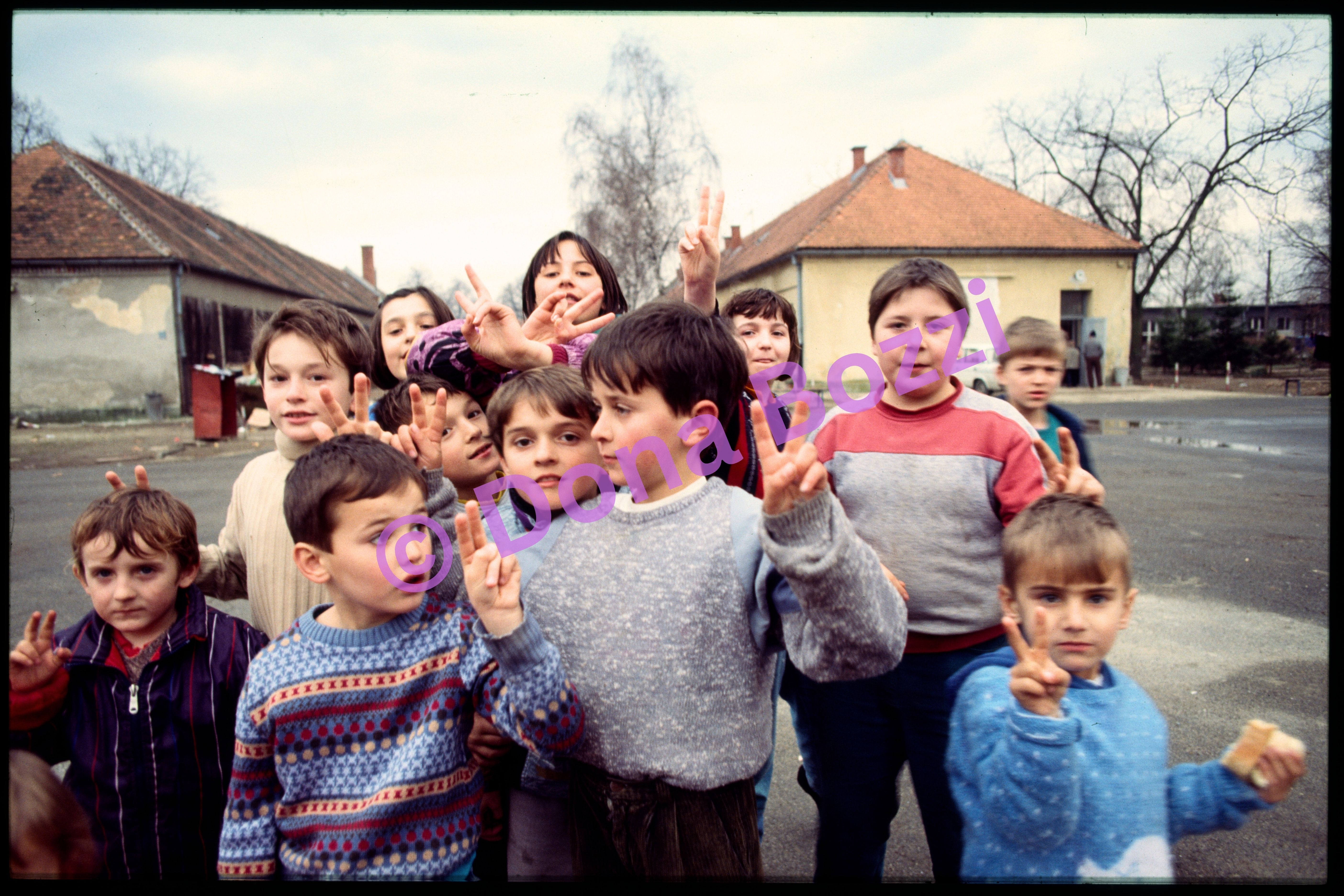
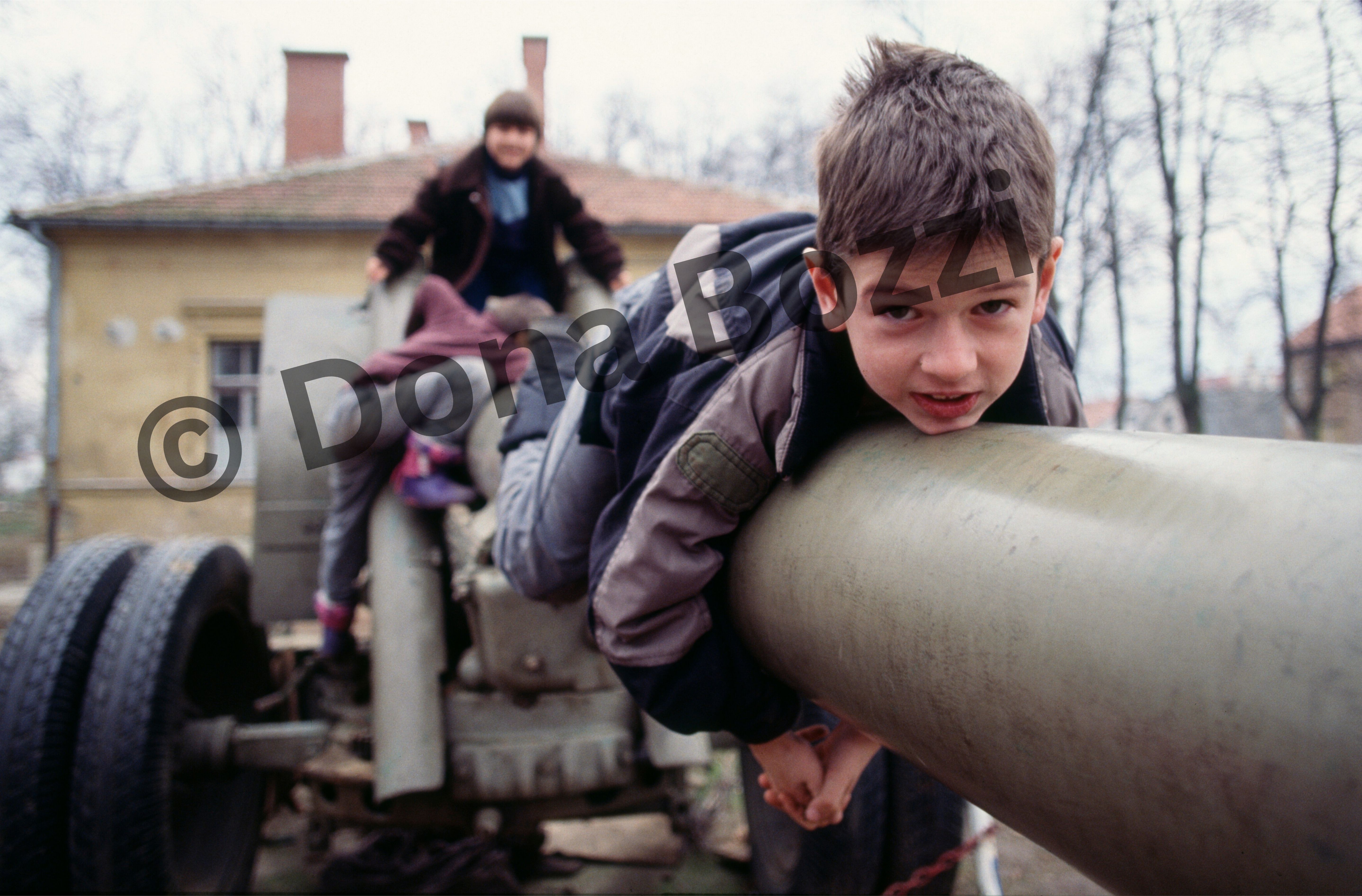
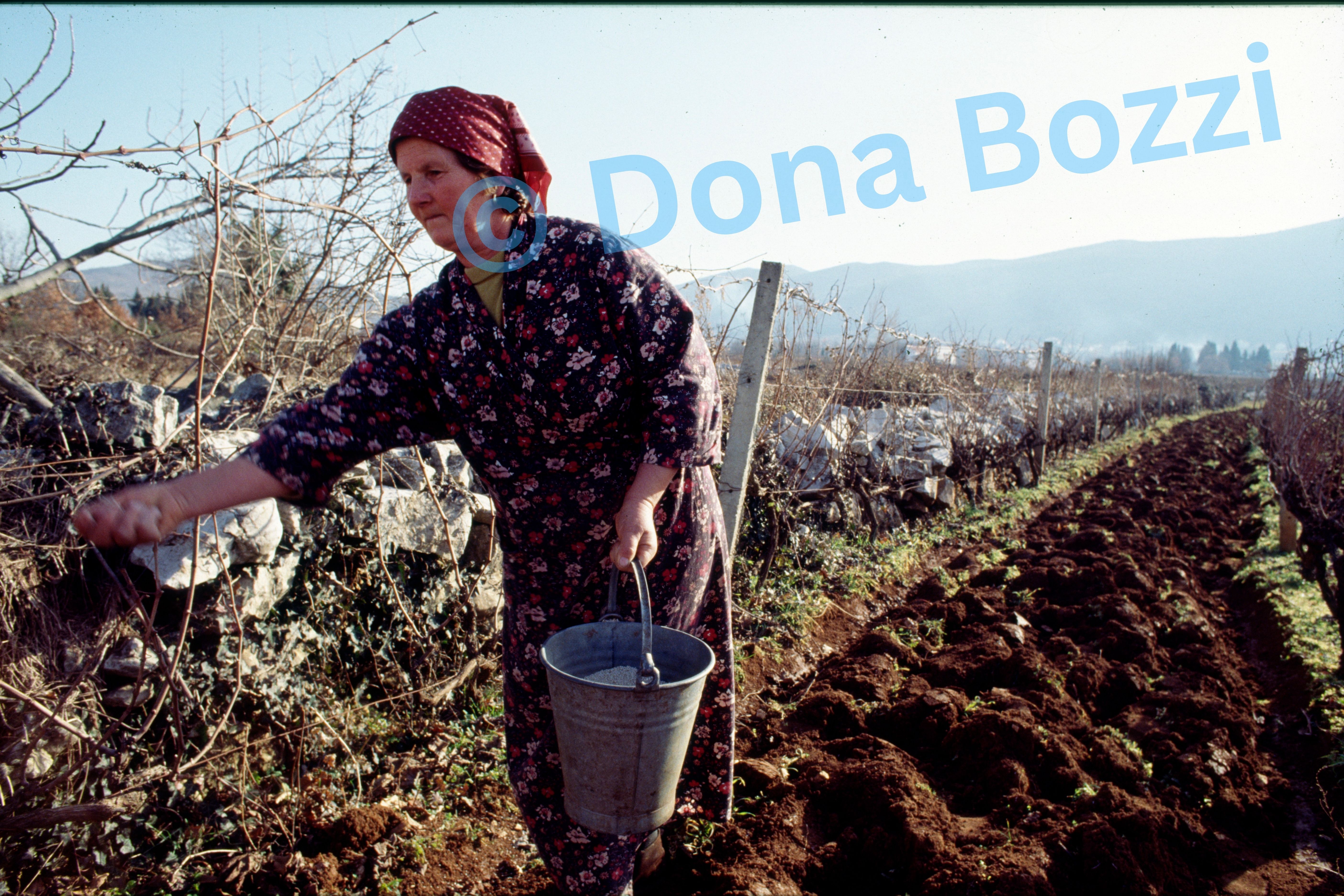
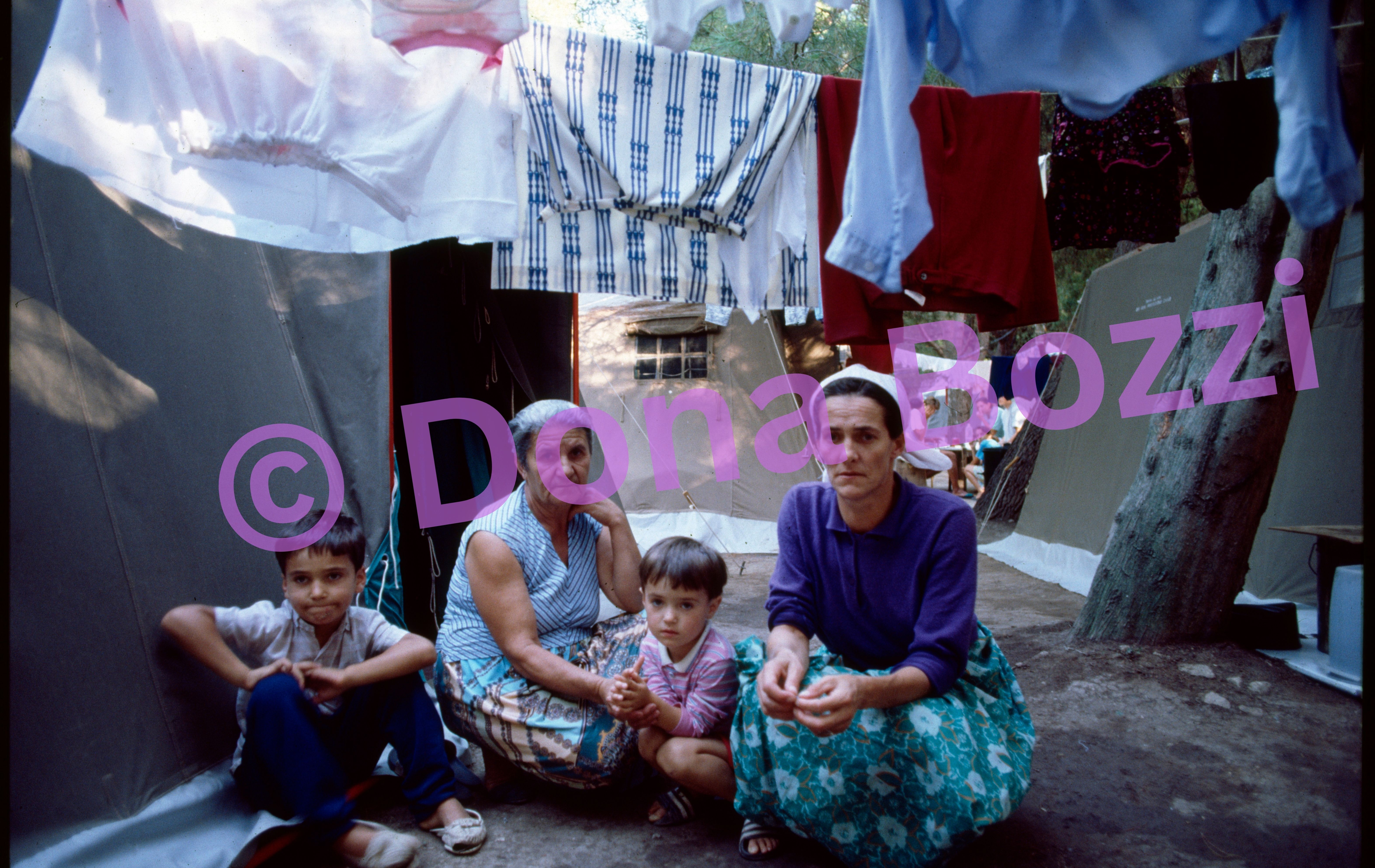
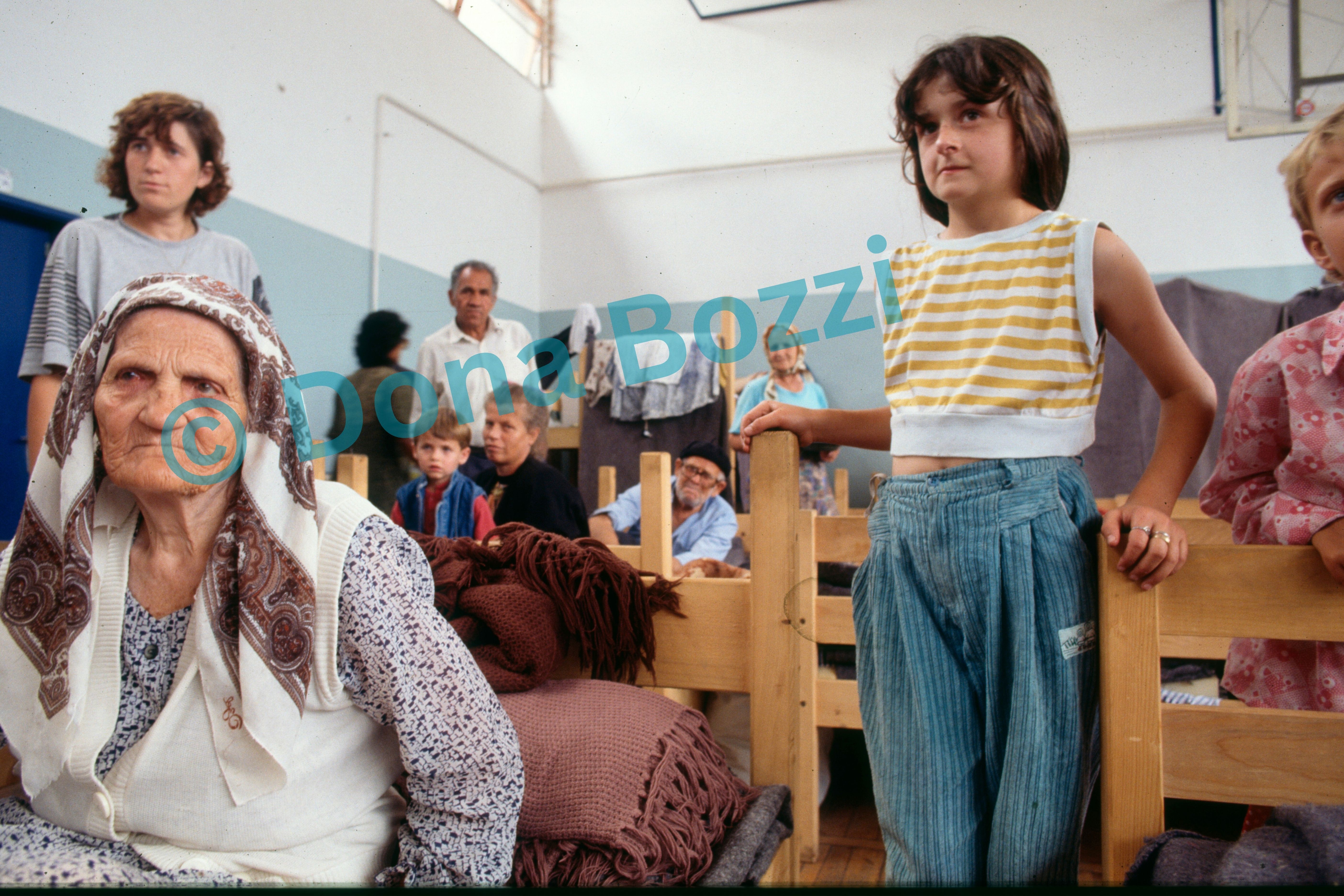
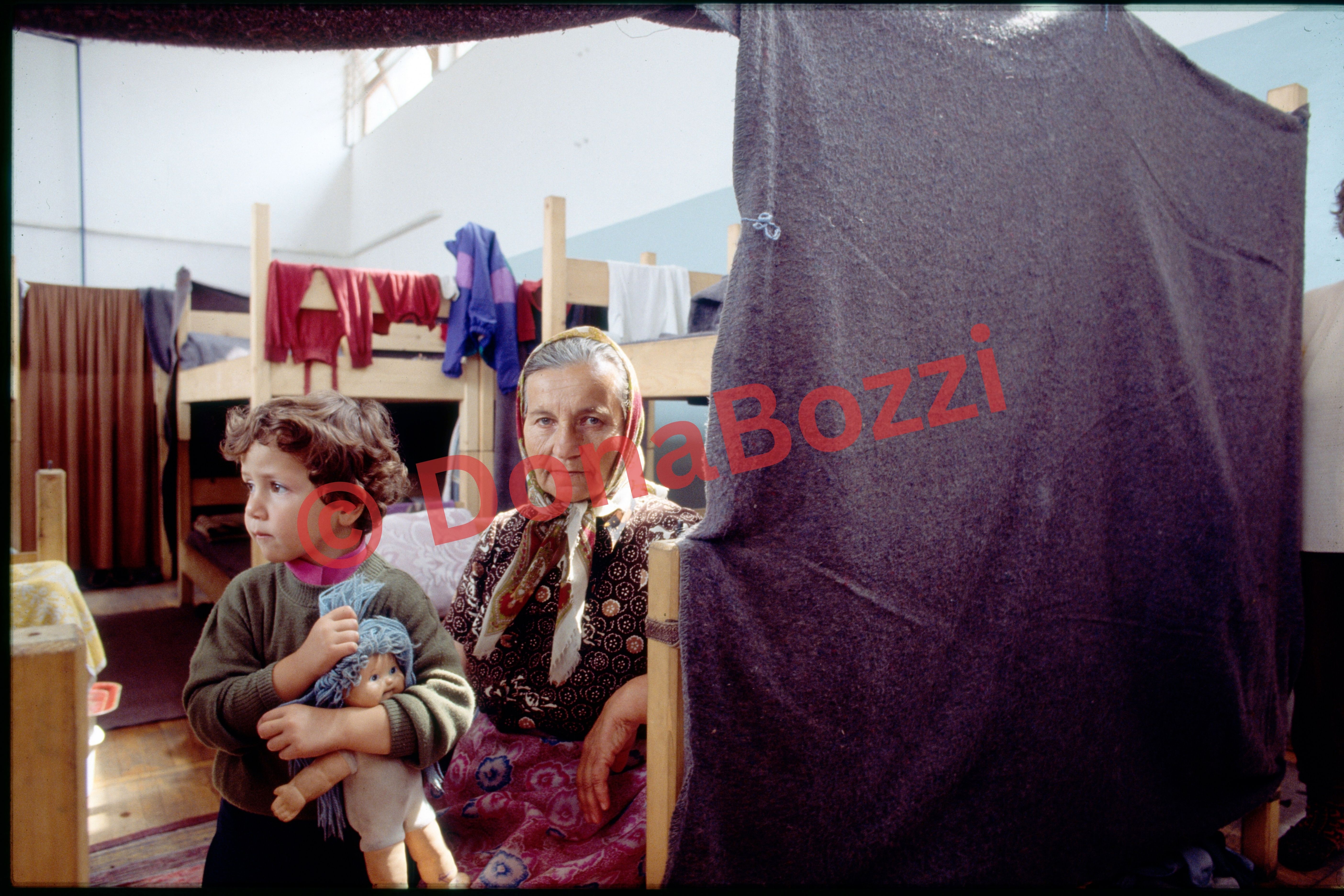
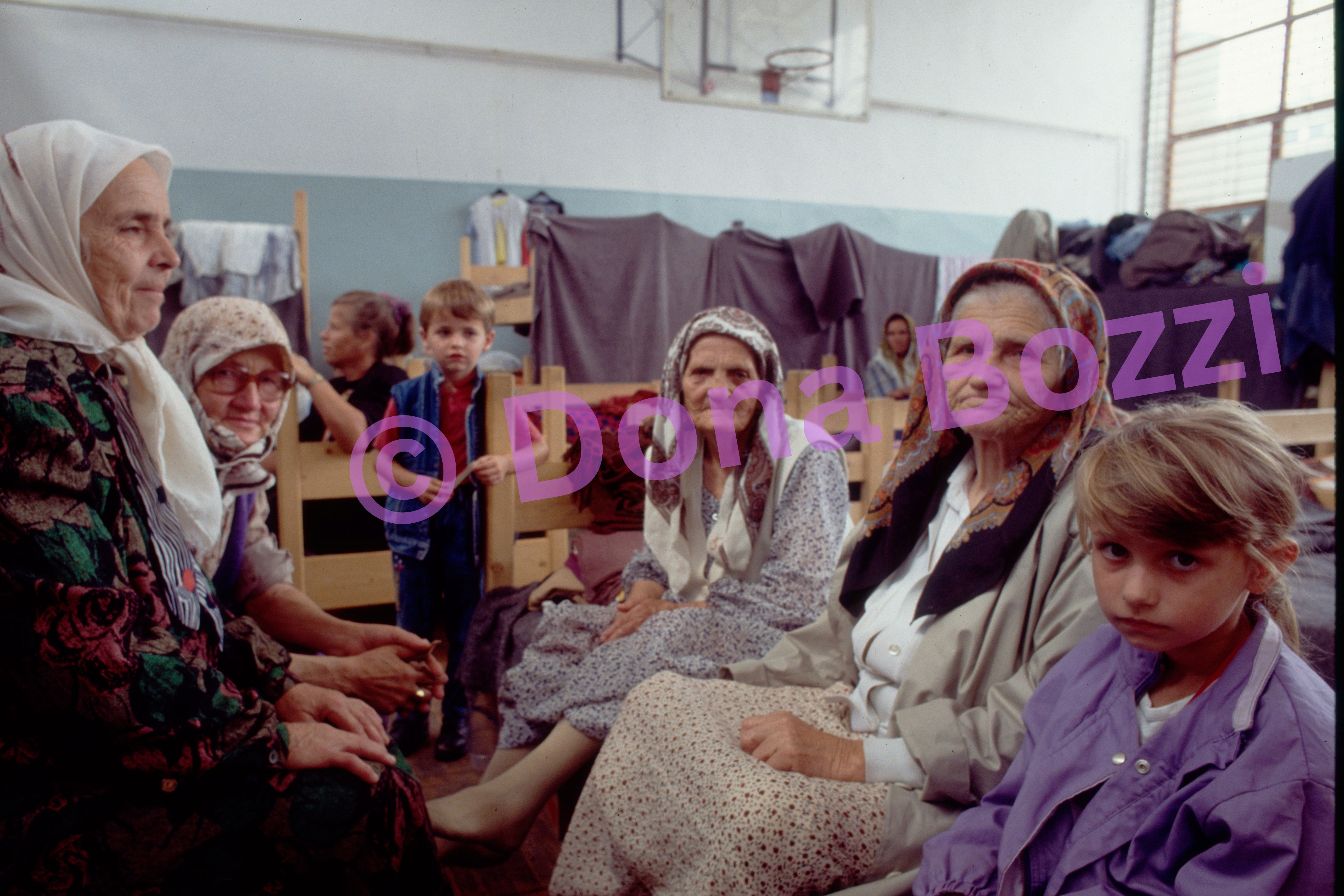
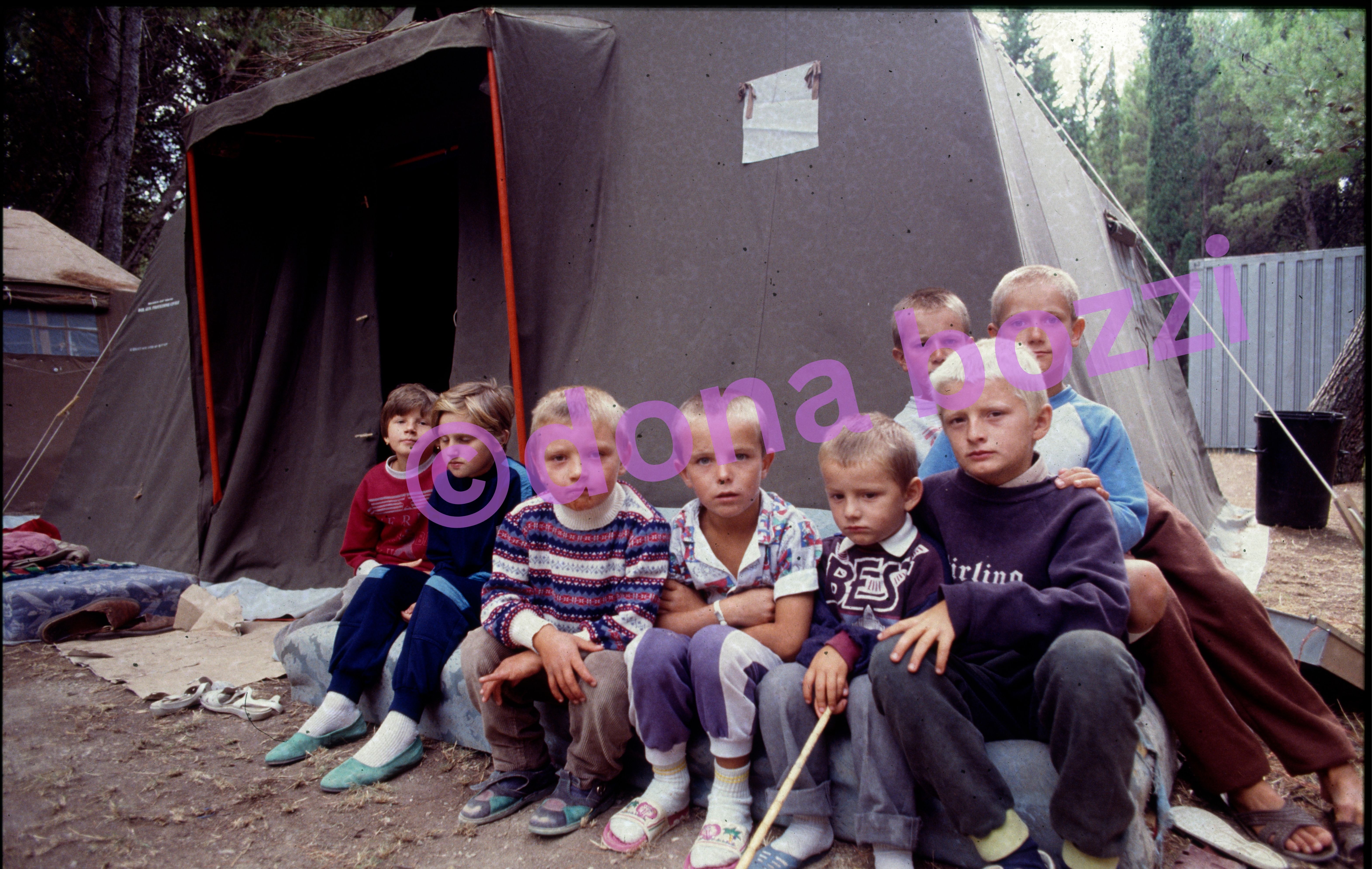
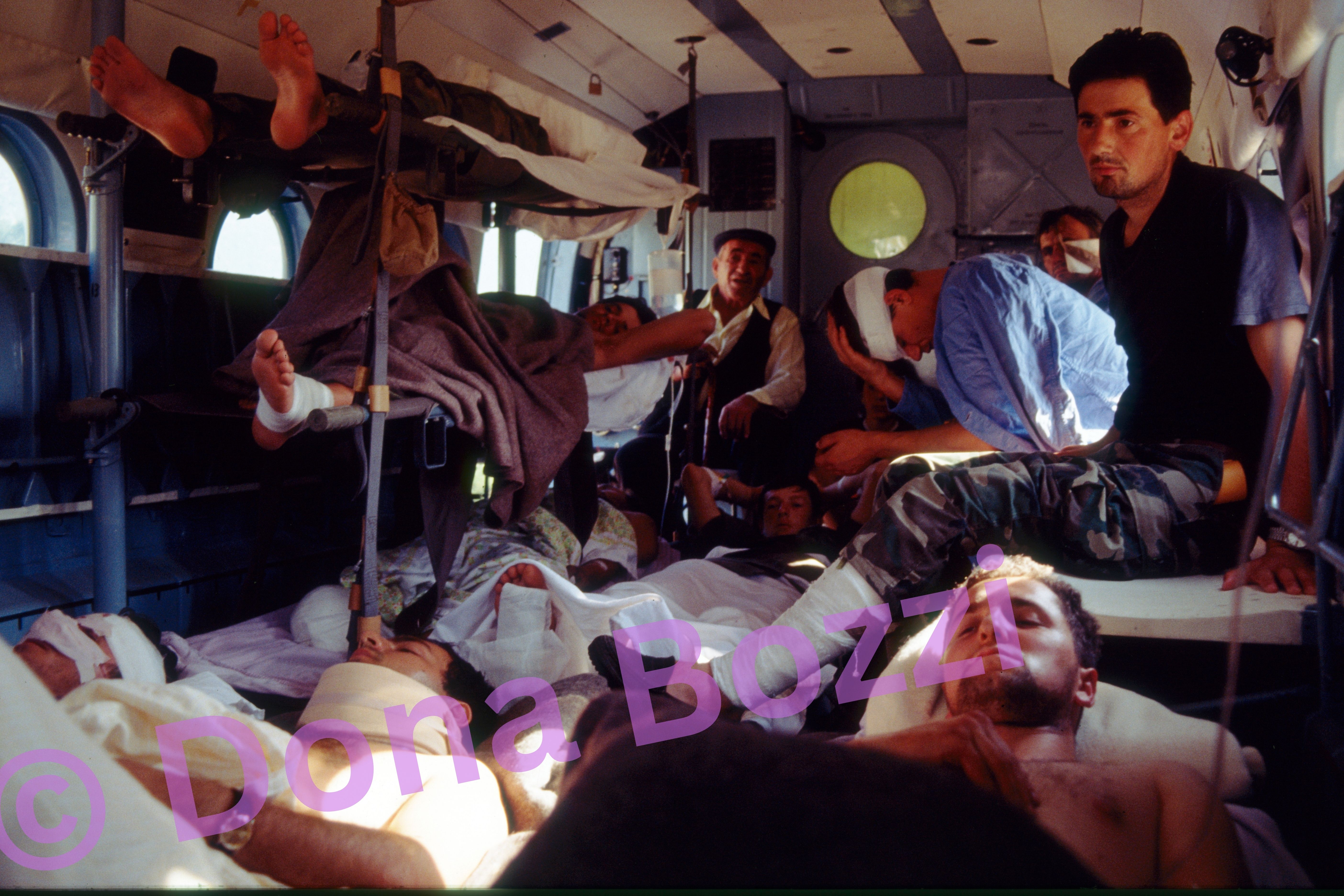
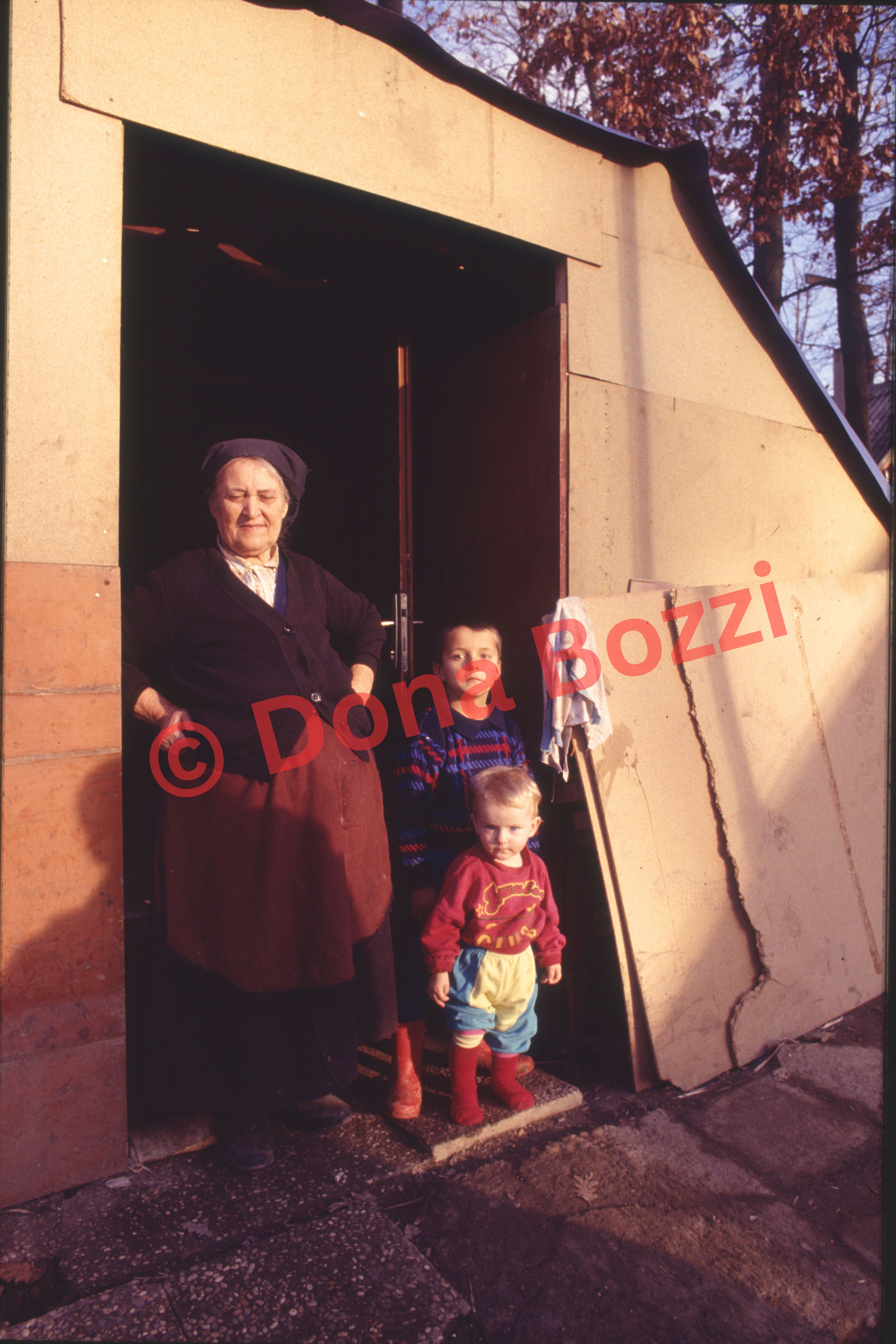
Vinkovci,Croatia, April 5 1992,Bosnian refugees hosted on train donated by Germany. The number of Bosnian refugees in Croatia reached around 16,500 in March 1992, This influx created a significant humanitarian and economic burden on CroatiaVinkovci,Croatia,April 5 1992,Bosnian refugees hosted on train donated by Germany.The number of Bosnian refugees in Croatia reached around 16,500 in March 1992, This influx created a significant humanitarian and economic burden on CroatiaVinkovci,Croatia, April 5 1992,Bosnian refugees hosted on train donated by Germany. The number of Bosnian refugees in Croatia reached around 16,500 in March 1992, This influx created a significant humanitarian and economic burden on CroatiaVinkovci,Croatia, April 5 1992, a Bosniak refugee gave birth in train donated by Germany.The number of Bosnian refugees in Croatia reached around 16,500 in March 1992, This influx created a significant humanitarian and economic burden on CroatiaVarazdin countryside,Croatia,Croatian boys holding Croatian flag,on April 6 1992. In 1992, the Vance plan established a ceasefire,after major gains of Serbian forces in Croatia in 1991.Karlovac, St.Nicholas Serbian Orthodox Church, April 7 1992. Mines were detonated inside the church by Croatian forces in 1991Karlovac,Croatia, St.Nicholas Serbian Orthodox Church,April 7 1992. Mines were detonated inside the church by Croatian forces in 1991. The church is now rebuiltMostar, April 11 1992,a woman in front of a building hit by Serbian shelling. In 1992 Mostar was.heavily hit by the JNA, the Yugoslav National Army, during a siege which involved the destruction of most of the city’s bridges.Mostar, April 11 1992,a woman in front of a building hit by Serbian shelling. In 1992 Mostar was.heavily hit by the JNA, the Yugoslav National Army, during a siege which involved the destruction of most of the city’s bridges.Dakovo, Croatia, April 10 1992. The writing on the wall: Americans,shame on your statue,seems to represent the resentment of the Croatian Bosniak population towards the US for not intervening early enough in the conflict.Osijeck, Croatia, April 13 1992 ,Camp hosting Bosniak refugees. The number of Bosnian refugees in Croatia reached around 16,500 in March 1992, This influx created a significant humanitarian and economic burden on Croatia.Varazdin,Croatia, April 14 1992,shelter for Bosnian refugees.The number of Bosnian refugees in Croatia reached around 16,500 in March 1992, This influx created a significant humanitarian and economic burden on Croatia.Mostar, April 17 1992, Bosnian children playing with tanks. Mostar was besieged by the Serb dominated Yugoslav People’s Army in 1992 after Bosnia and Herzegovina declared independanceVirovitica countryside,Croatia,April 18,outside a camp for Bosnian refugees.The number of Bosnian refugees in Croatia reached around 16,500 in March 1992, This influx created a significant humanitarian and economic burden on Croatia.Karlovac countryside, Croatia,April 20 1992,a woman sowing seeds in the groundVirovitica, Croatia, April 24 1992, Bosnian refugee camp. The number of Bosnian refugees in Croatia reached around 16,500 in March 1992. This influx created a significant humanitarian and economic burden on Croatia.Zenica, Bosnia,April 26 1992, Bosniak refugee camp.In 1992 Bosnia had centers for internally displaced people (IDPs) to provide humanitaria aid. The conflict caused a massive wave of displacement. Zenica,Bosnia,April 28 1992, shelter for Bosnian refugees.In 1992 Bosnia had centers for internally displaced people (IDPs) to provide humanitaria aid. The conflict caused a massive wave of displacement.Zenica, Bosnia, April 28 1992, shelter for Bosnian refugees.In 1992 Bosnia had centers for internally displaced people (IDPs) to provide humanitaria aid. The conflict caused a massive wave of displacement.Zenica,Bosnia,April 28 1992,shelter for Bosnian refugees.In 1992 Bosnia had centers for internally displaced people (IDPs) to provide humanitaria aid. The conflict caused a massive wave of displacement.Zenica,Bosnia,April 29 1992, camp hosting Bosnian refugees.In 1992 Bosnia had centers for internally displaced people (IDPs) to provide humanitaria aid. The conflict caused a massive wave of displacement.Zenica, Bosnia,April 30 1992,camp hosting Bosnian refugees.In 1992 Bosnia had centers for internally displaced people (IDPs) to provide humanitarian aid. The conflict caused a massive wave of displacement.Zenica, Bosnia, May 1st 1992, wounded Bosniak fighters.When the war started in April 1992, the Army of the Republic of Bosnia and Herzegovina (dominated by Bosniaks) and the Bosnian Croat military were allied against the Bosnian Serb army and the Yugoslav army forces
Zenica, Bosnia,May 05 1992, refugee camp.In 1992 Bosnia had centers forinternally displaced people (IDPs) to provide humanitarian aid. The conflict caused a massive wave of displacement.
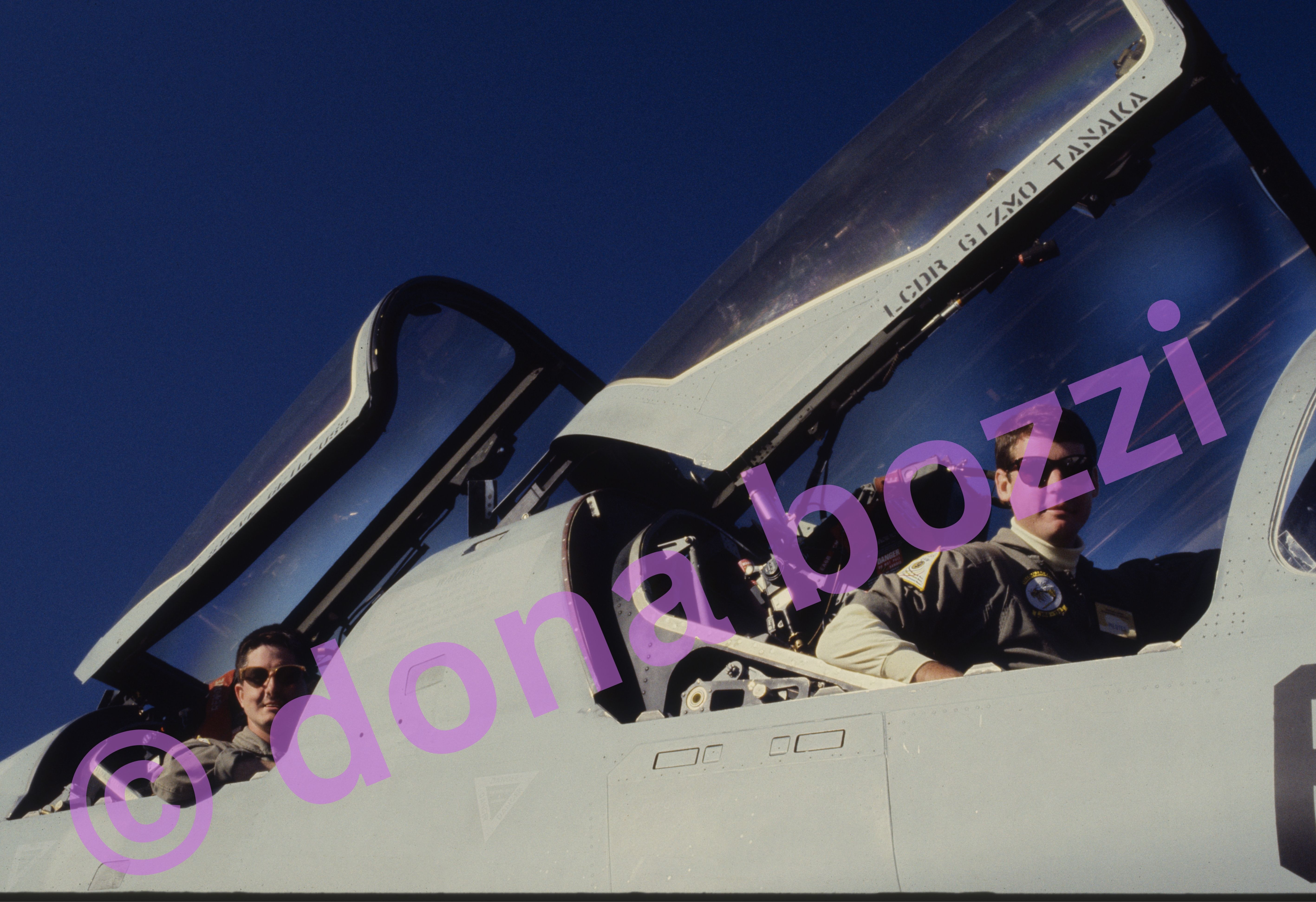
Zenica, Bosnia, May 6 1992, an aircraft part of the UNPROFOR Mission in Bosnia.Its mandate included delivering humanitarian aid, protecting designated “safe areas”
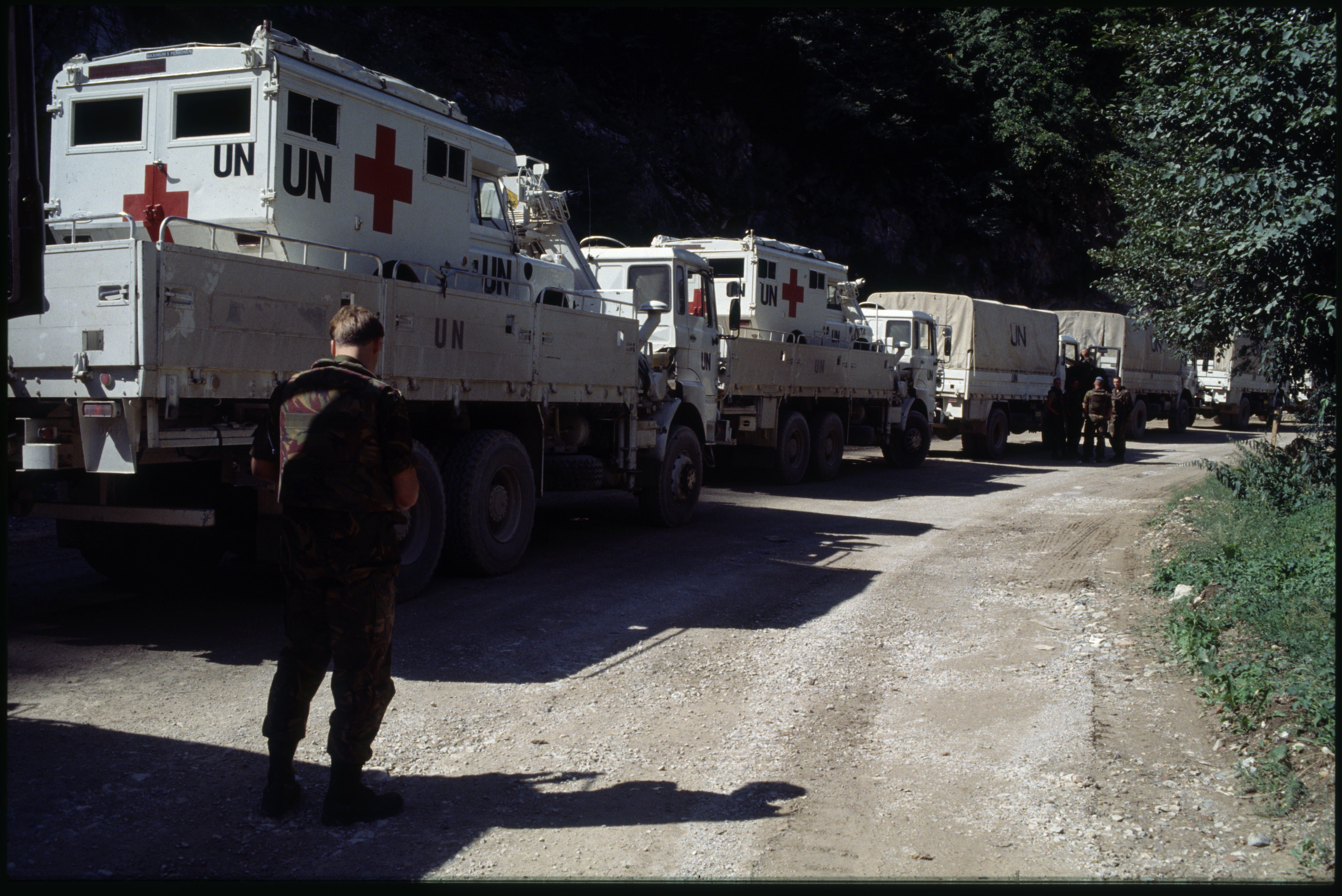
Zenica, Bosnia,May 7 1992,UN humanitarian aid convoy.The UN’s large-scale humanitarian mission in Bosnia began in 1992 with the establishment of the UN Protection Force (UNPROFOR)
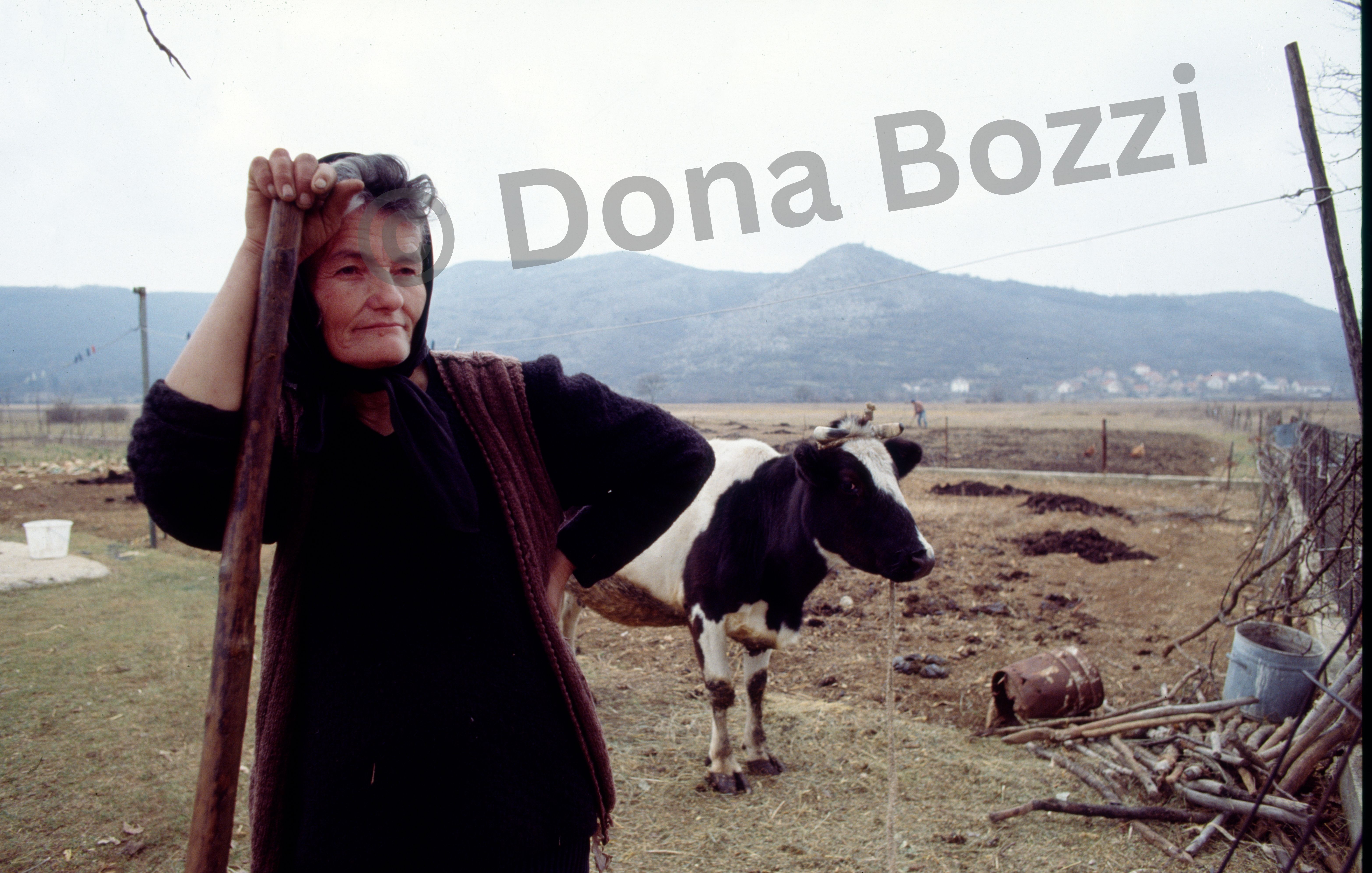
Zenica countryside,Bosnia,May 7 1992,a Bosniak woman tending her cow.
Zenica, Bosnia,May 7 1992, Bosniak residents in front of building hit by a Serbian airstrike
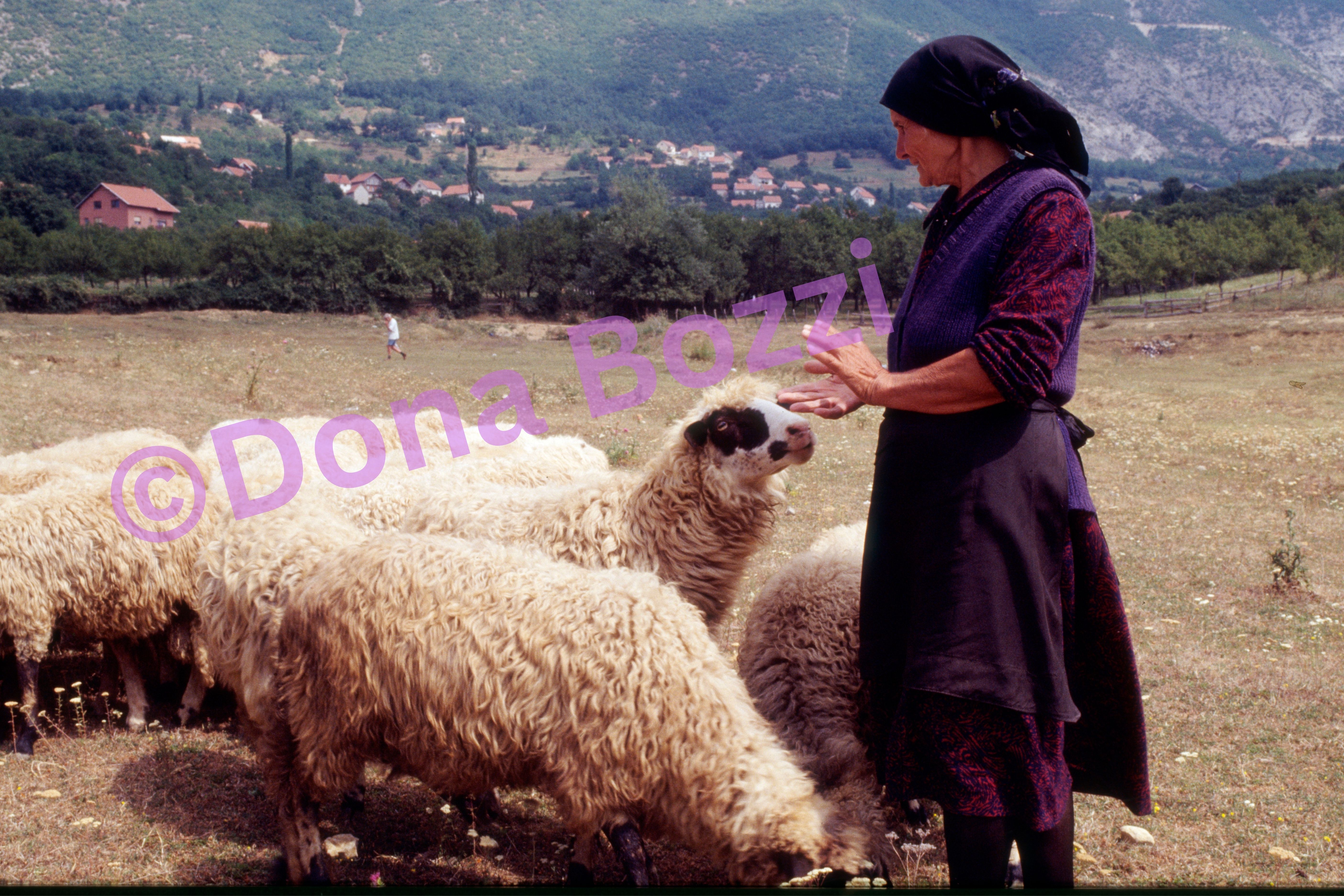
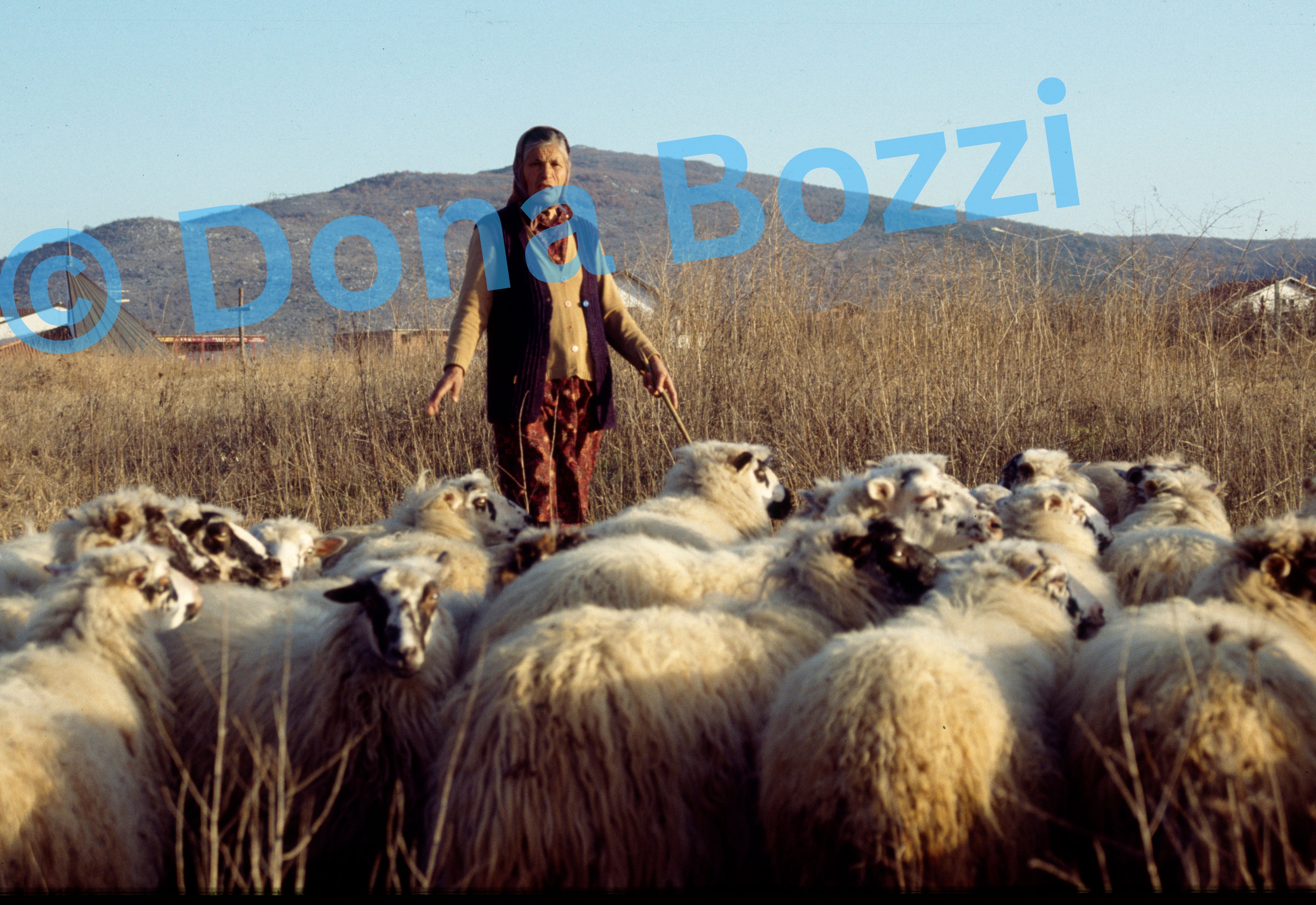
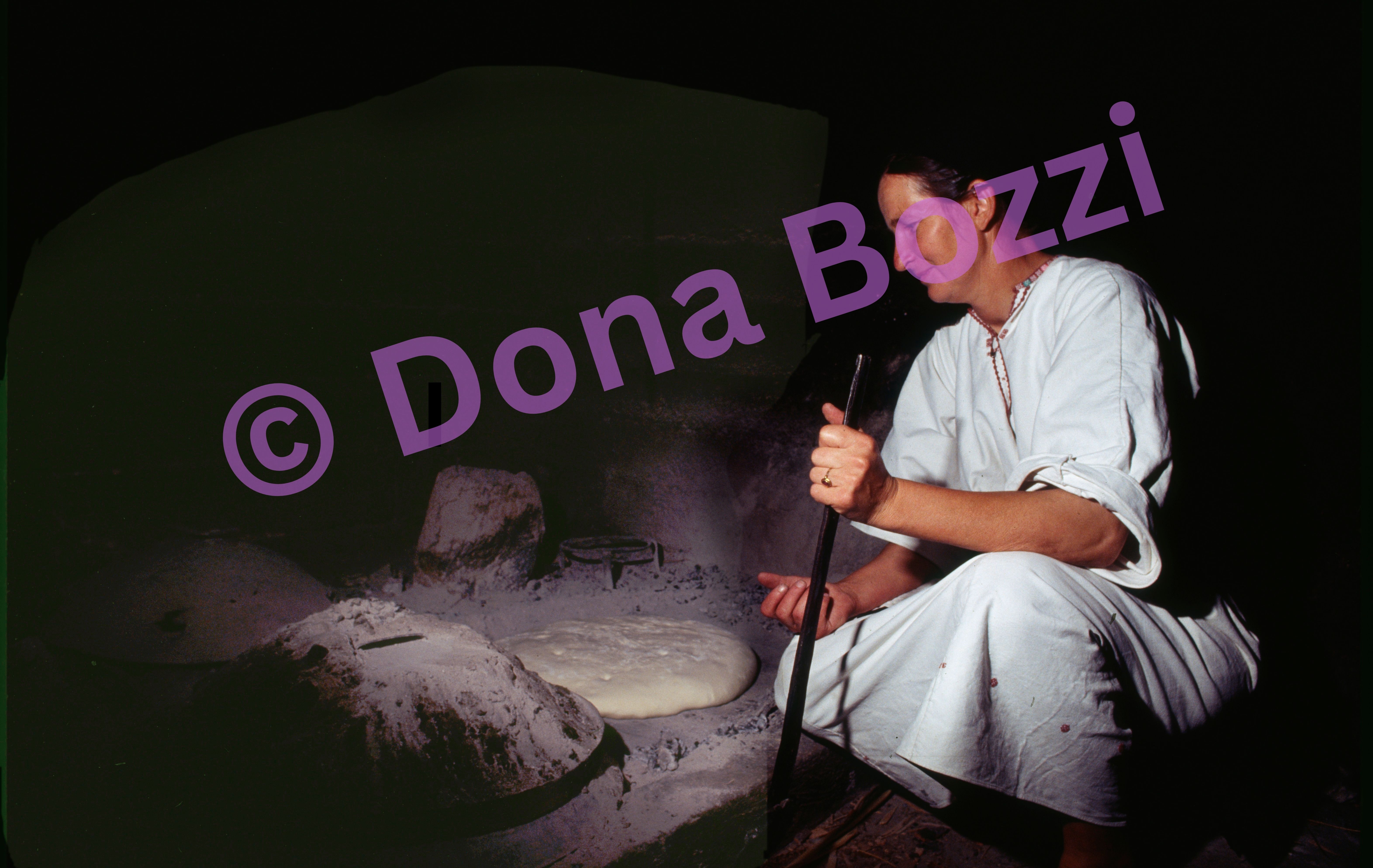
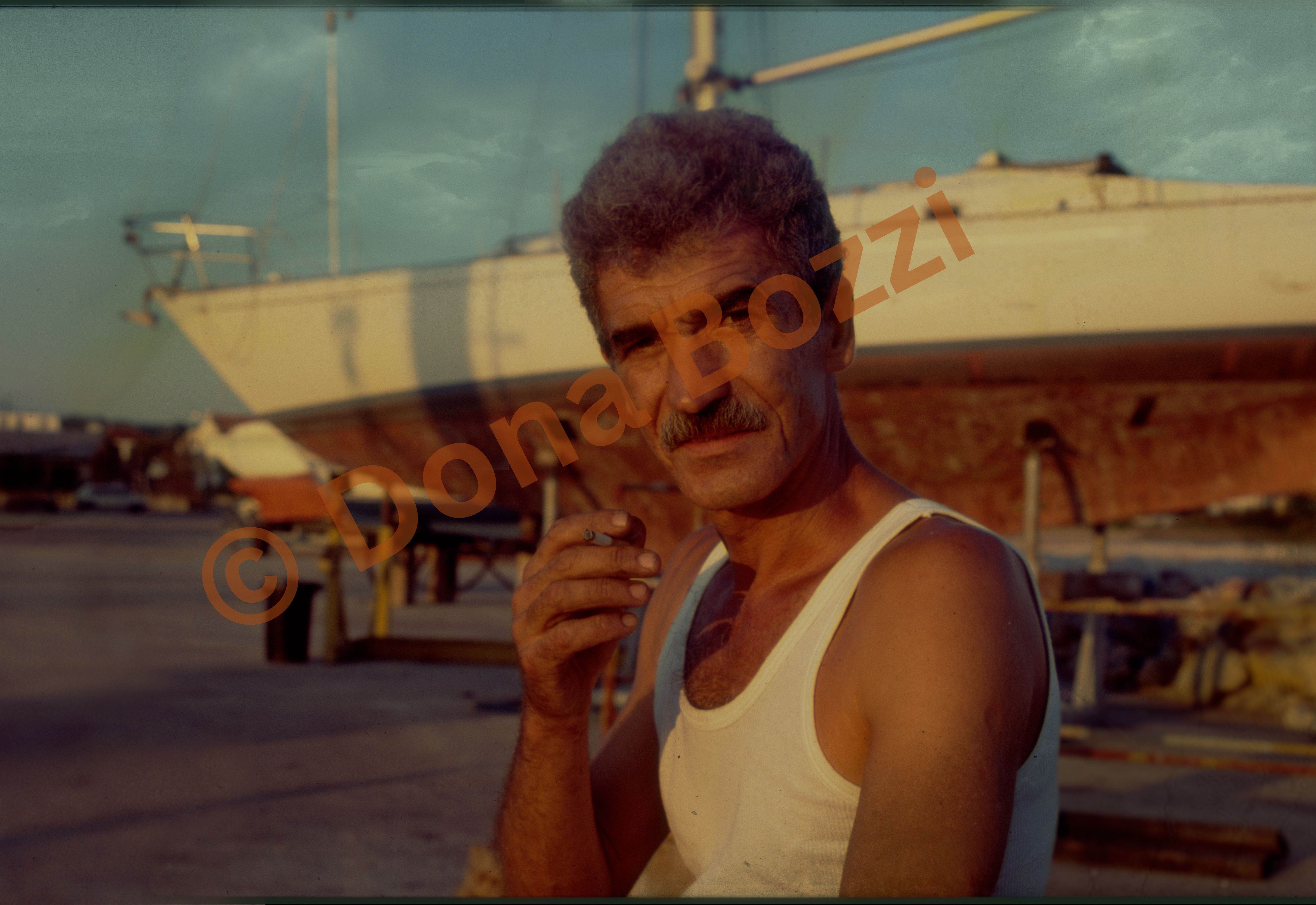
Dakovo, Croatia, May 7 1992. The number of Bosniak refugees in Croatia reached around 16,500 in March 1992.This influx created a significant humanitarian and economic burden on Croatia.Unspecified village in Northern Bosnia,May 8 1992.A Bosniak woman tending her flockUnspecified village in Northern Bosnia,May 8 1992,a Bosniak woman tending her flock.Zenica,Bosnia,May 8 1992,a Bosniak woman making bread in a makeshift oven.Split, Croatia,May 20 1992. In the port,a man is resting on the dock by an old vessel
Split,Croatia,May 20 1992. On the coastal city, people kept going about their daily business in spite of the war..
Split, Croatia,May 20 1992.In the coastal city, people kept going about their business in spite of the war.
Split,Croatia,May 20 1992.In the coastal city,people kept going about their daily business in spite of the war.Split,Croatia,May 20 1992.In the coastal city, people kept going about their daily business in spite of the war.
Split, Croatia,May 20 1992.In the coastal town, people kept going about their daily business in spite of the war.
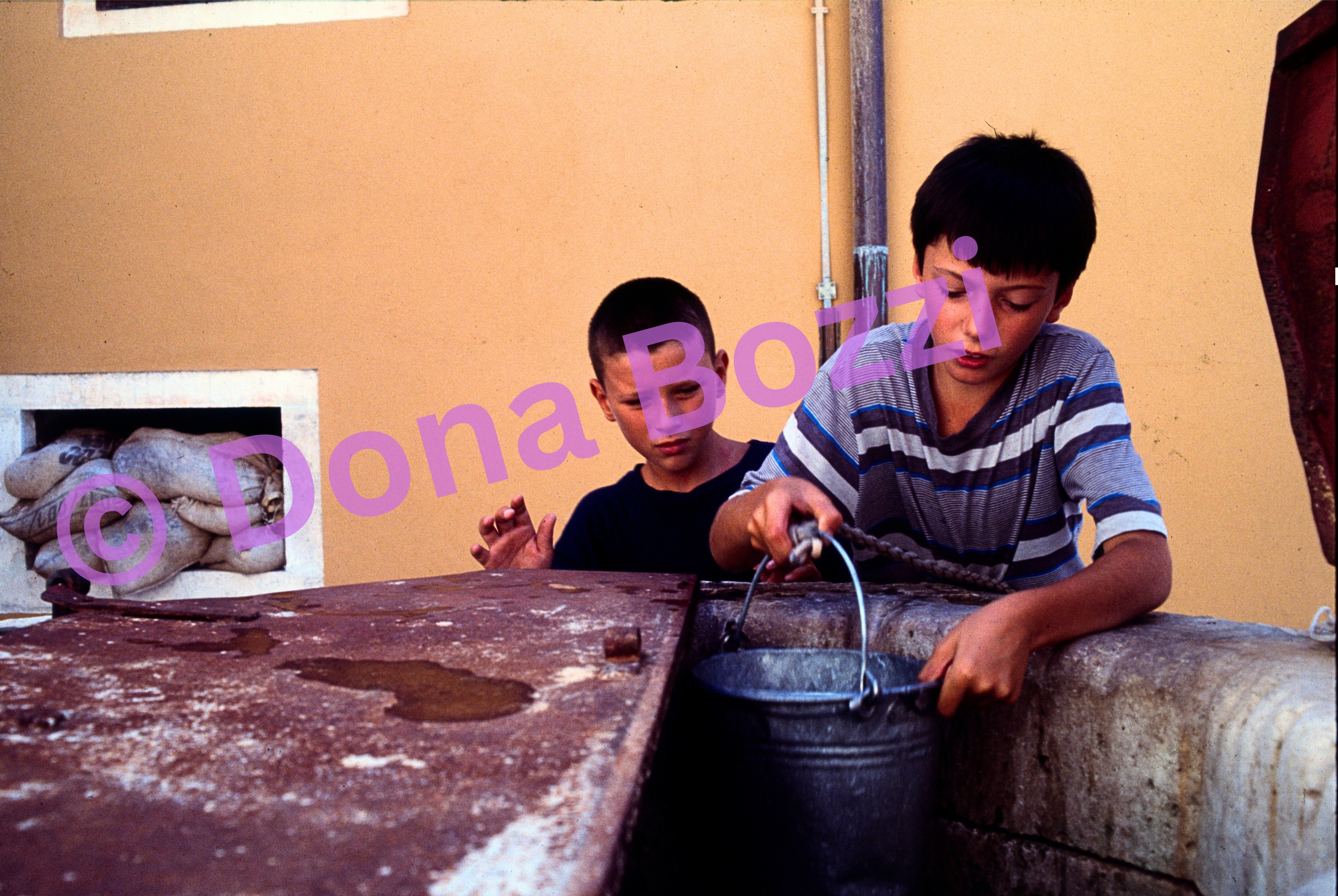
May 21 2021.In Zadar,on the mediterranean coast,Croatian boys draw water from a well due to the scarcity of water.
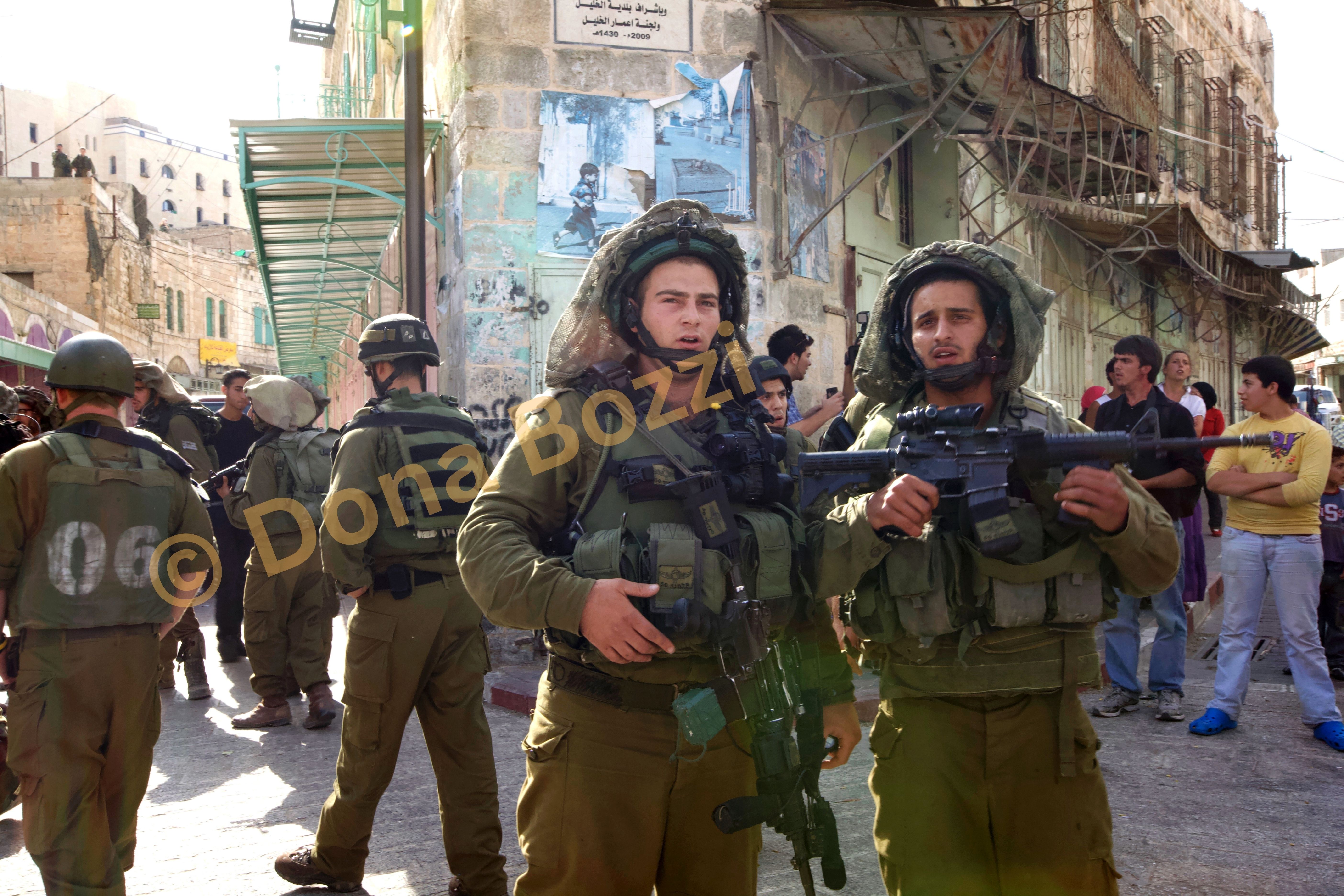
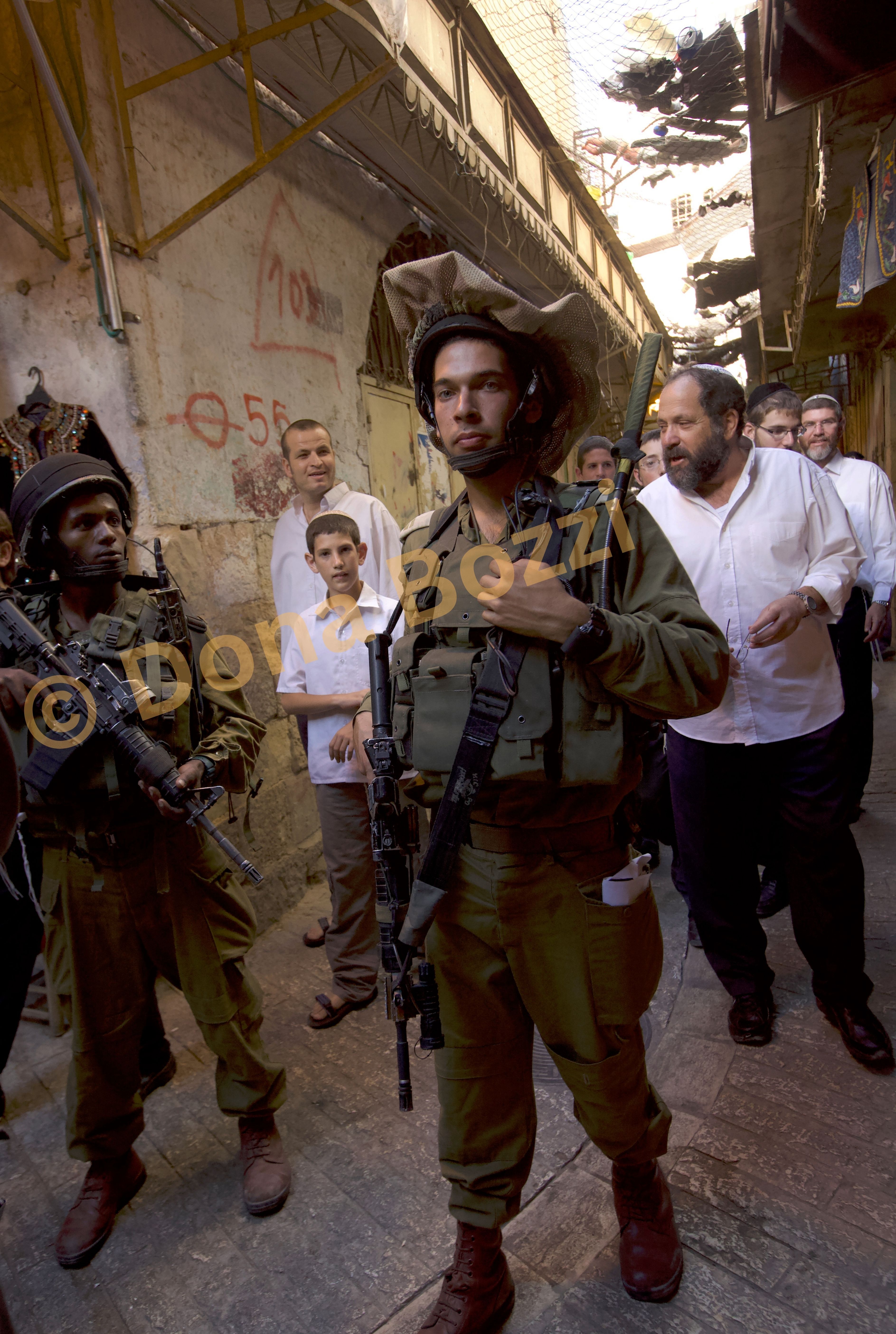
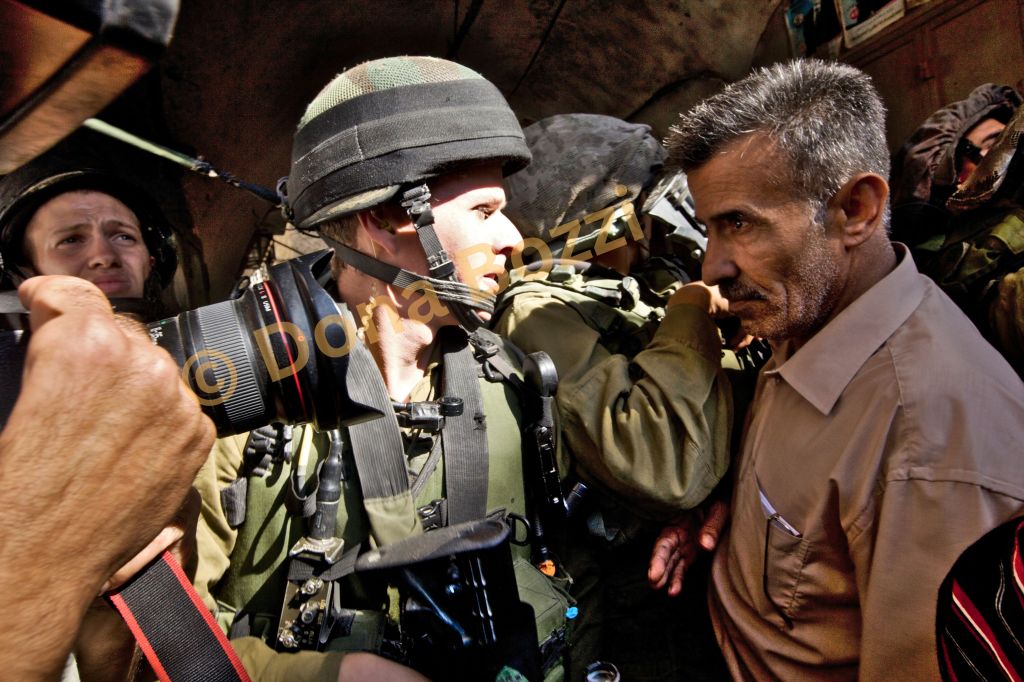
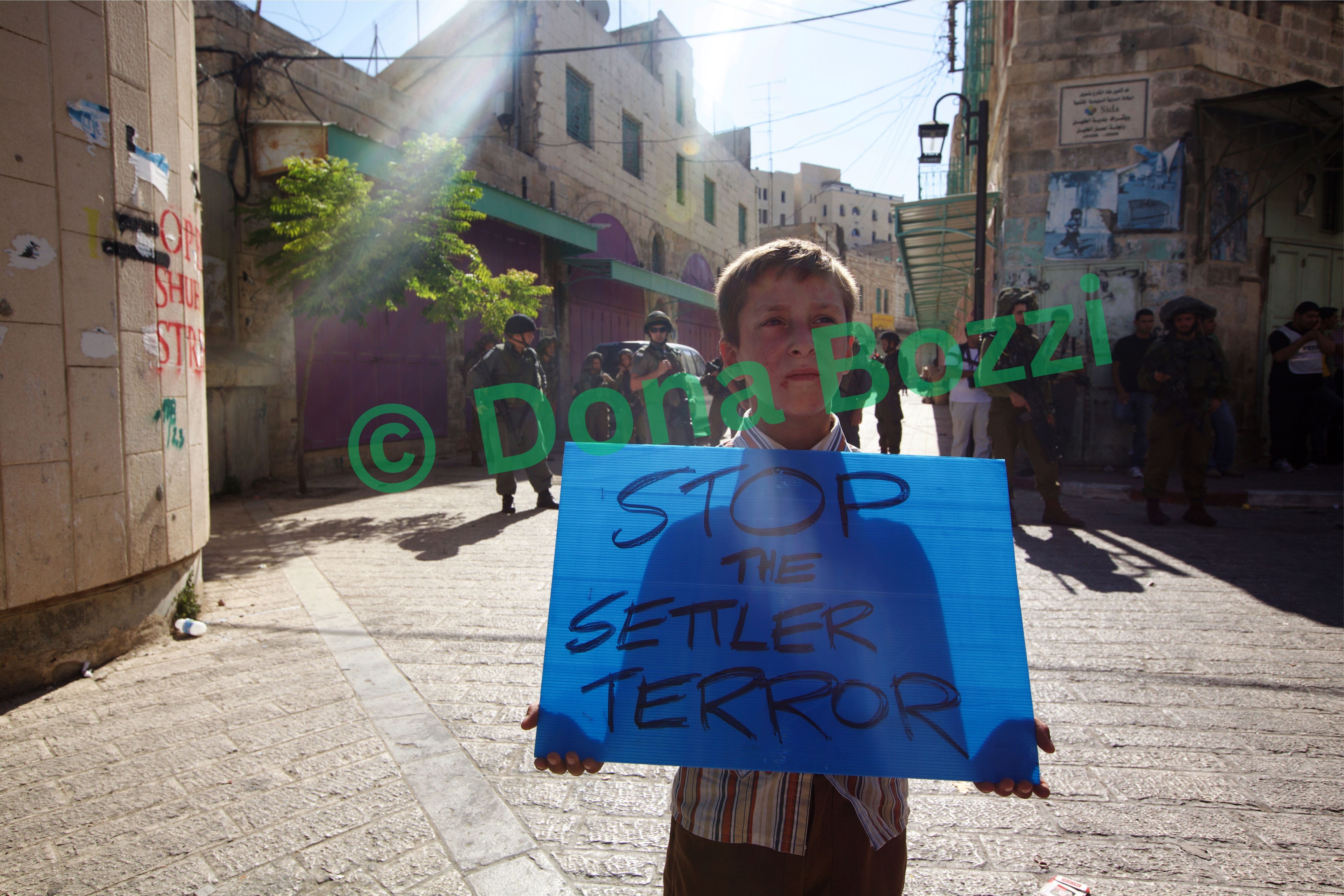
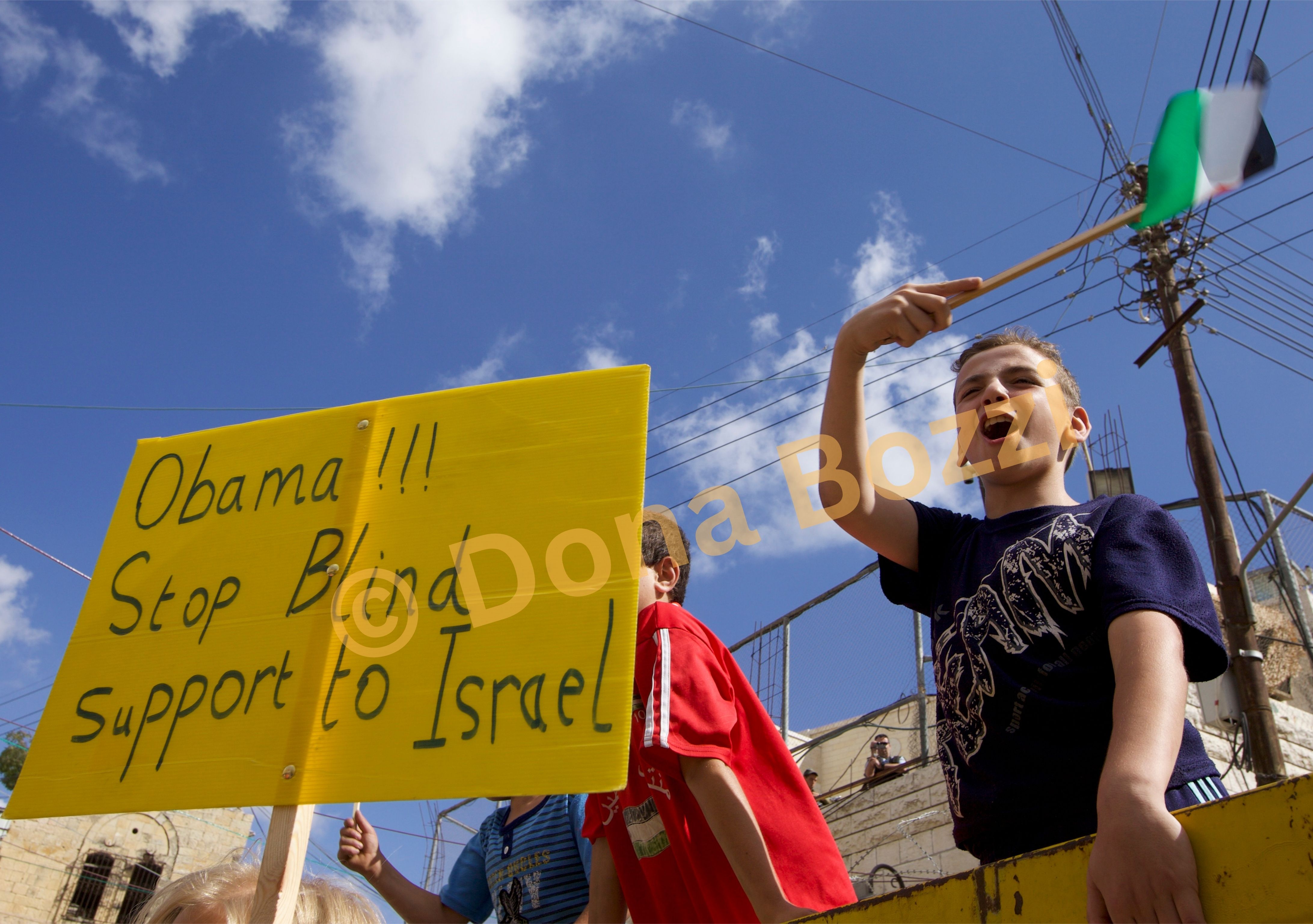
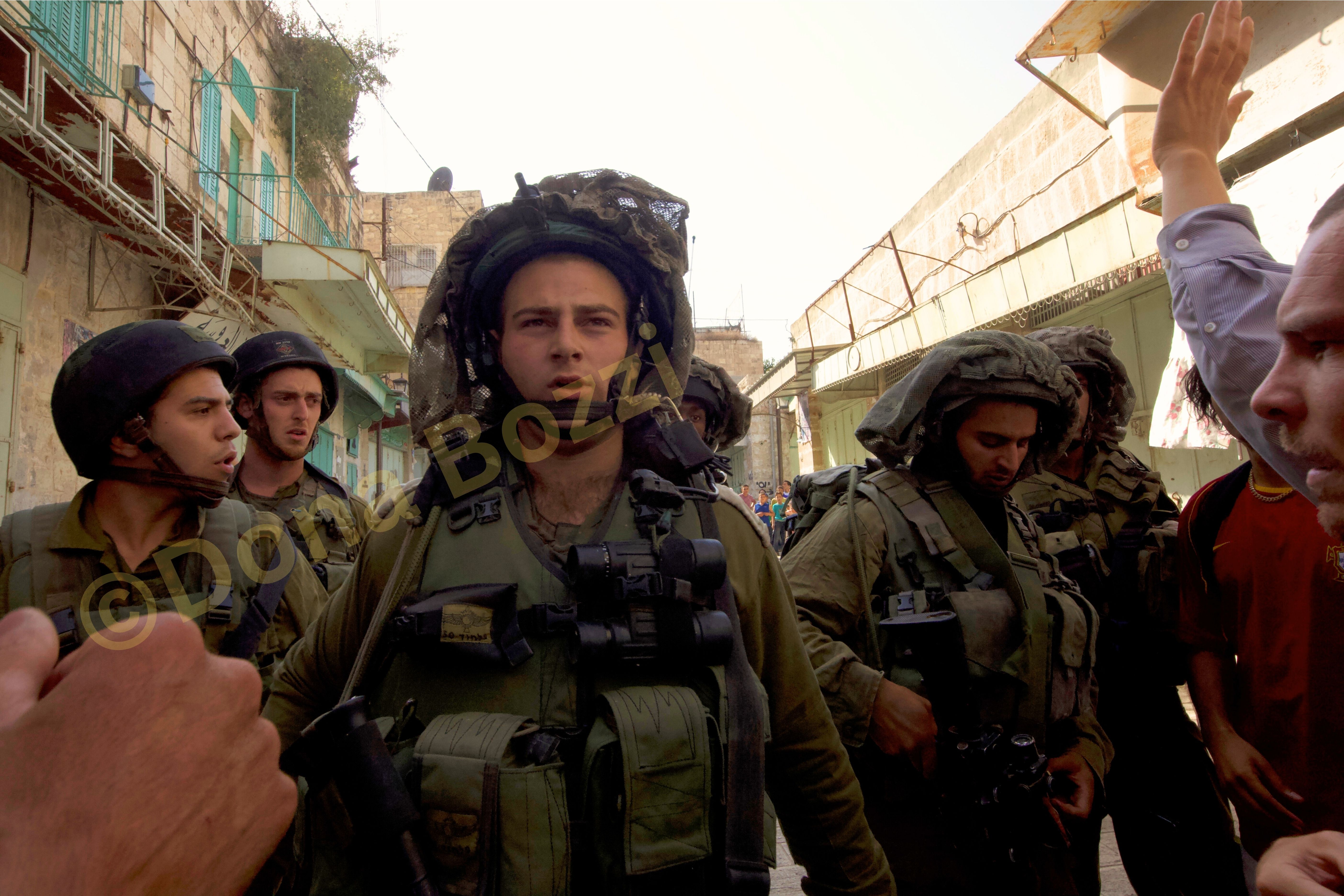
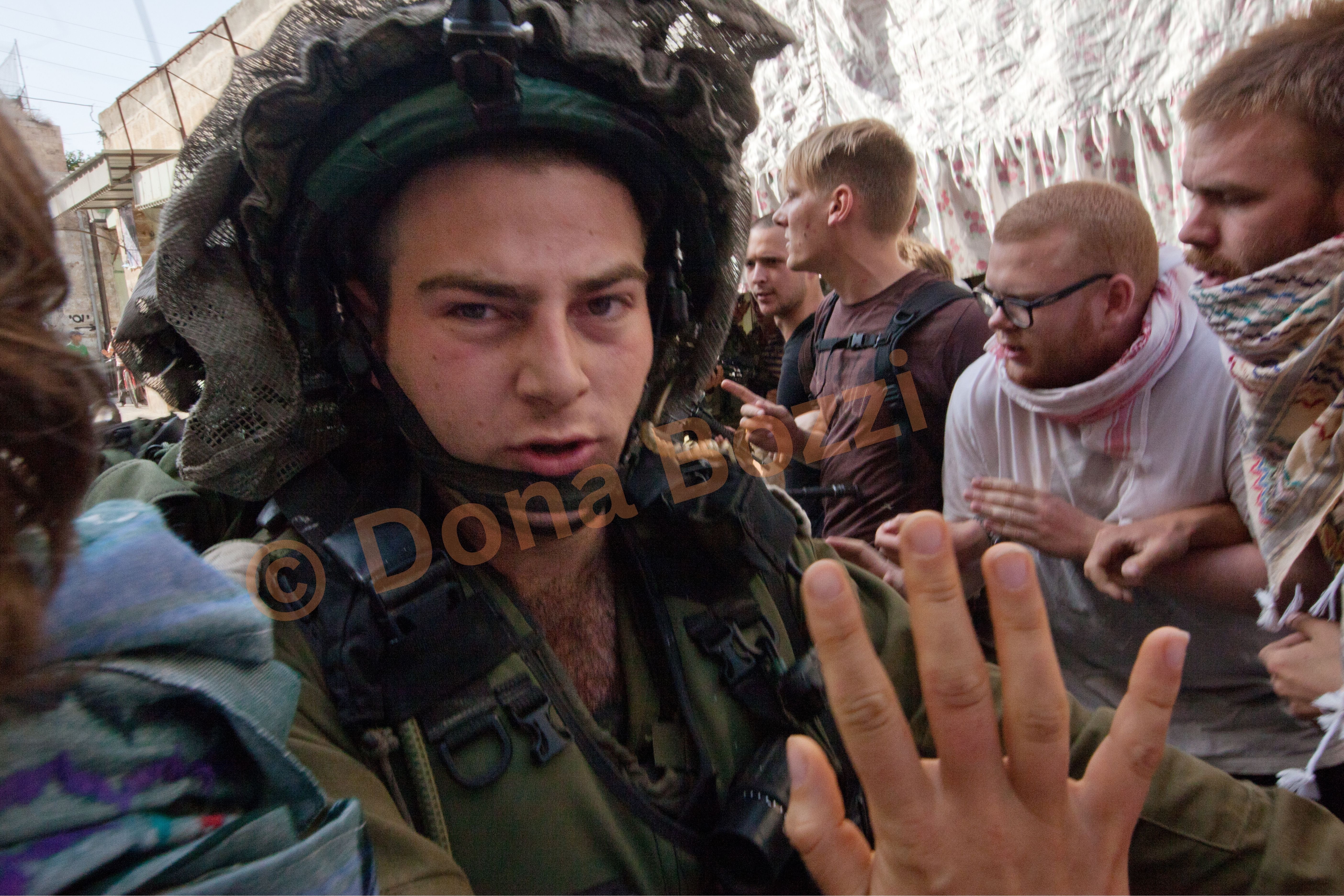
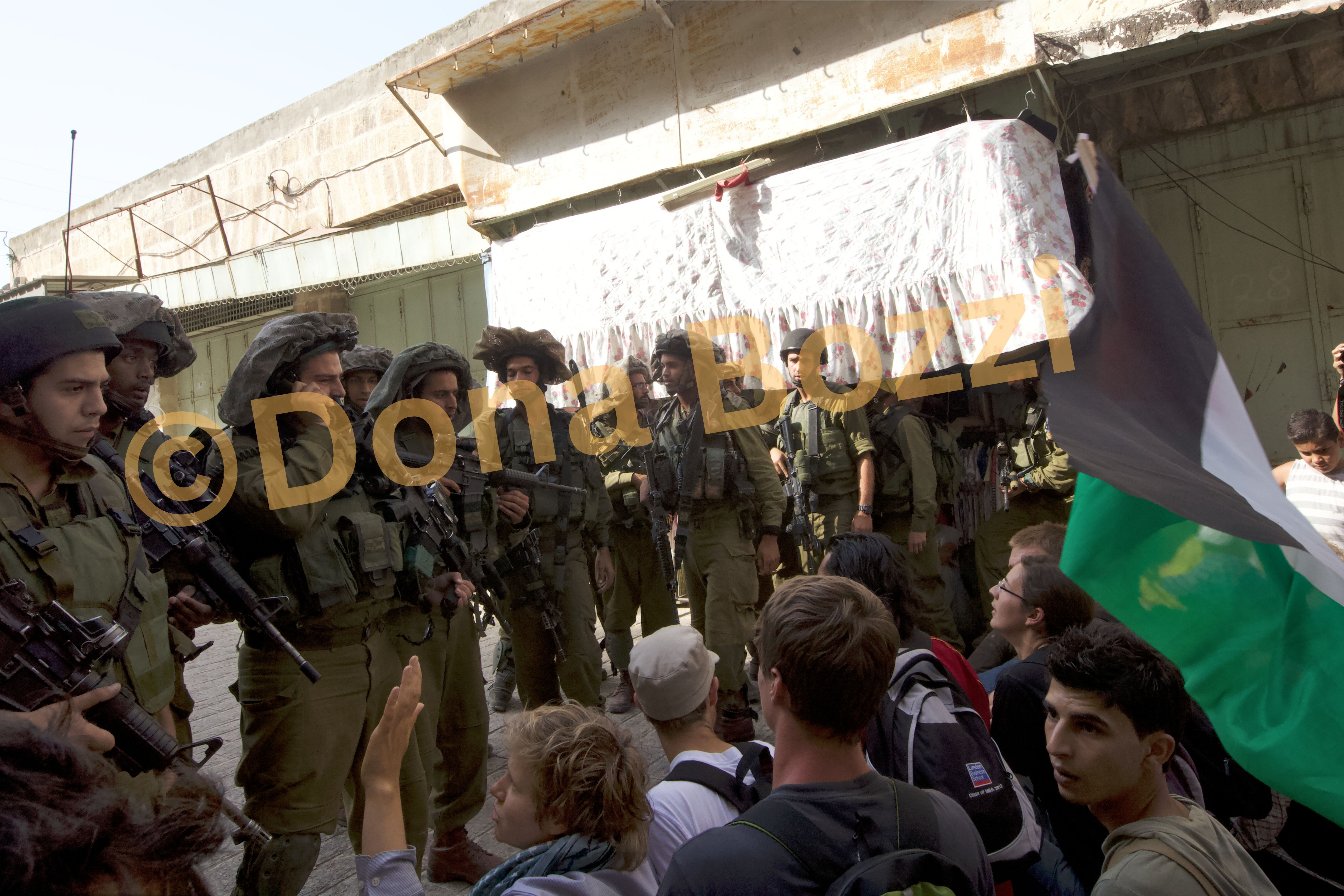
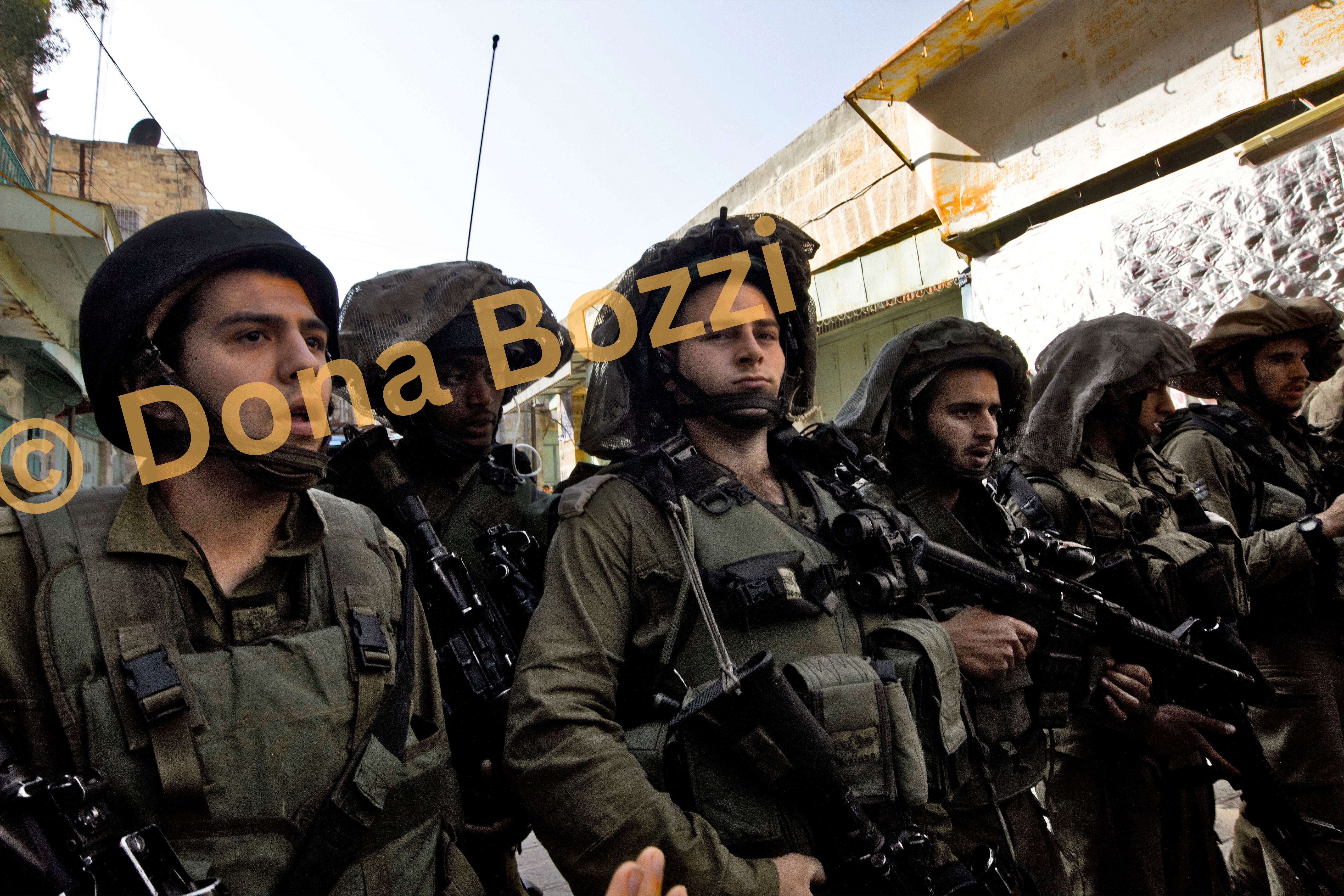
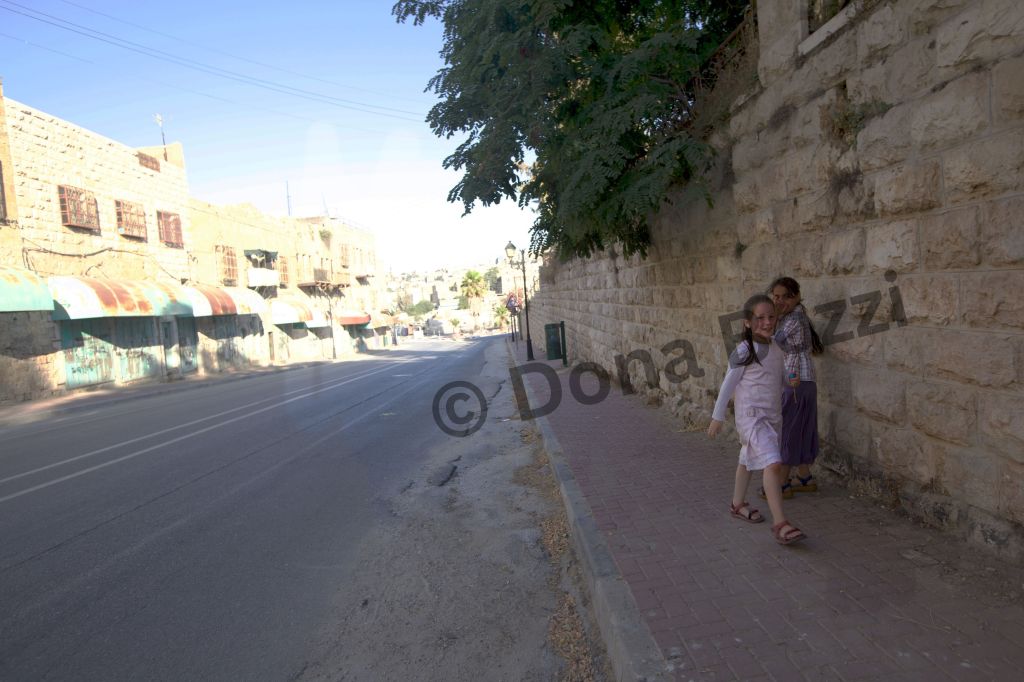
Hebron, West Bank,July 10 2010.IDF (Israeli Defence Forces) take position at anti occupation demonstration.Hebron,June 26 2010. In the Beit Romano settlement in the old city Israeli settlers walk through a street where stores are owned by Arab residents,and the upper floors are occupied by settlersHebron, July 3 2010. A Palestinian man face to face with a Israeli military at anti occupation demonstration.Hebron,West Bank, July 3 2010, Palestinian boy holding a sign against occupation as IDF looks on.On In the Beit Romano settlement,in the old town of Hebron, weekly demonstrations were attended by international protesters and residents as well.Hebron, July 10 2010, international activists facing IDF in anti occupation demonstration
Hebron, July 10 2010, international activists face IDF at demonstration against occupation
Hebron,Beit Romano Settlement,July 10 2010, IDF takes position during a raid in the occupied old town.
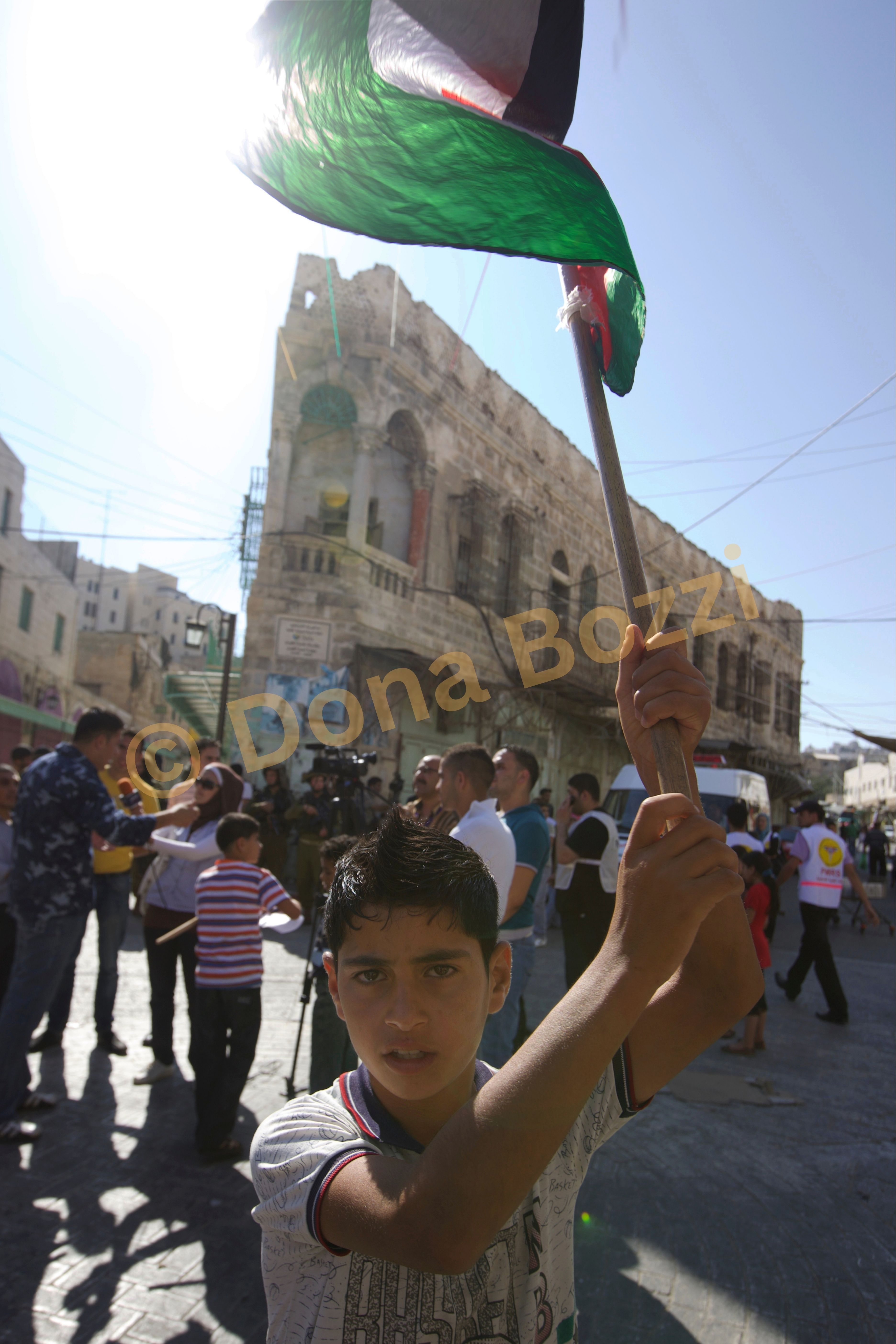
Hebron, West Bank, July 3 2010, Palestinian boy at demonstration against occupation
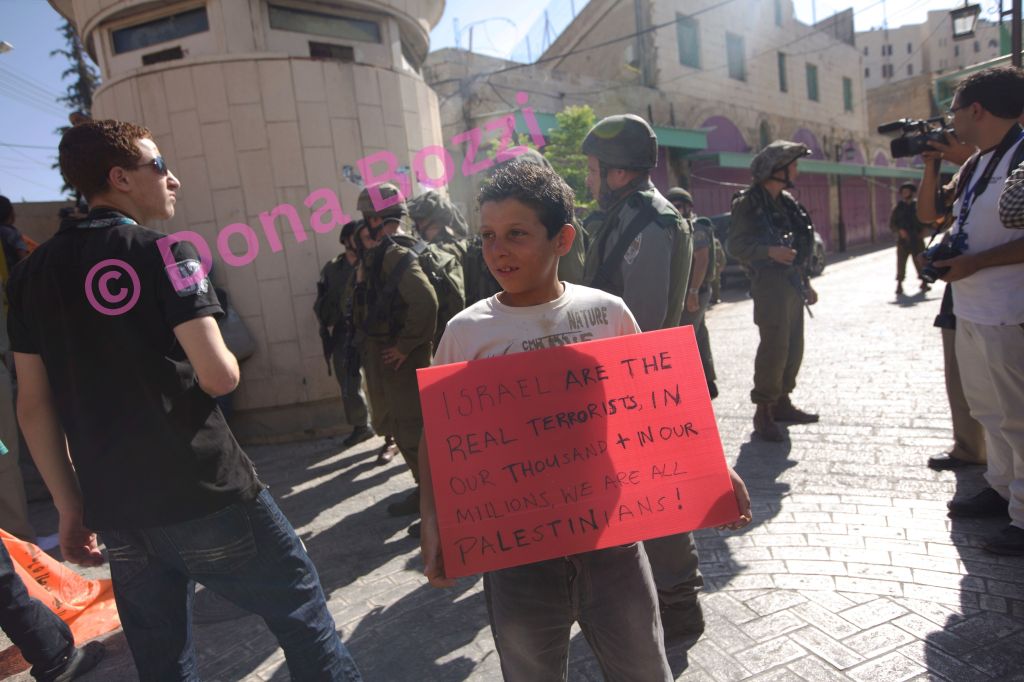
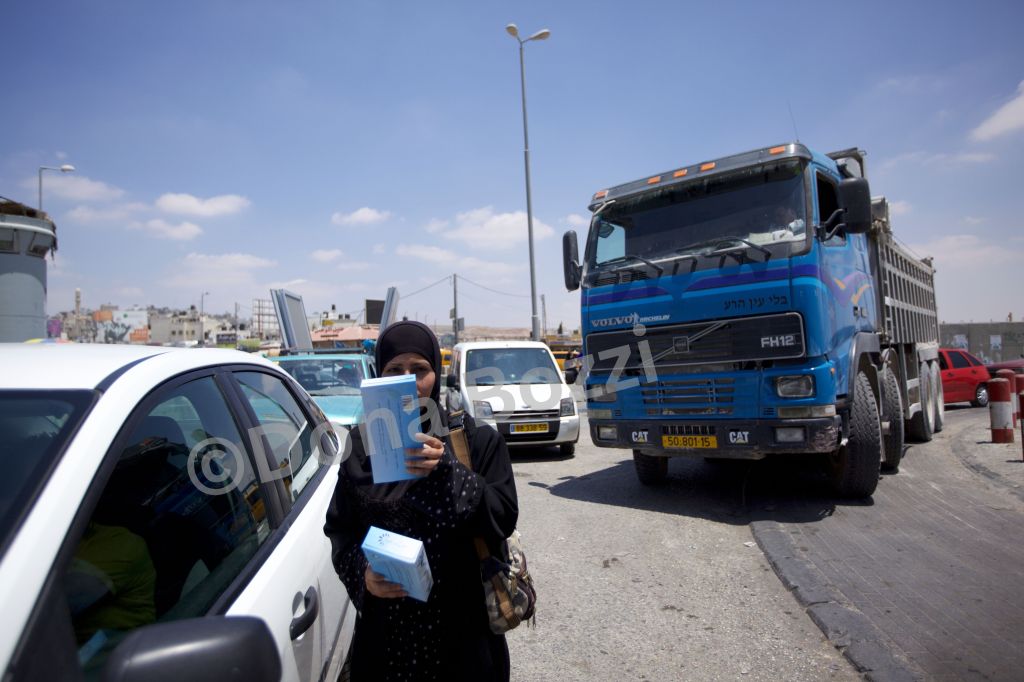
Kalandia checkpoint, entry to Jerusalem, July 9 2009,Palestinian boy trying to sell merchandise to vehicles entering IsraelHebron,West Bank,July 10 2010, Palestinian residents and international activists facing IDF at anti occupation demonstrationHebron,West Bank,July 3 2010, Palestinian boy holding a sign against occupation as IDF looks on.
Hebron,West Bank,July 10 2010, Palestinian boy holding a sign against occupation at a weekly demonstration.
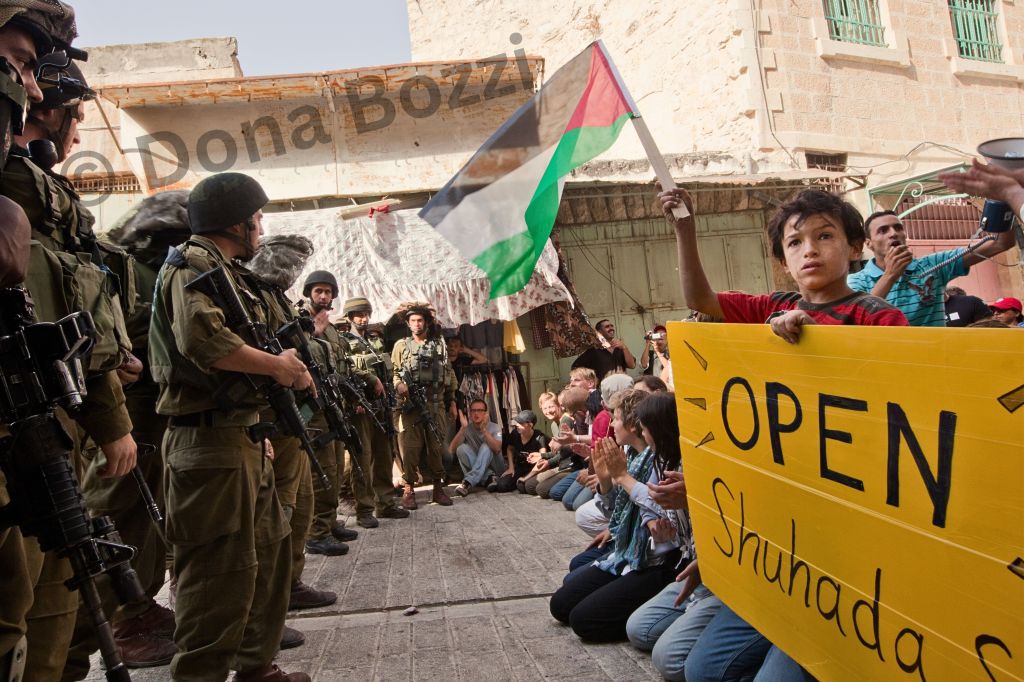
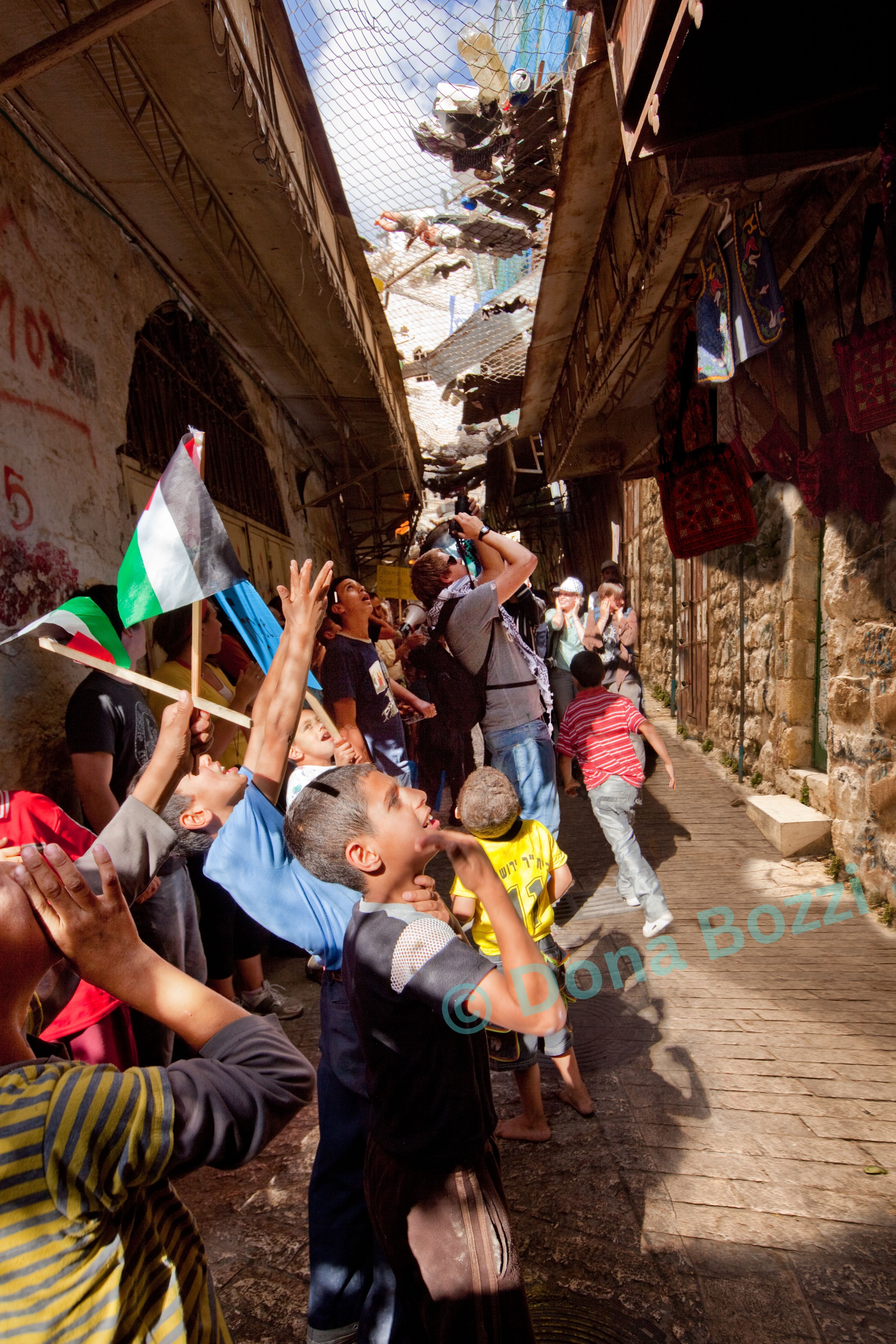
Hebron, Beit Romano settlement,Palestinian youth shouting at Israeli settlers while holding the sign: “Open” (Shouhada street).From a window, they are showering the protesters with dirty water,
Hebron, June 26 2010. Paestinian residents shouting at Israeli settlers who threw garbage into a Arab street.A net was placed to hold the garbage.The settlers occupy the upper floors while Arab residents own the stores on the street.
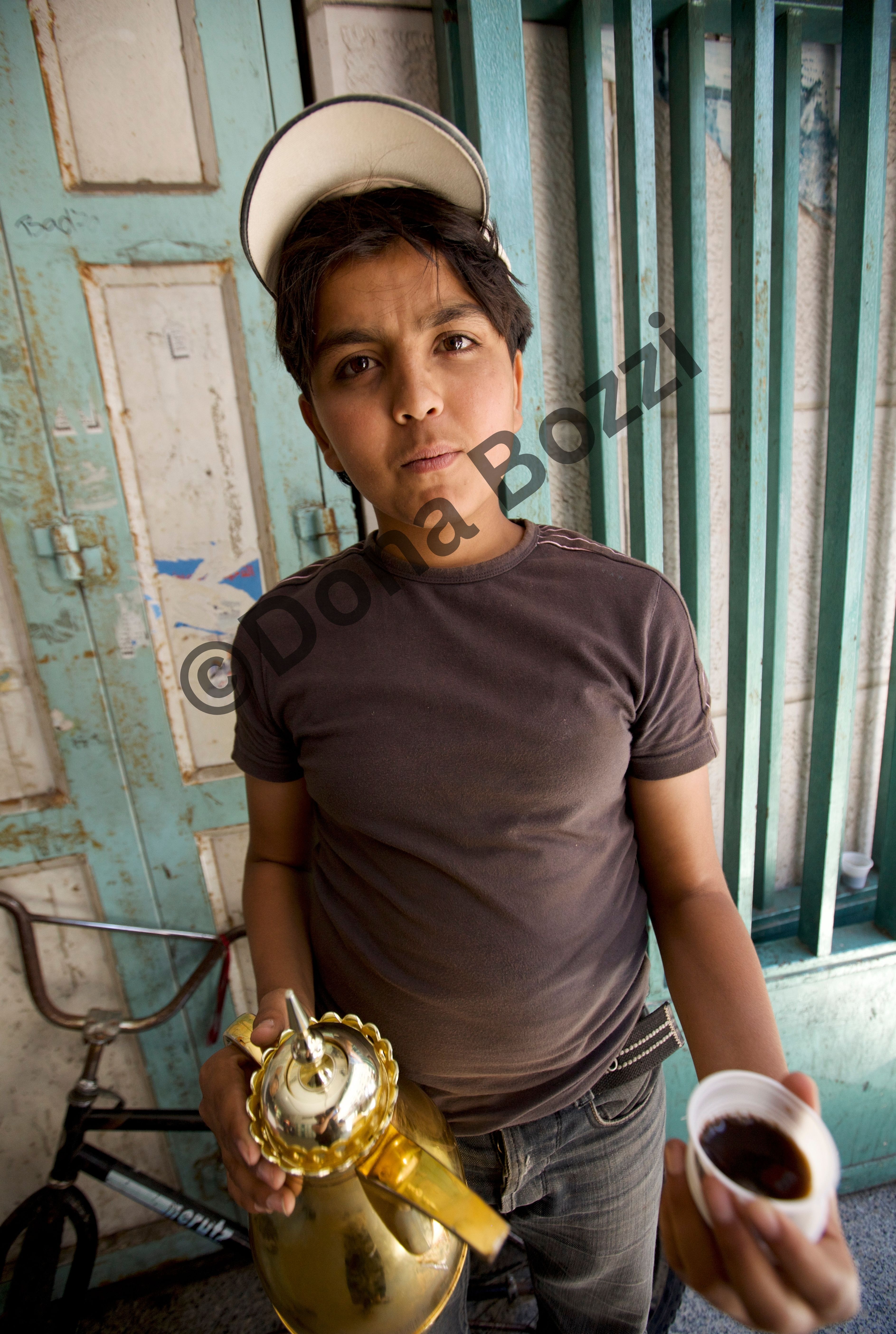
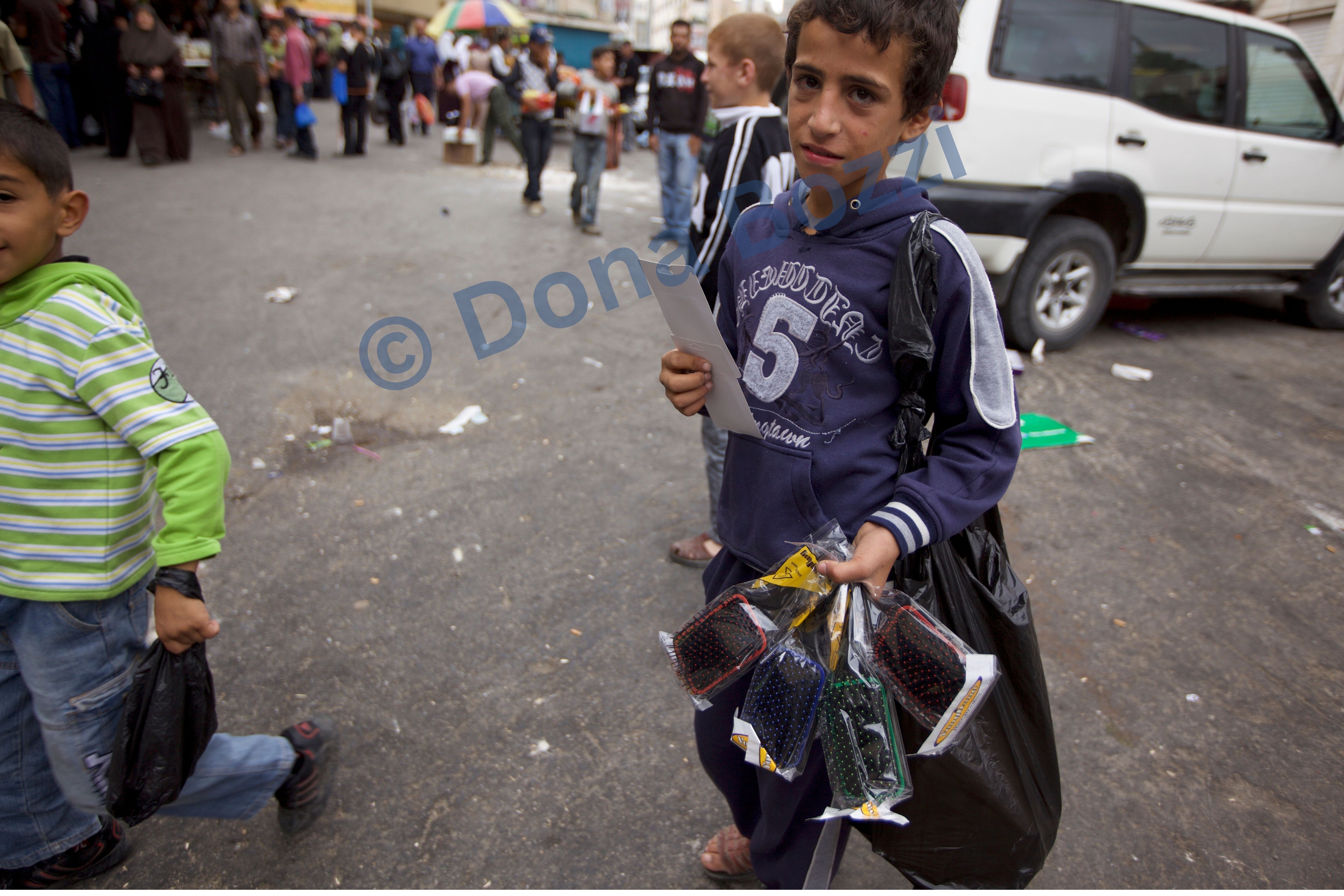
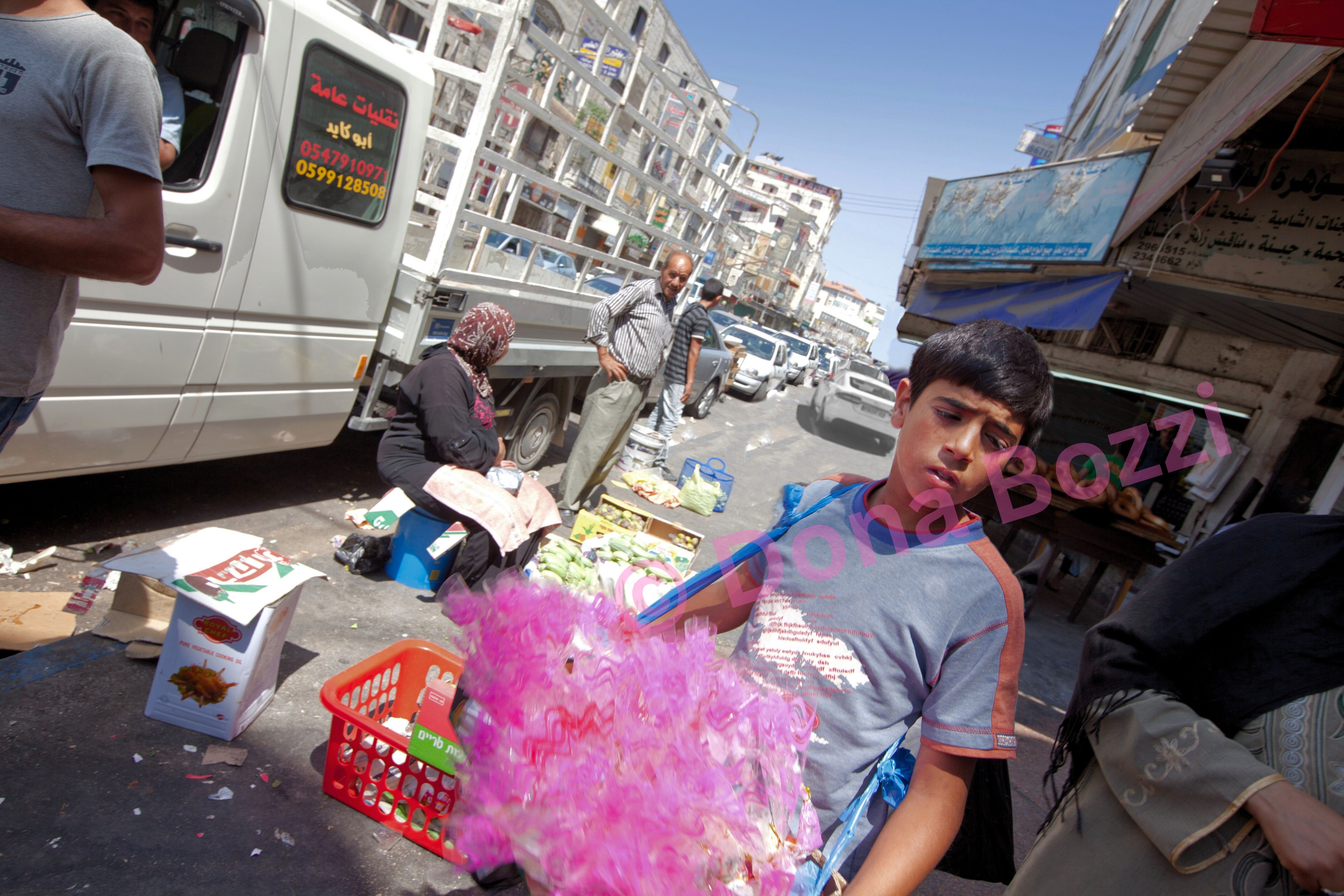
Ramallah, West Bank, July 7 2009, Palestinian boy selling coffee
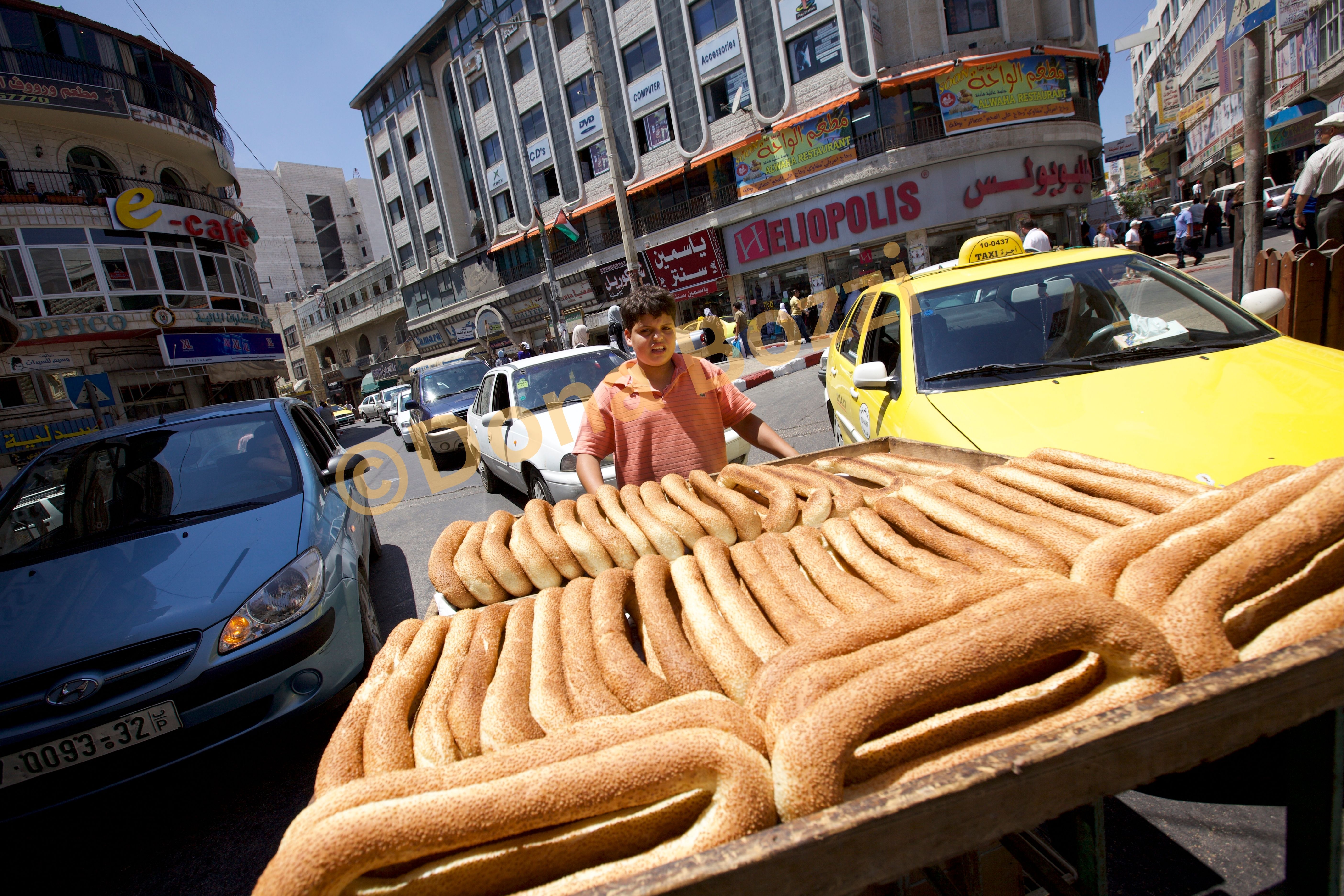
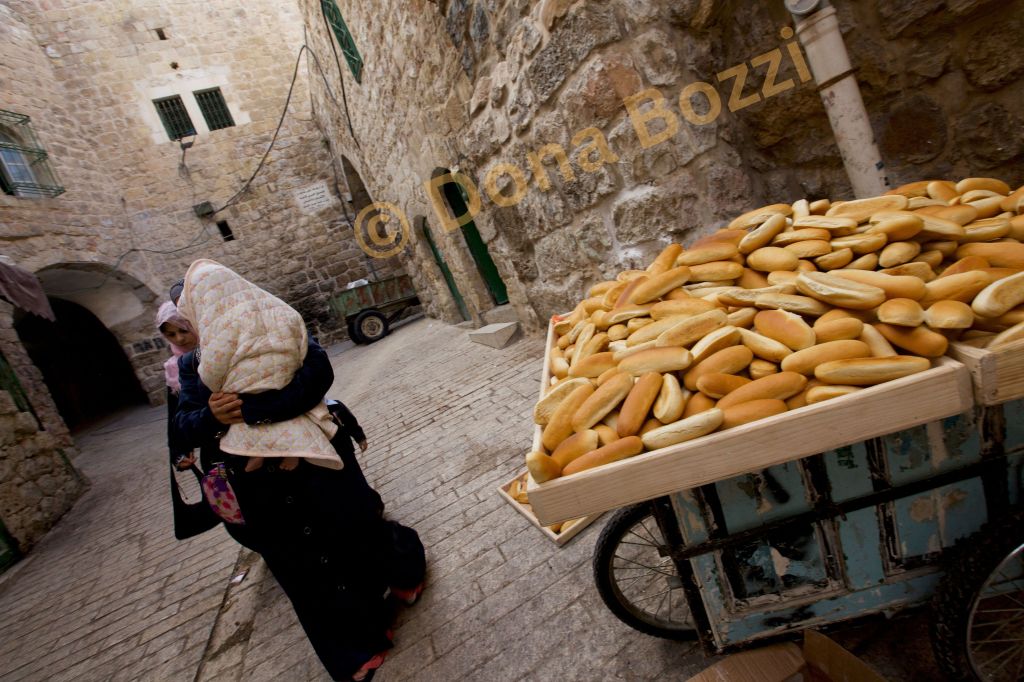
Ramallah,West Bank, July 7 2009, a Palestinian boy pushing his bread cart
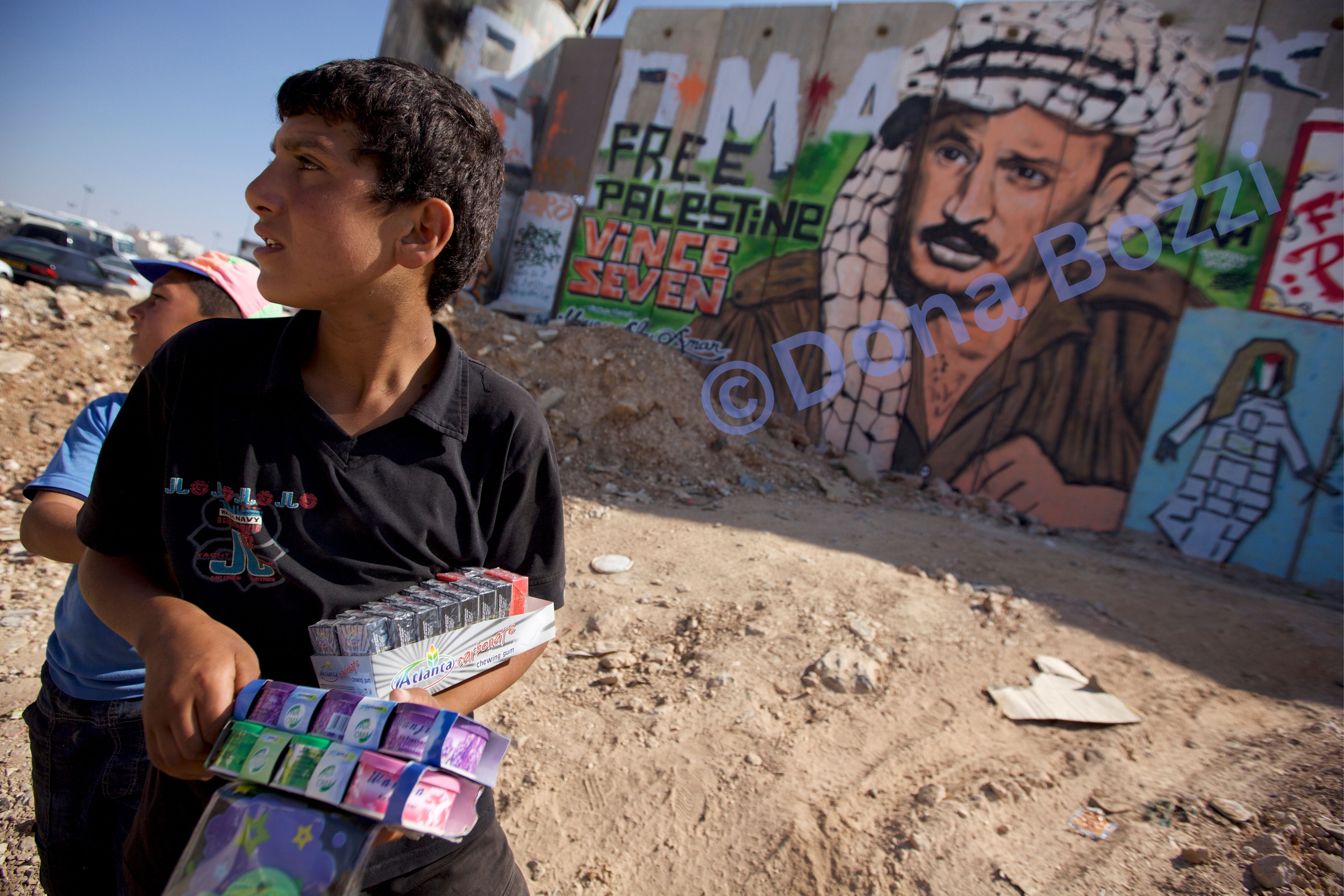
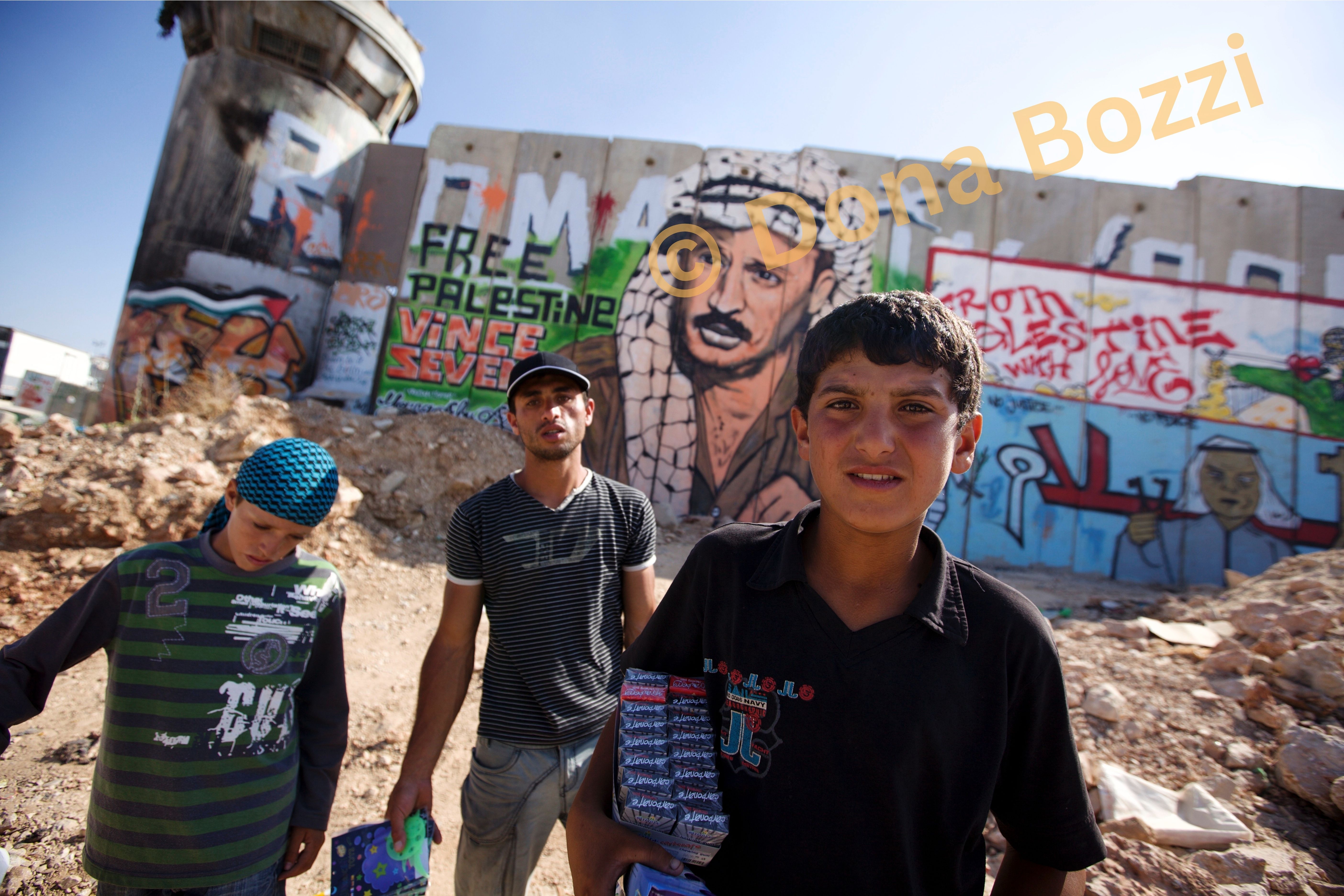
Kalandia checkpoint,West Bank, July 9 2009, Palestinian youth selling merchandise by the separation wall.
Kalandia checkpoint, entry to Jerusalem, July 9 2009, Palestinian youthsselling merchandise at the separation walll.
July 9 2009, Kalandia Checkpoint, Palestinian boy waiting for vehicles to sell items to West Bank residents entering East Jerusalem.
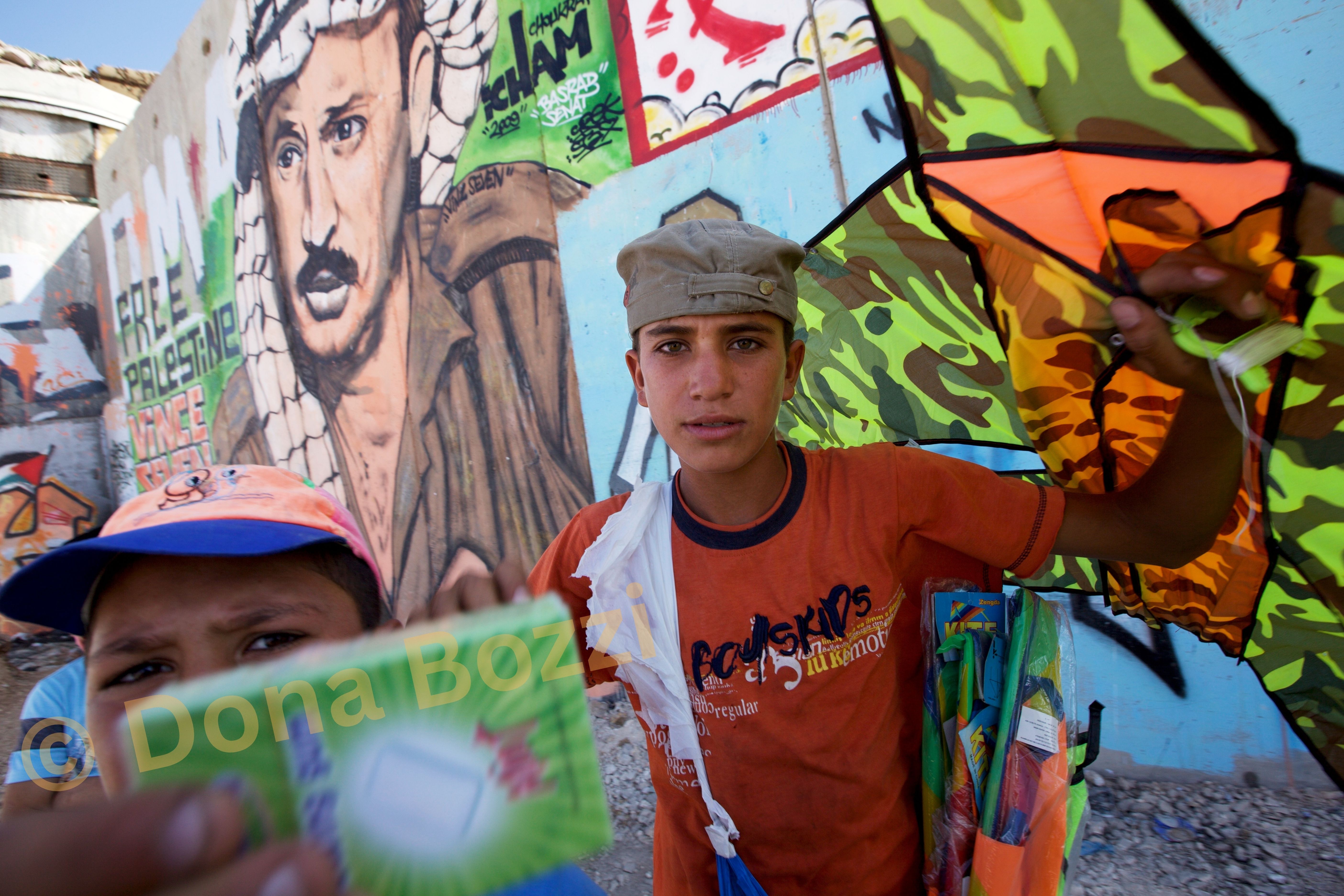
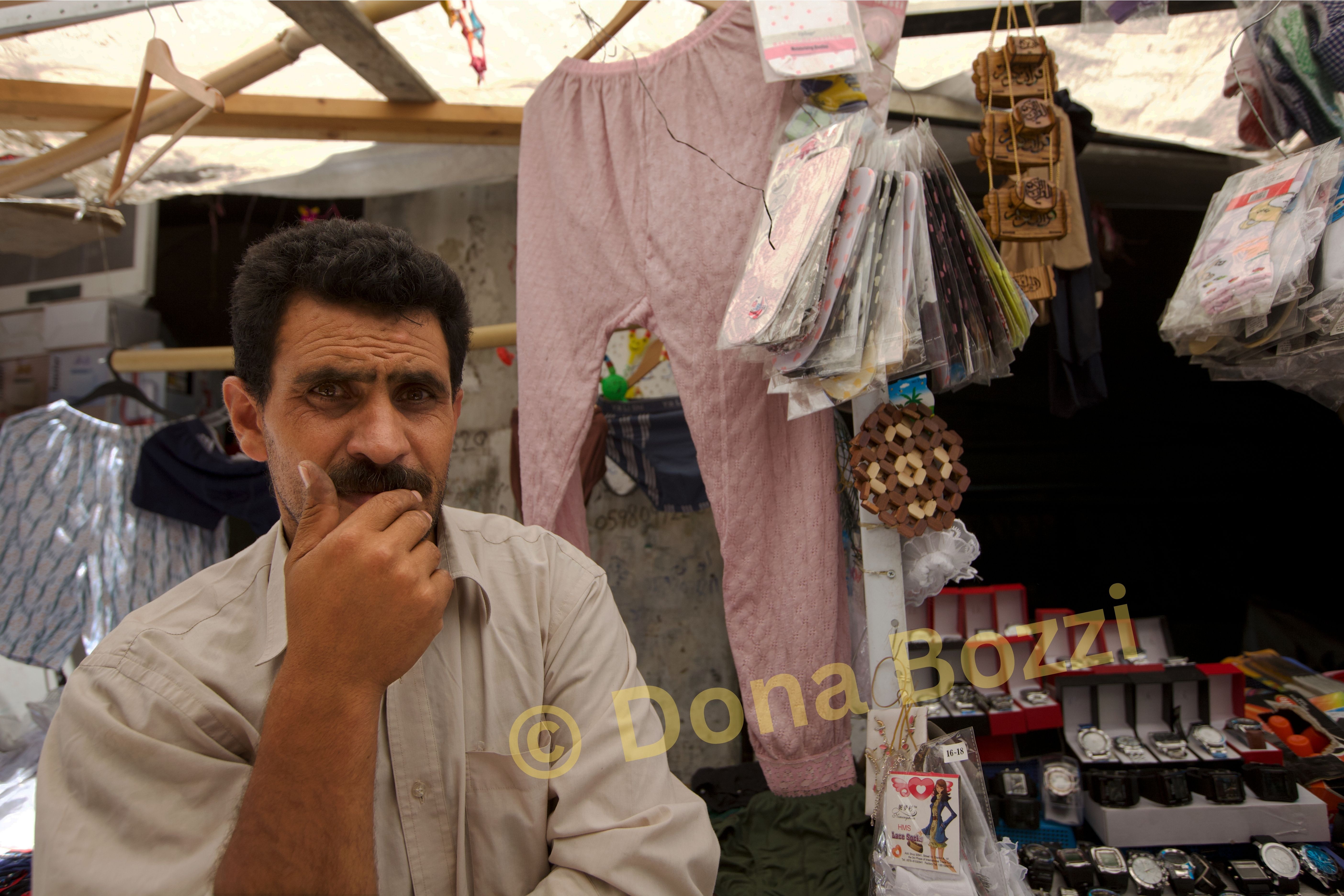
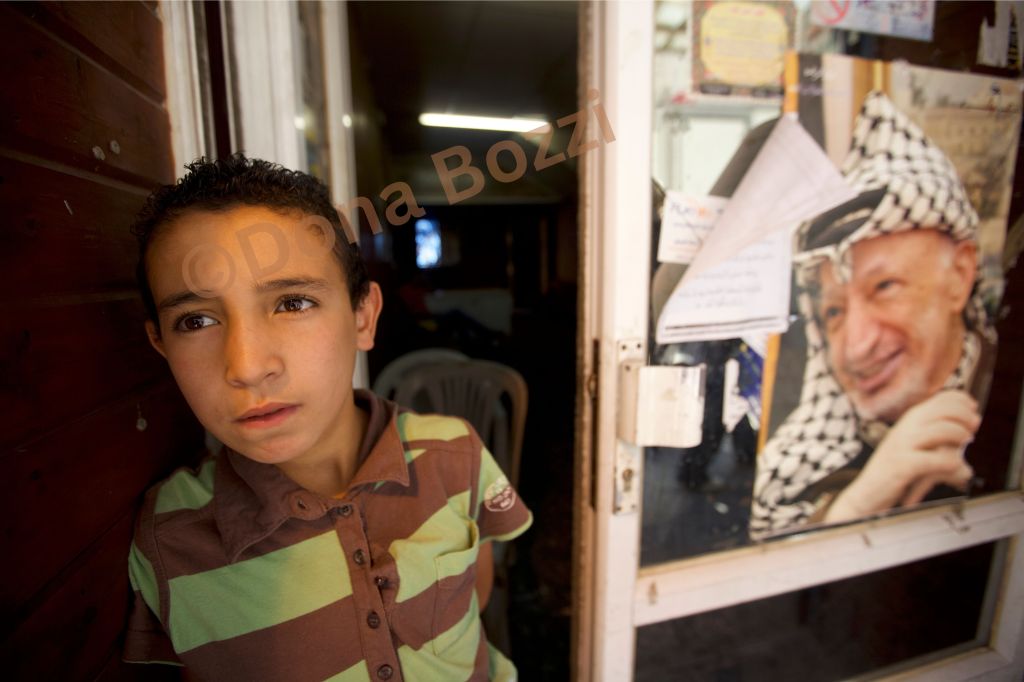
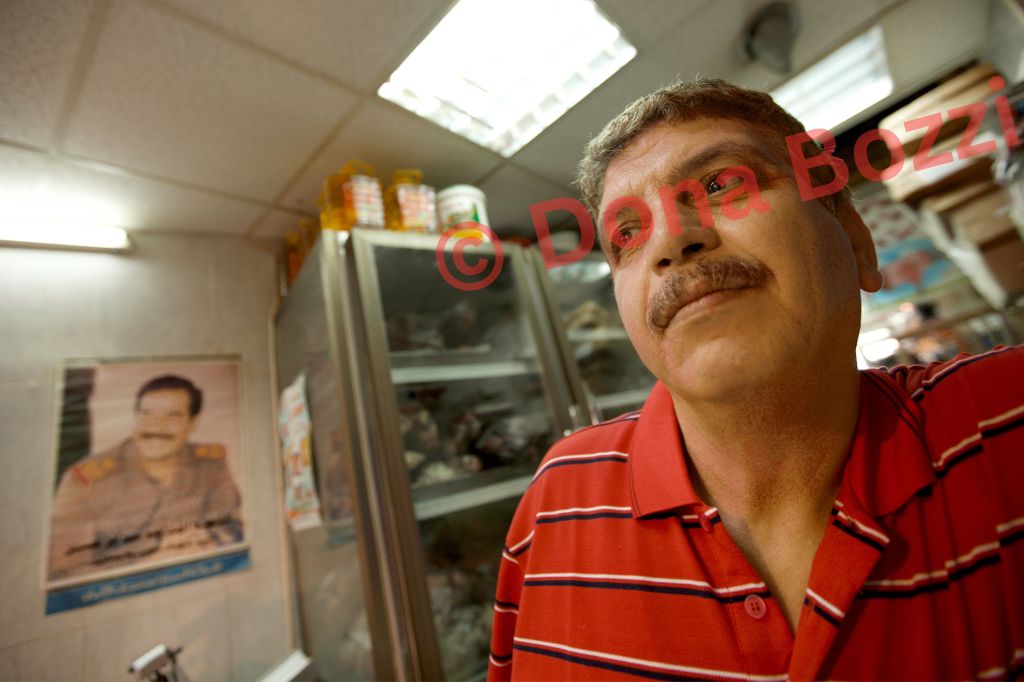
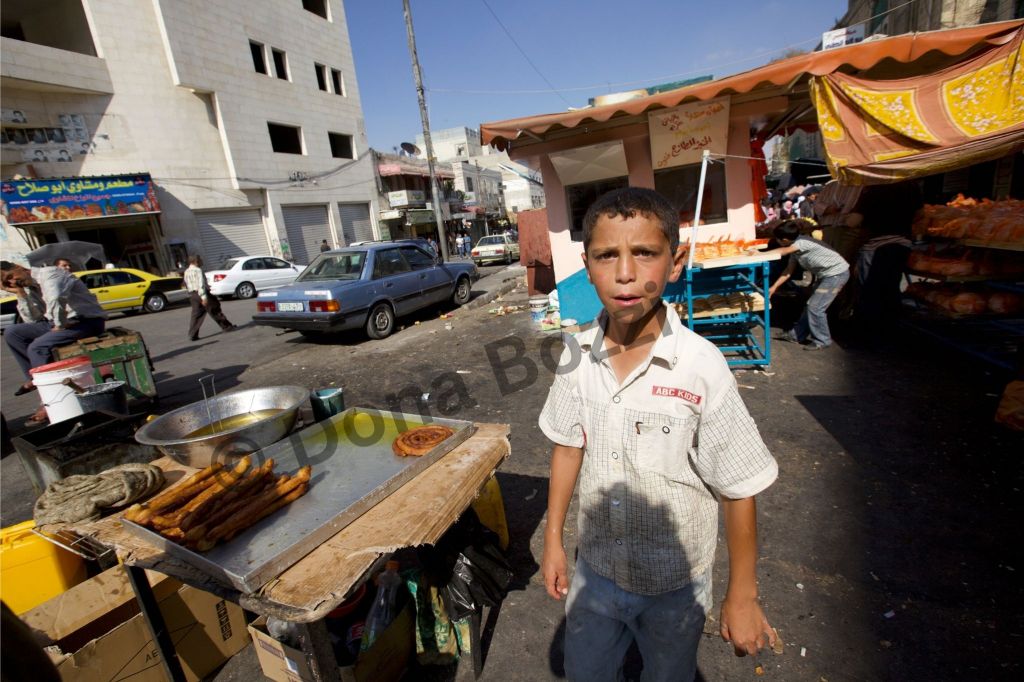
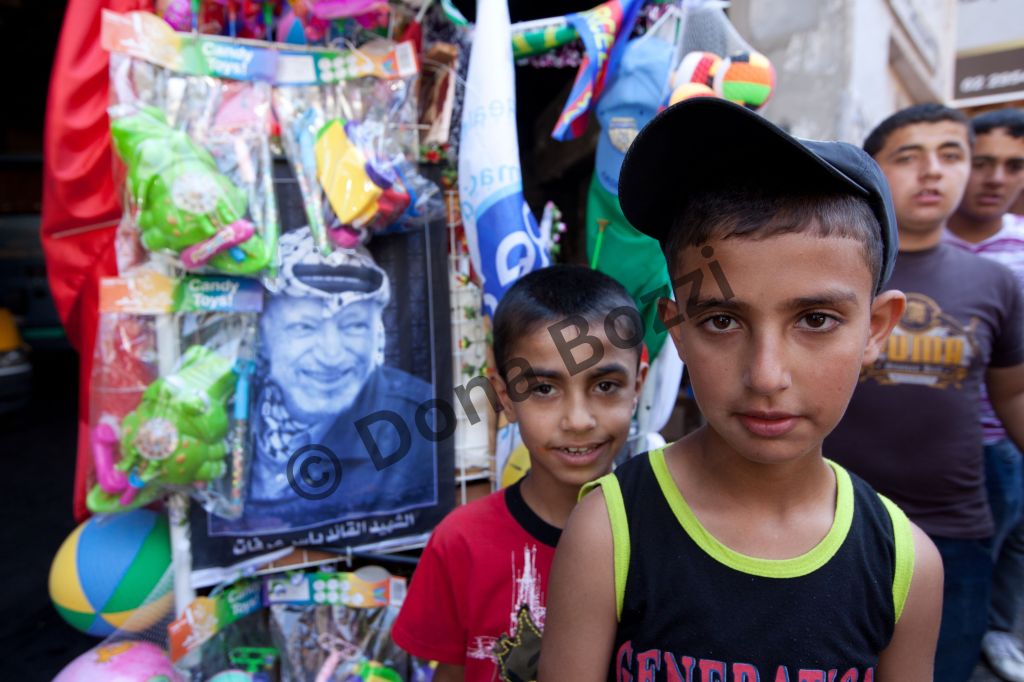
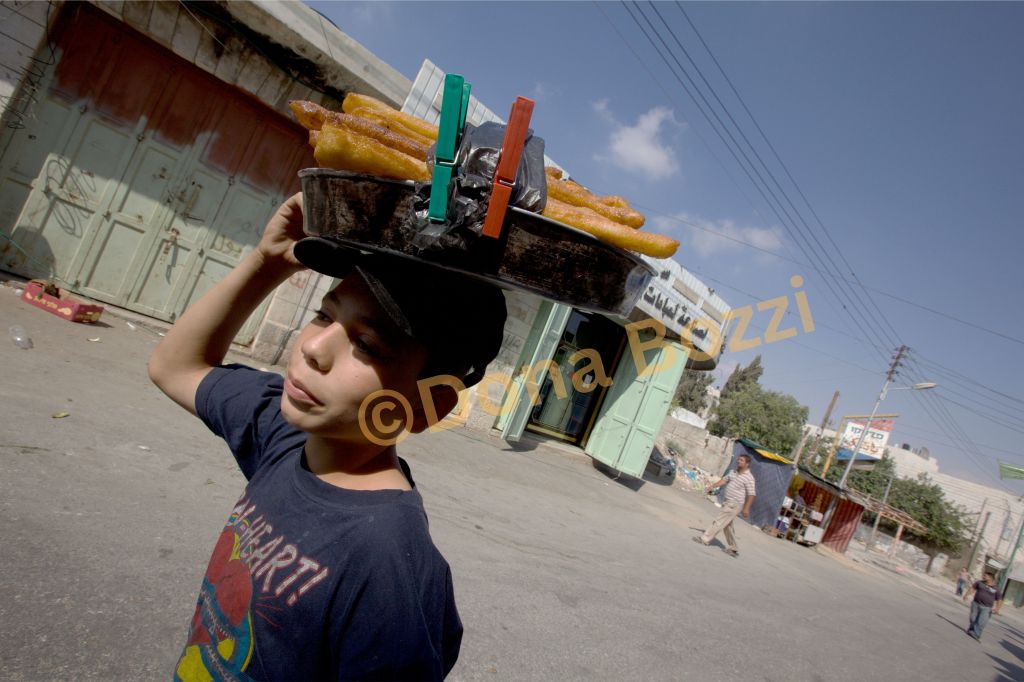
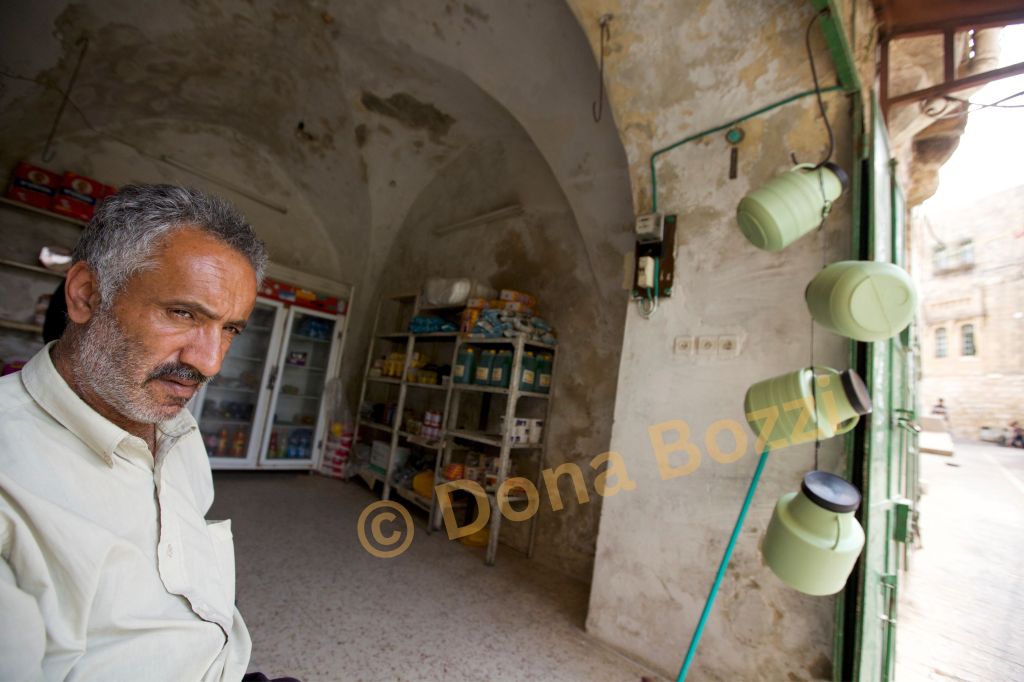
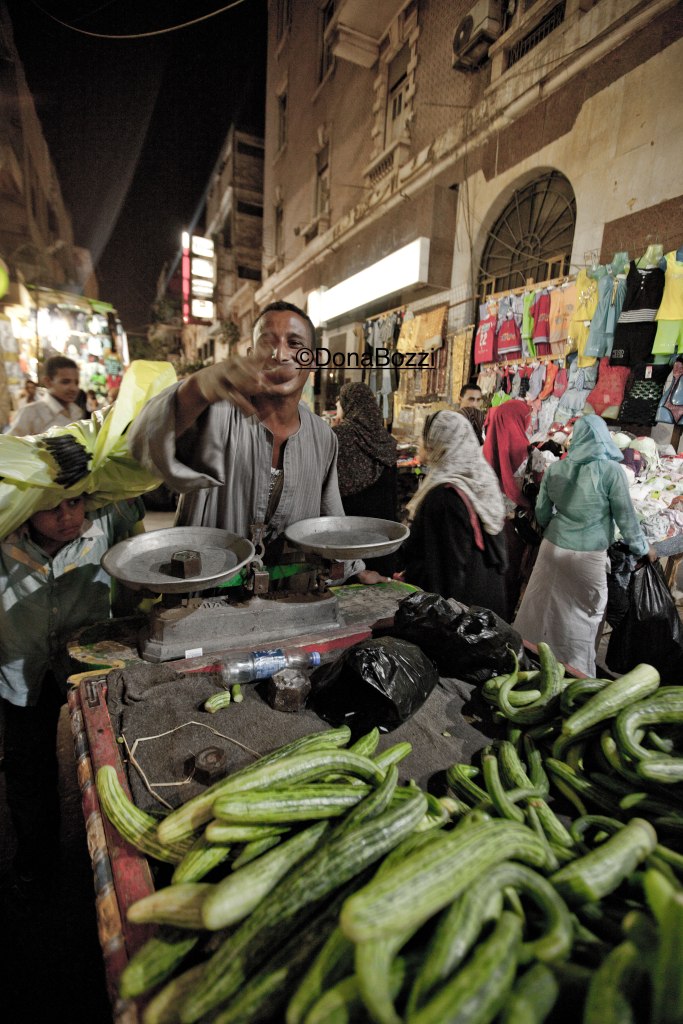
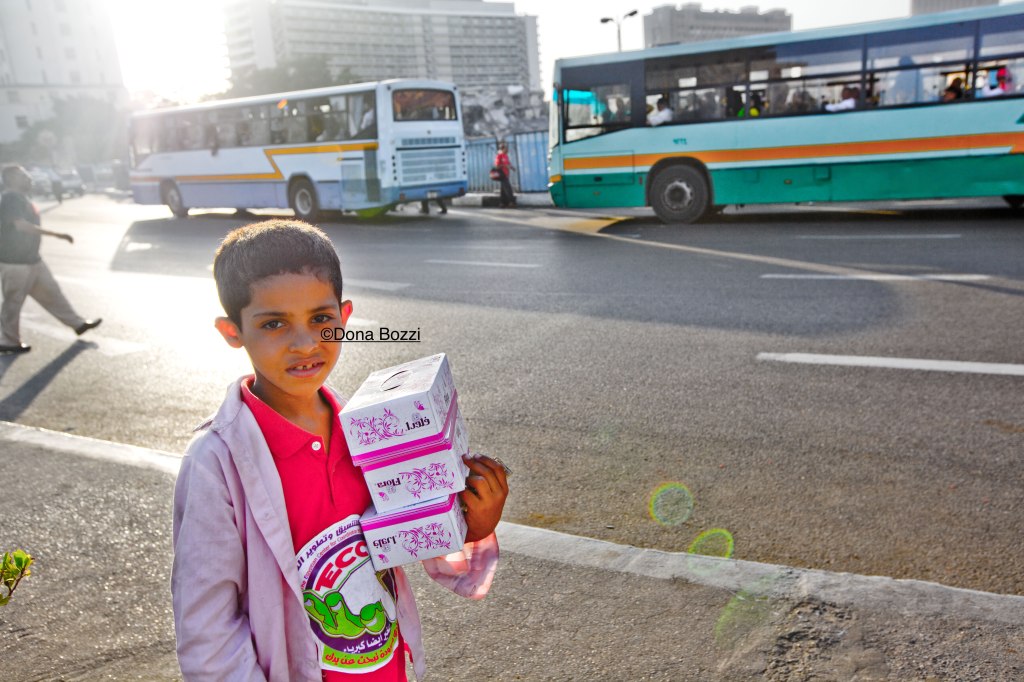
Kalandia checkpoint, entry to East Jerusalem,July 9 2009,the separation wallRamallah,West Bank,July 3 2010.Palestinian man at his market stall.Hebron,West Bank,June 26 2010,Palestinian boy selling merchandise at the market on the way to the Beit Romano settlement.Ramallah,West Bank, July 9 2010, Palestinian boy selling sweets on theHebron, West Bank,July 7 2009,Palestinian boy next to Arafat posterhebron, a Palestinian store owner.On the wall,a poster of Saddam Hussein.Palestinian regarded Saddam as a strong leader who championed their cause throughout his life and was a steadfast defender of their rights to his last days.
Hebron, West Bank,July 6 2009, Palestinian boy selling sweets.
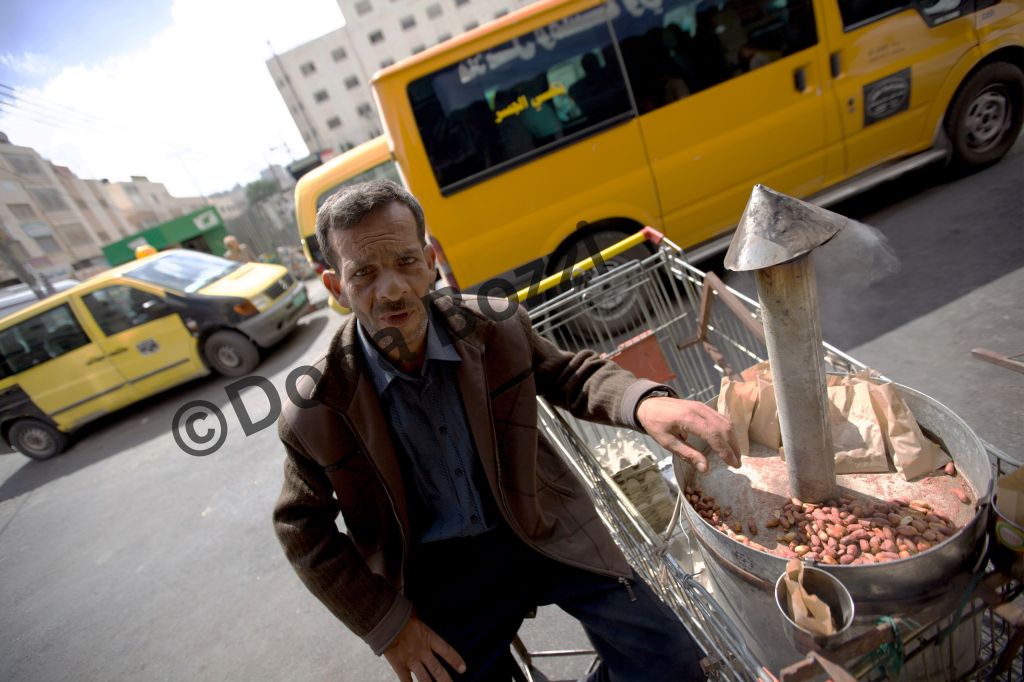
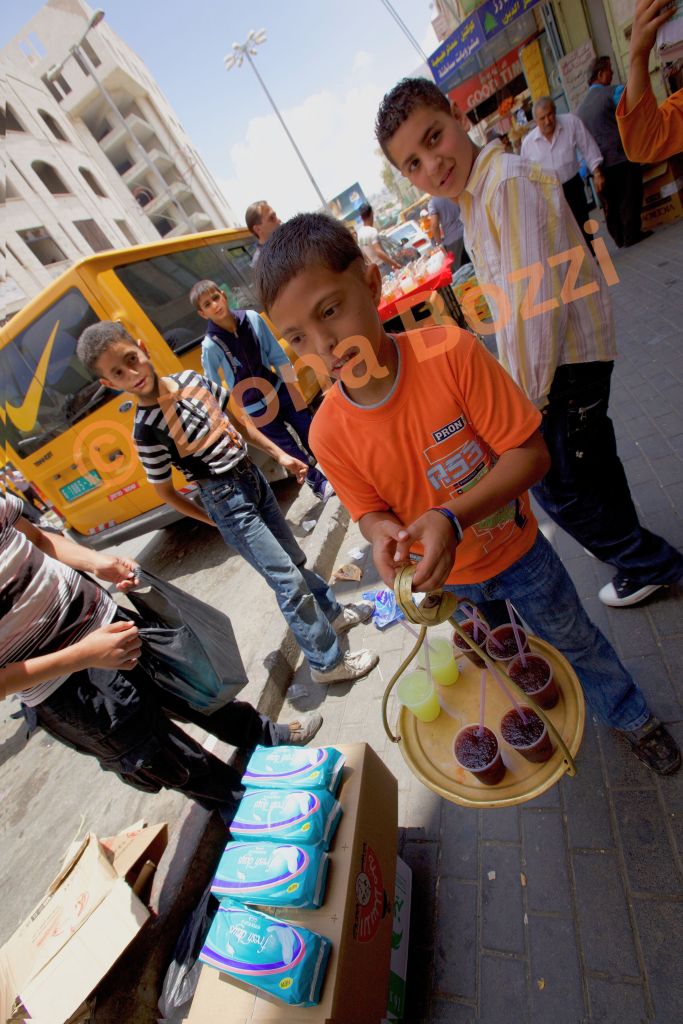
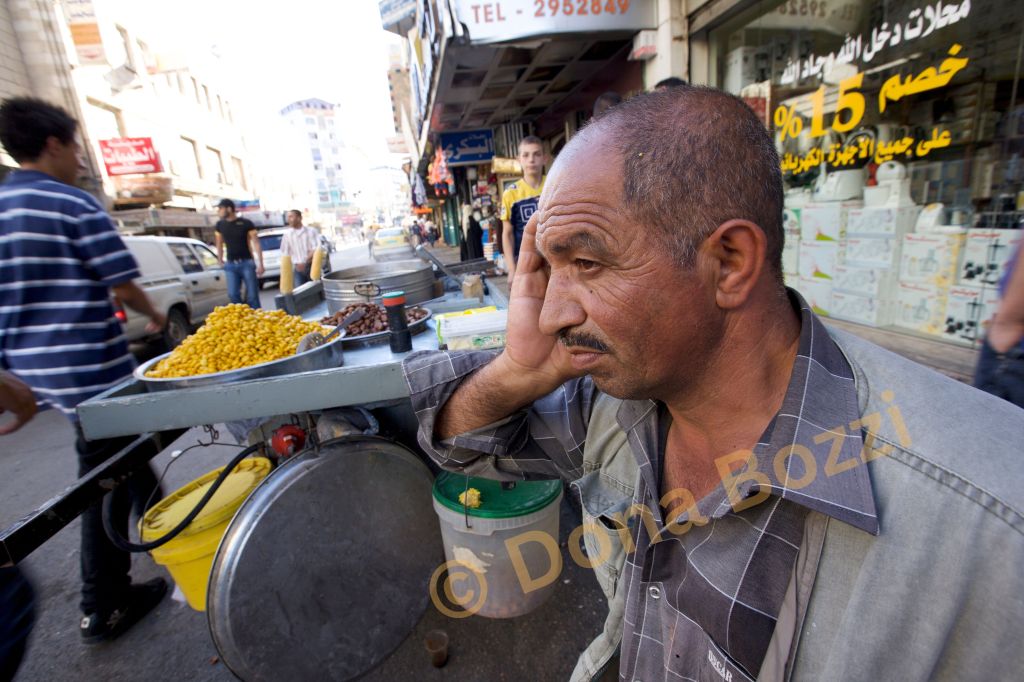
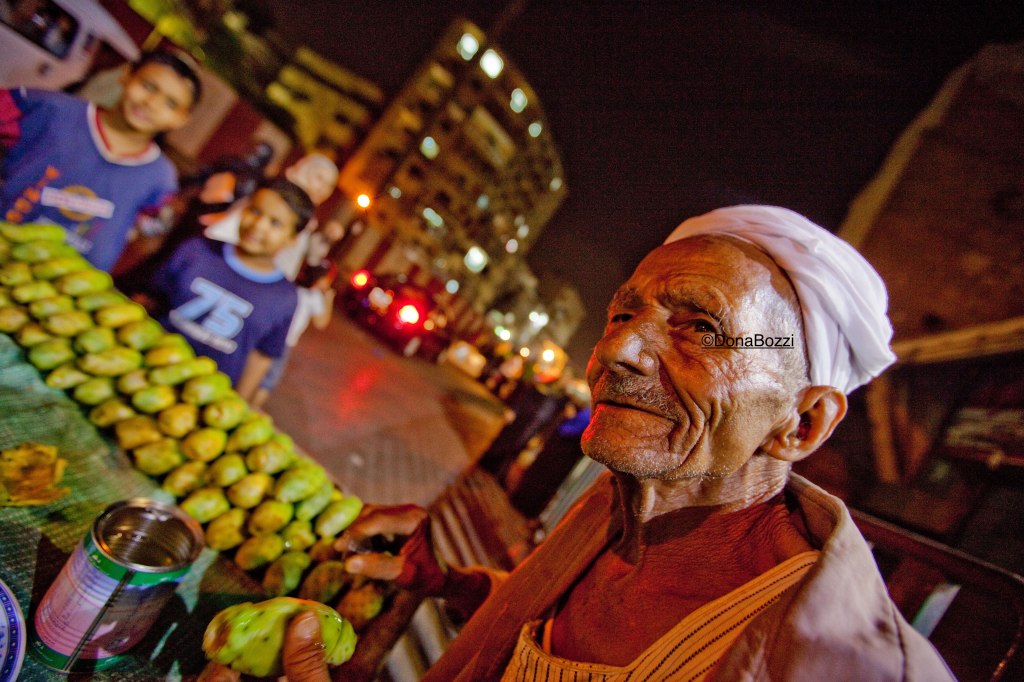
Hebron,West Bank, July 5 2009,Palestinian man selling almondsin the city center.Ramallah, West Bank, July 9 2009,Palestinian boy selling drinksRamallah, 3 July 2010, Palestinian boys near Arafat posterHebron,the old town,West Bank, July 6 2009, Palestinian boy selling sweets.Many residents stores were closed by the IDF after a Jewish man’s rampage killed 29 Muslim worshipers at the nearby Tomb of the Patriarchs in 1994.Bethlehem,July 4 2009,Palestinian man at his market stall.
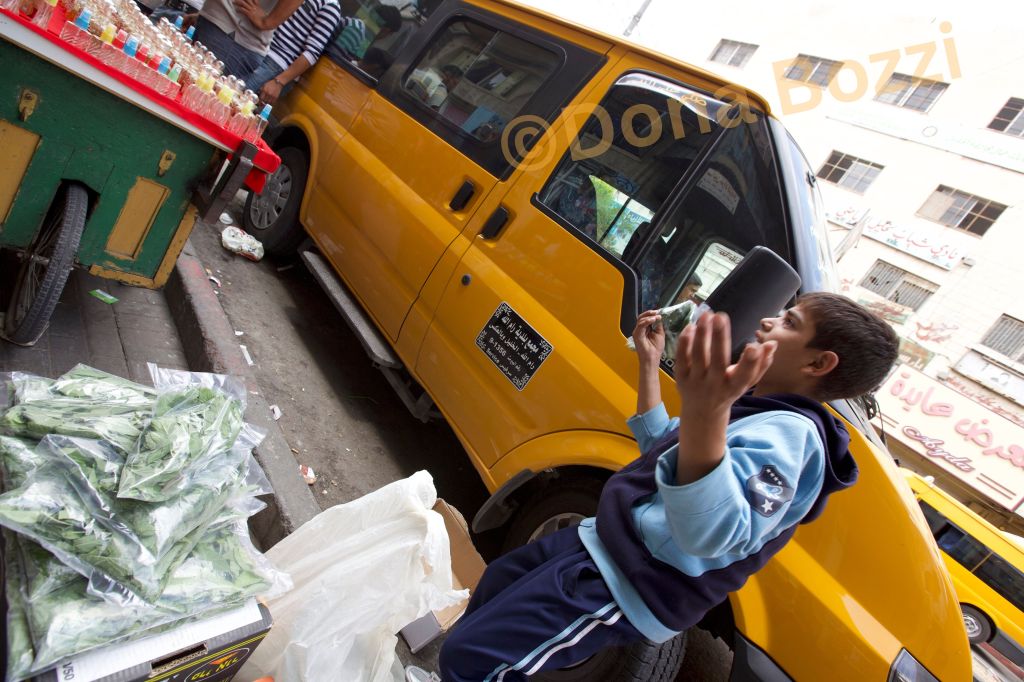
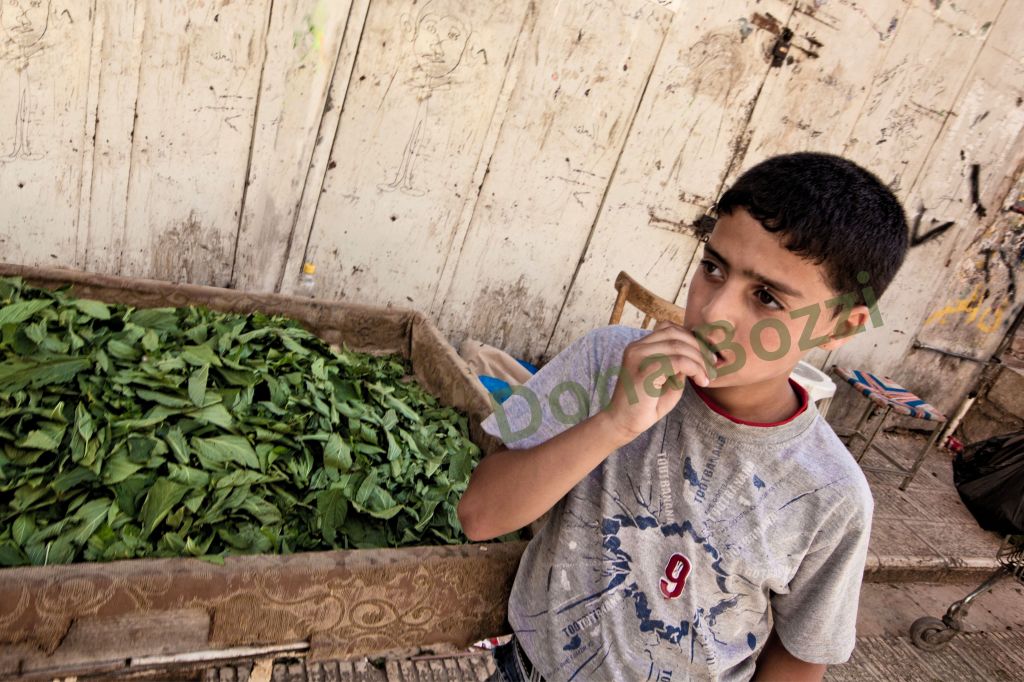
Ramallah, West Bank,July 3 2010, Palestinian boy selling herbs at the market
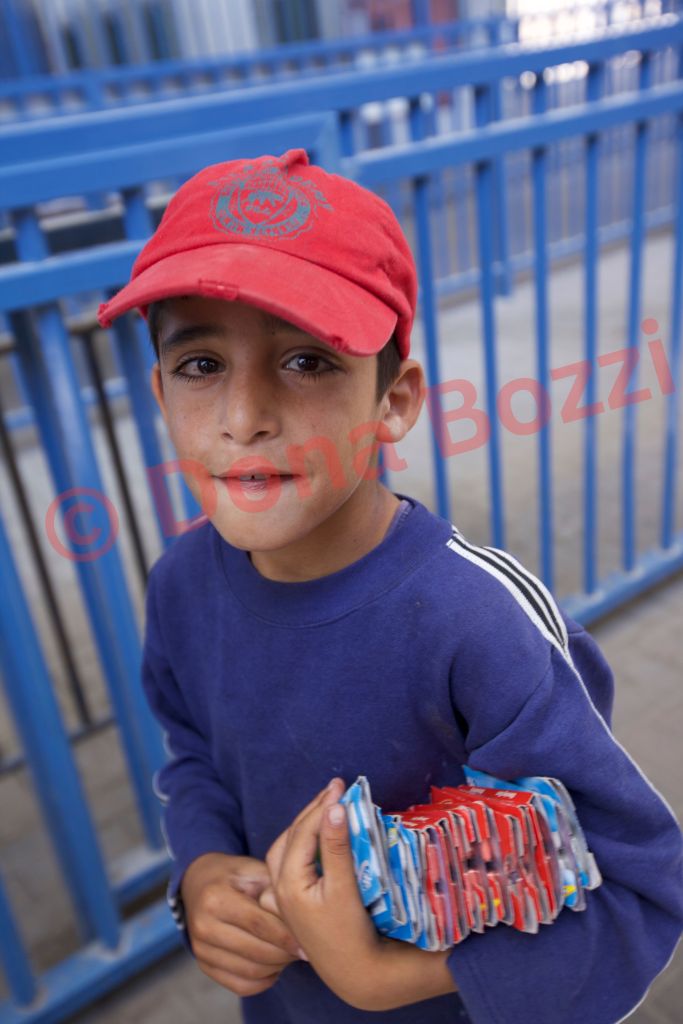
Kalandia checkpoint, West Bank, entry to East Jerusalem.30/6/2010.Palestinian boy heading to the check point to sell sweets to West Bank residents entering Israel.
Bethlehem,West Bank,July 4 2009.Palestinian woman in her store
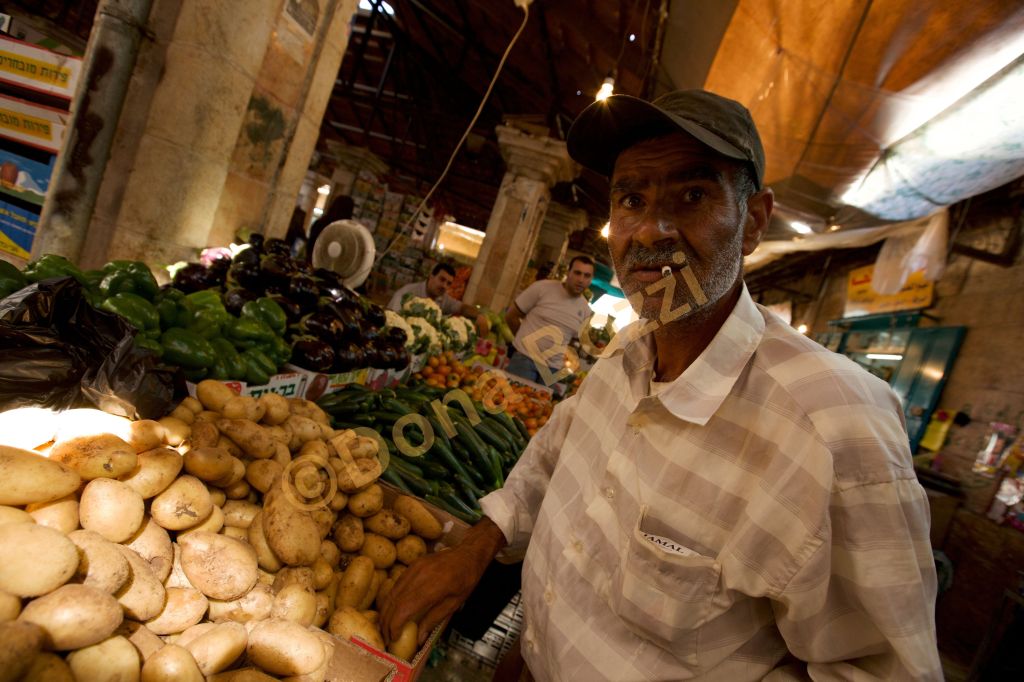
Hebron, West Bank,July 7 2009. The main market
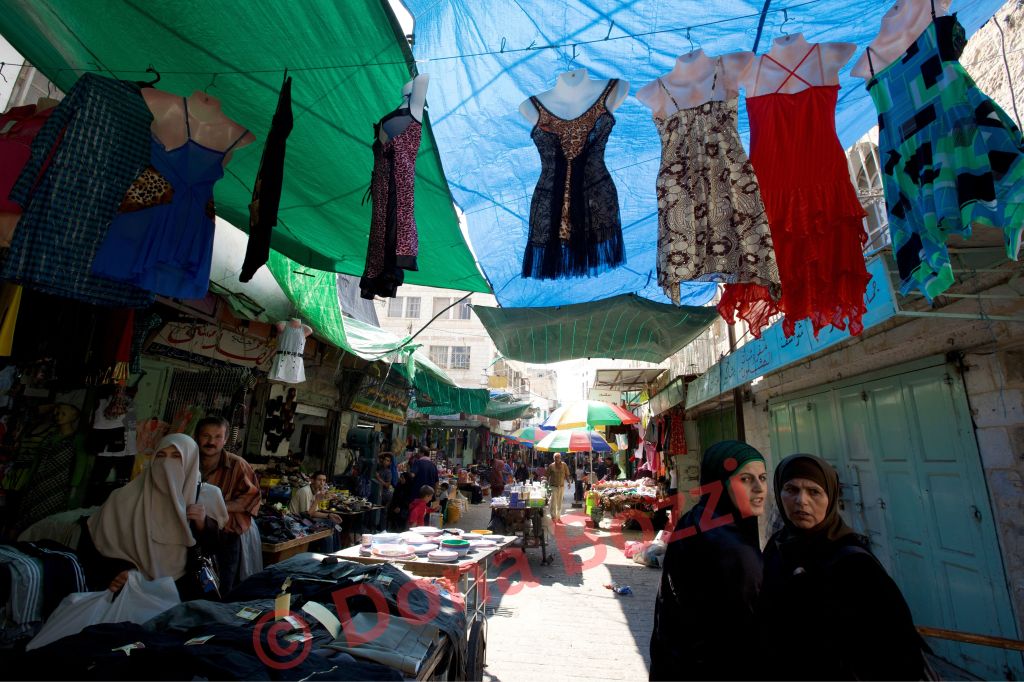
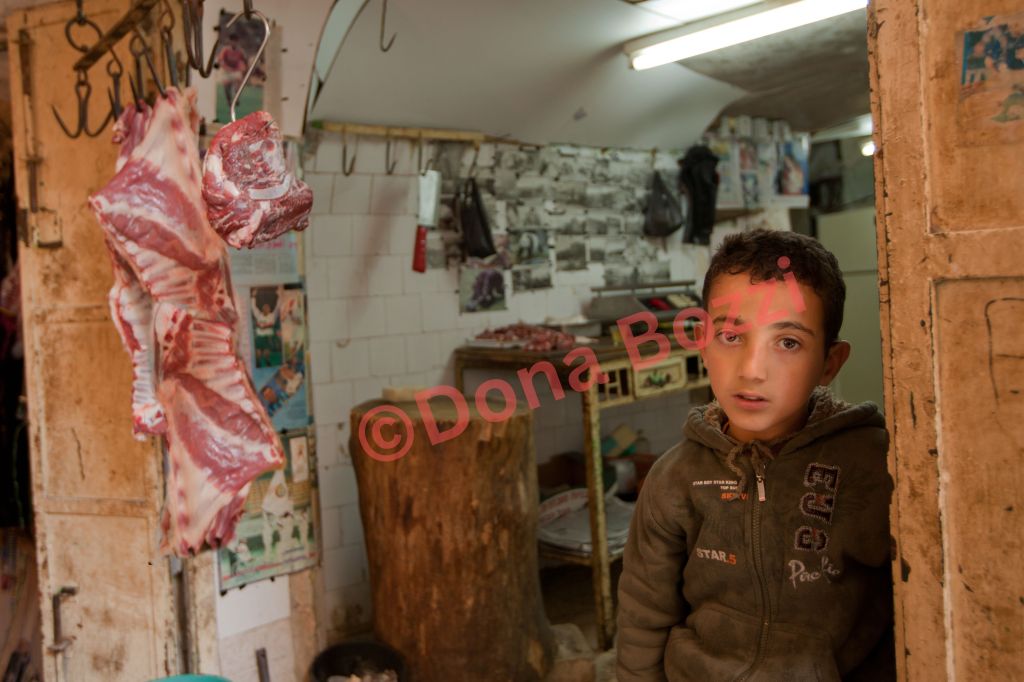
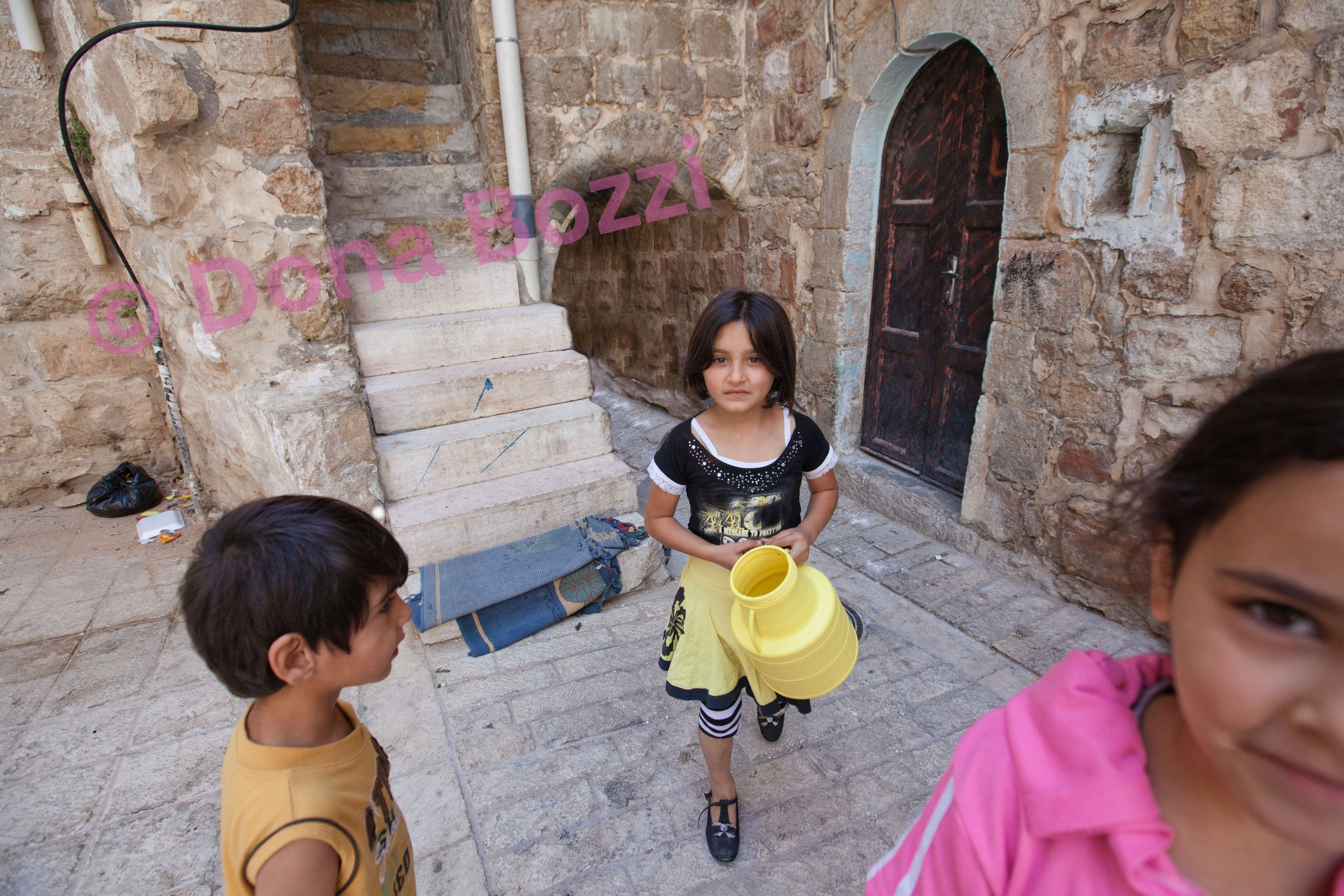
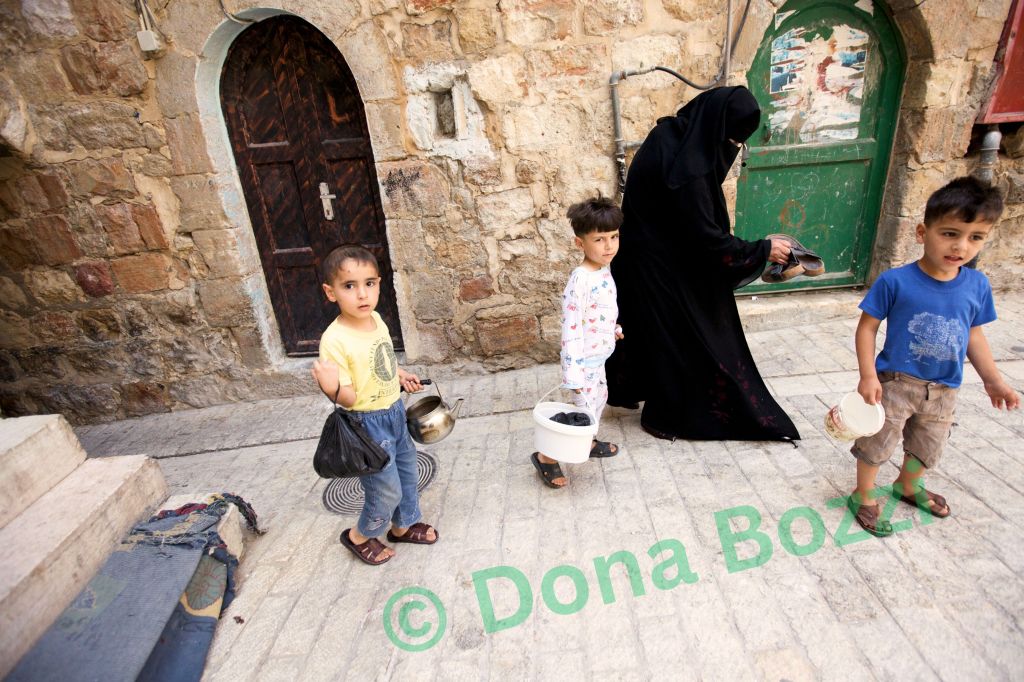
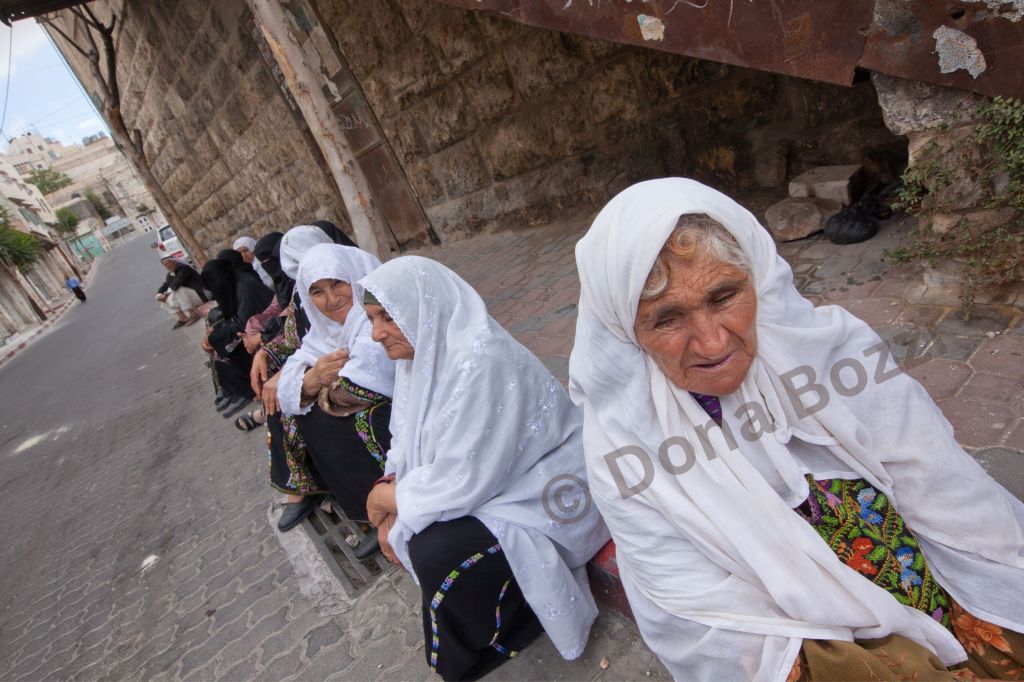
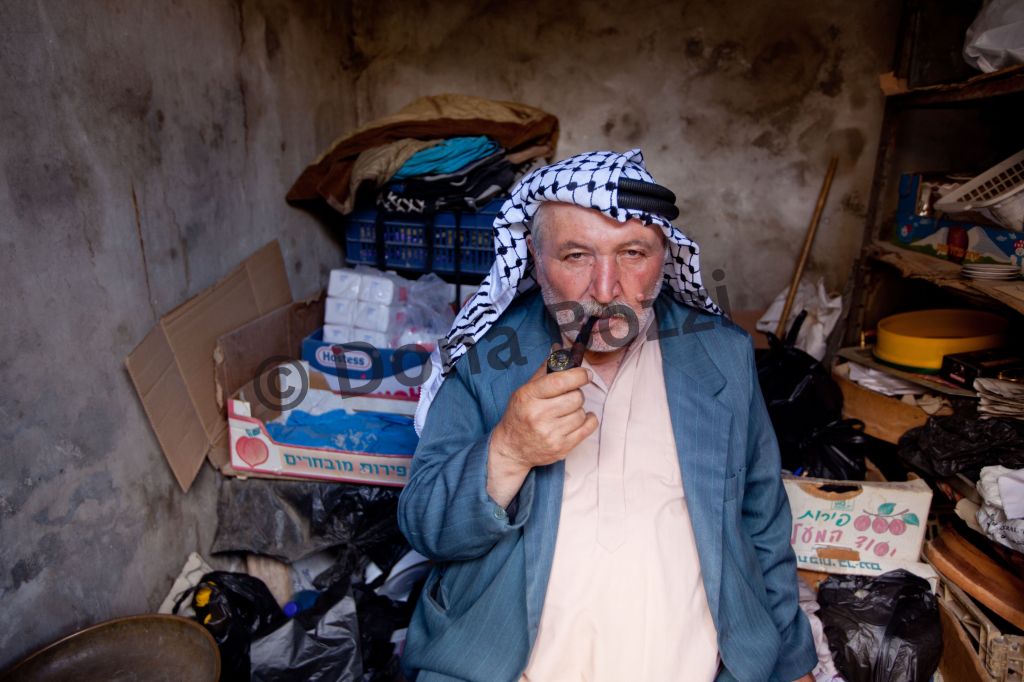
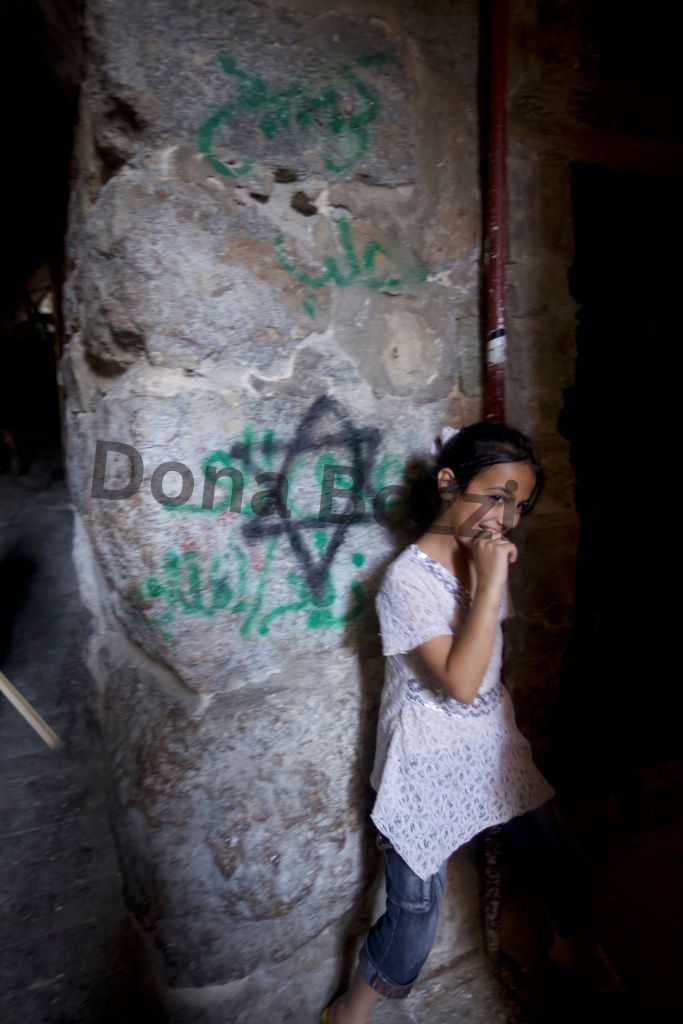
Hebron,West Bank,June 26 2010. A boy in the butcher’s shopHebron, July 6 2009, Palestinian women in the old town.Hebron,West Bank, July 6 2009, Palestinian man at his food stall.Hebron, West Bank, July 6 2009,a Palestinian man in his store in the old townHebron,West Bank,July 3 2010. Palestinian man making bread in the oldtown. Many Arab residents’stores were closed after a Jewish man’s rampage killed 29 Muslim worshipers at the nearby Tomb of the Patriarchs in 1994.Hebron, West Bank,July 6 2009. Palestinian children coming back from the marketHebron, West Bank,July 6 2009Hebron, West Bank,July 6 2009, Palestinian children heading back from the market.Hebron, July 6 2009.A Palestinian woman heading to the marketwith her children.Hebron, West Bank, July 5 2009. A Palestinian youth selling herbs in the city center.Hebron, Shouhada Street,July 3 2010. After the massacre carried out by Baruch Goldstein, a right wing Jewish extremist in 1994, killing 29 Palestinian in the Hibrahimi Mosque, Isreal closed the street to Palestinians “in order to prevent reprisals”.Hebron,West Bank,July 3 2010. Arab residents are denied access to Shuhada StreetHebron, West Bank, July 3 2010,Hebron, West Bank, June 26, 2010, Palestinian women resting.
Bethlehem,July 4 2009,Palestinian man at the market
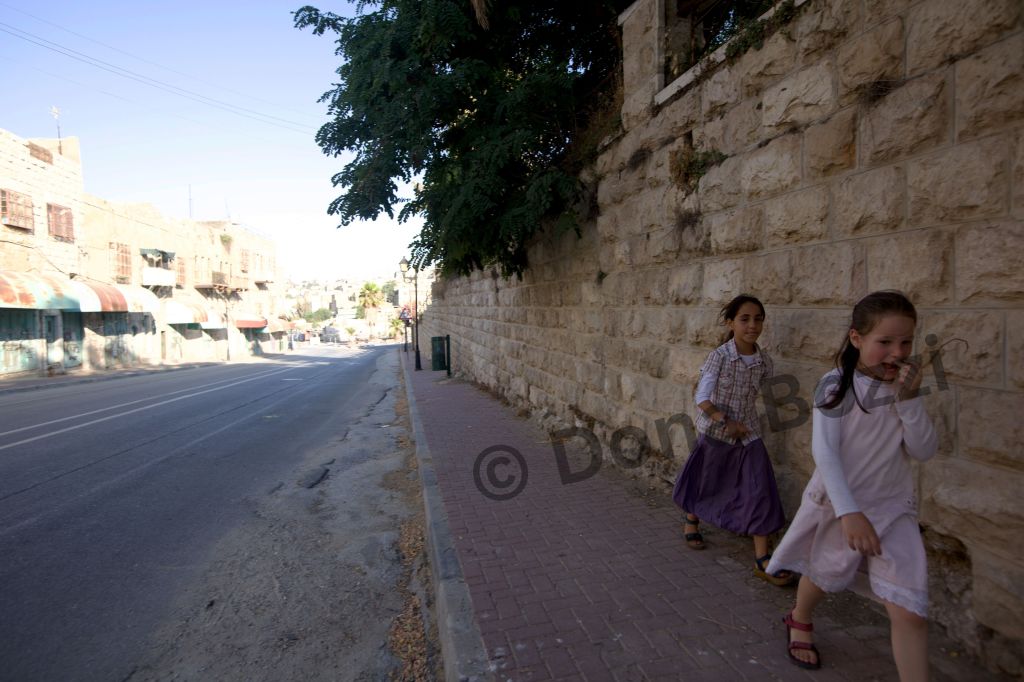
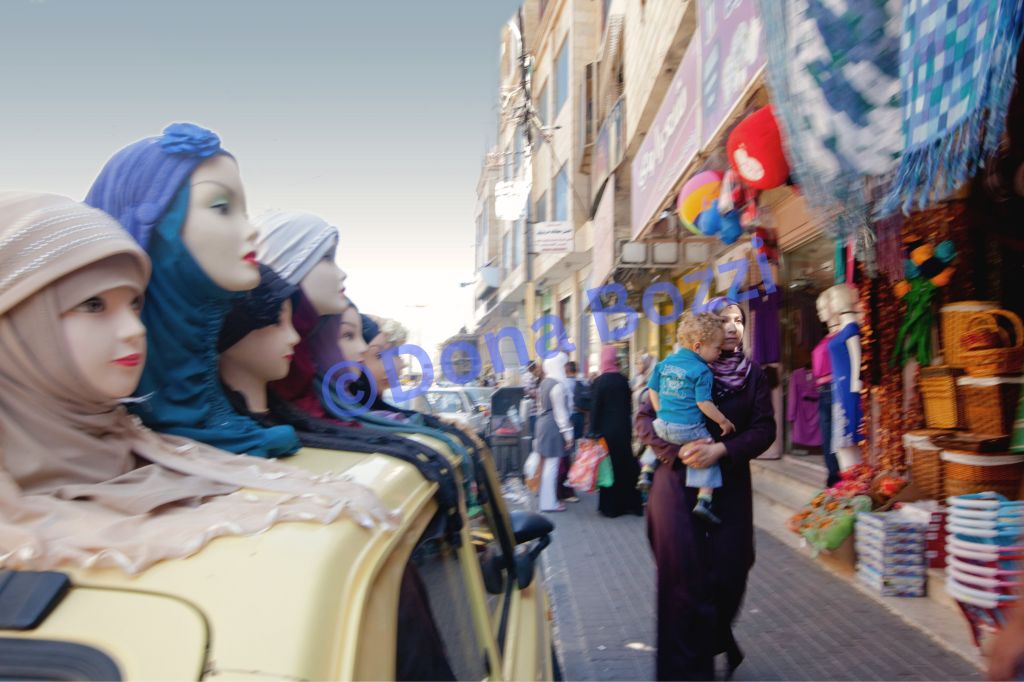
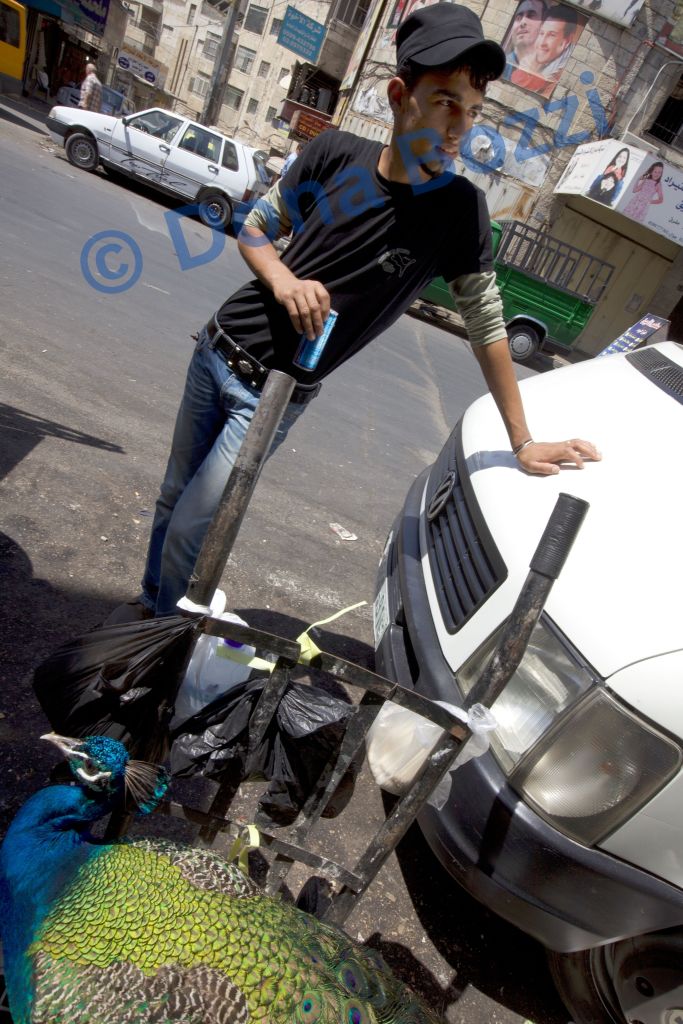
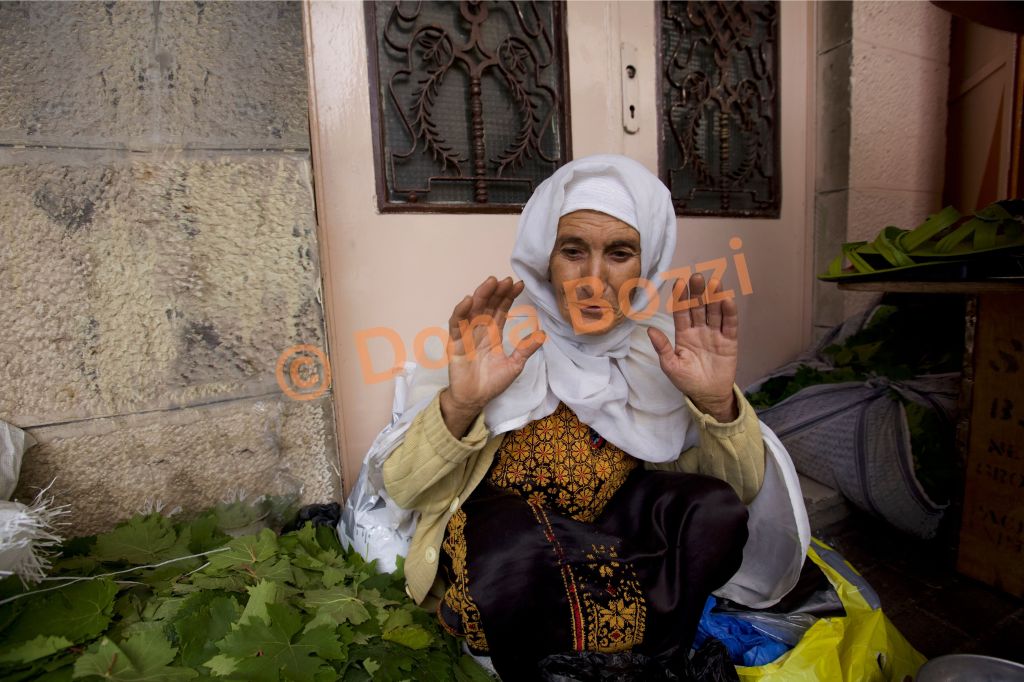
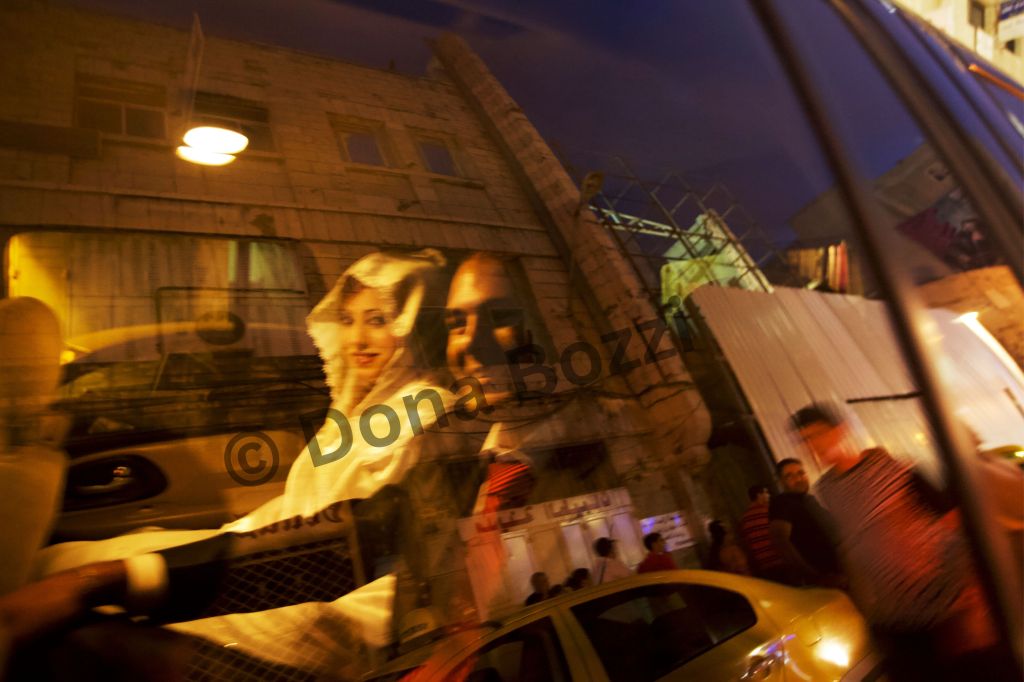
Hebron,West Bank,June 29 2010.A Palestinian boy selling herbs in the old town. Hebron, West Bank, July 3 2010. A Palestinian woman with her child walks on the main streetRamallah, West Bank,July 9 2010, a Palestinian man brings his peacock to the marketHebron, West Bank,Beit Romano settlement. July 10 2010. Palestinian woman shying away from the camera.Bethlehem, West Bank, July 10 2010, The separation WallHebron, West Bank, June 26 2010, a Palestinian man in the Beit Romano settlementHebron, West Bank, July 5 2009, a Palestinian woman selling herbs in front of her house.Ramallah, West Bank,June 24 2010, a just married couple reflected in a window
According to the legal counsel of Pacific Press Agency, Mr Herman Lumanog, CEO of Pacific Press Photo Agency, did Not sell these images, of which I am the Author and copyright holder, to the end user, Deutsche Welle.
“Pacific Press was not the one who sold to parties who used the said images since they only distribute to agencies as well”
As per credit attribution, adjacent although not prominent, to these Deutsche Welle images, they were in fact marketed/distributed/shared by PPA to PA, DPA Picture Alliance GmbH, a wholly-owned subsidiary of the German Press Agency dpa.
Not only were the above Deutsche Welle sales, unreported in my PPA sales report, but also #UnPaid.
#Unreported Sales to Deutsche Welle
Although the legal counsel of PPA clearly states:
“As regards to sales, you may rest assured that the 30 images that were used by several publications included but not limited to Deutsche Welle,Infomigrants and The Guardian have been properly accounted for in their records”,
Deutsche Welle is naturally not obligated to disclose their contractual relationships with their rights owners:
Picture Alliance refers their visitors to Pacific Press Agency
It appears that Picture Alliance refers their visitors to PPA to license their images featured on Picture Alliance Website:
Neither did Mr Herman Lumanog pay me royalties for The Guardian, Radio France, AlJazeera, Condé Nast, Microsoft, Tower Media Middle east, and InfoMigrants.
Agency shall remit to the Contributor a royalty of fifty per cent of the net revenue invoiced and reported by Agency for the licensing of Contributor’s images through the Pacific Press Agency worldwide
Thus, according to the above sales report, Mr Lumanog made a median net revenue of approximately 2,34 USD per image sold, after sales to PPA partner agencies, resulting in a median royalty of 1,60 USD per image to the Contributor.
PPA Public price of image license as compared to royalties in PPA sales report https://t.co/zziWivQVCA
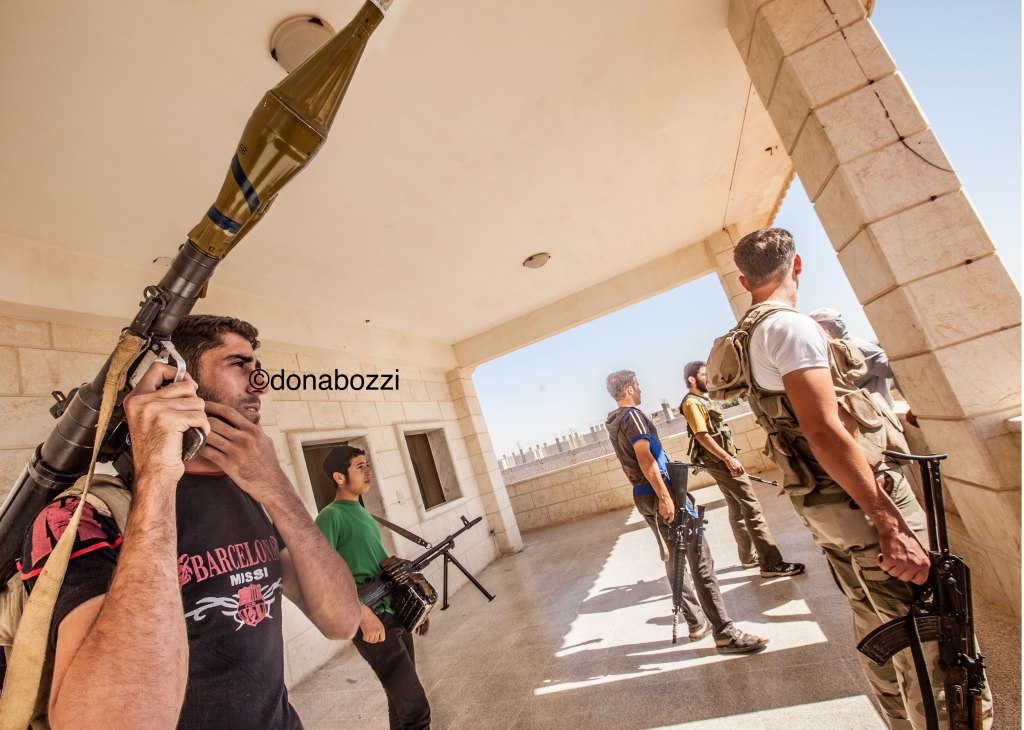
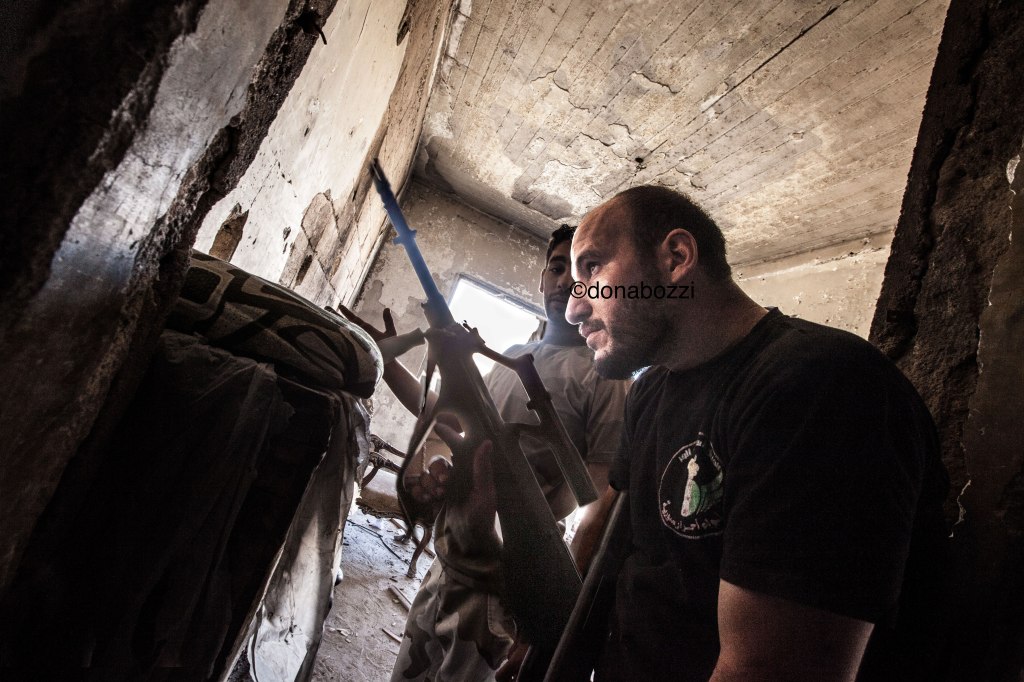
Summer 2013. In the Aleppo countryside, the Al-Aqsa Brigade of the Free Syrian Army fires down below at the Hezbollah militias who have penetrated the villages of Nubbul and Zahara.
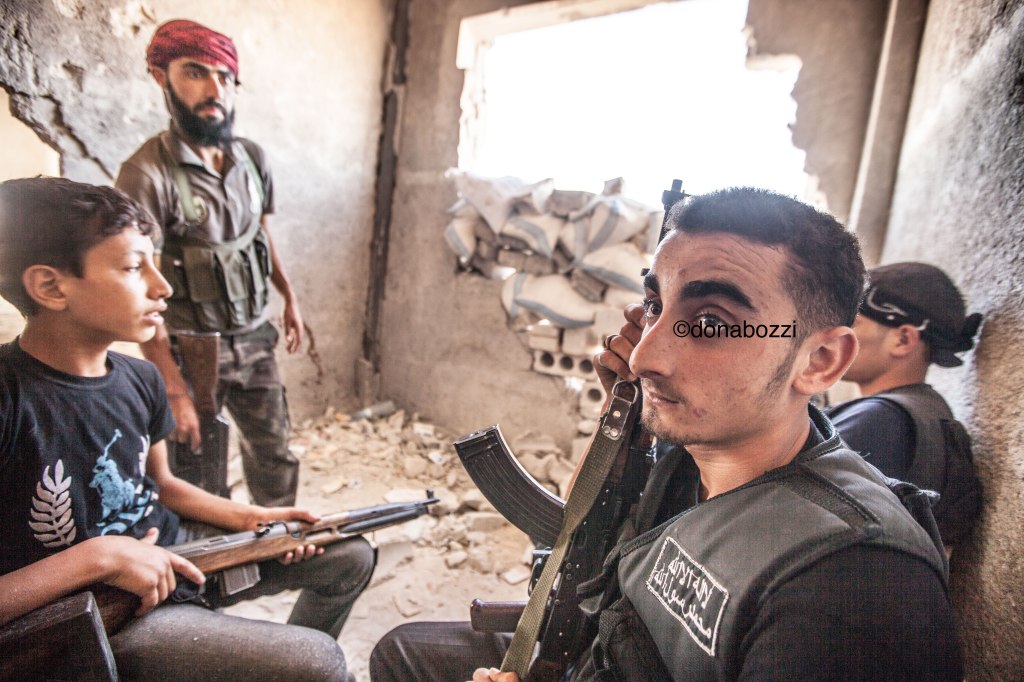
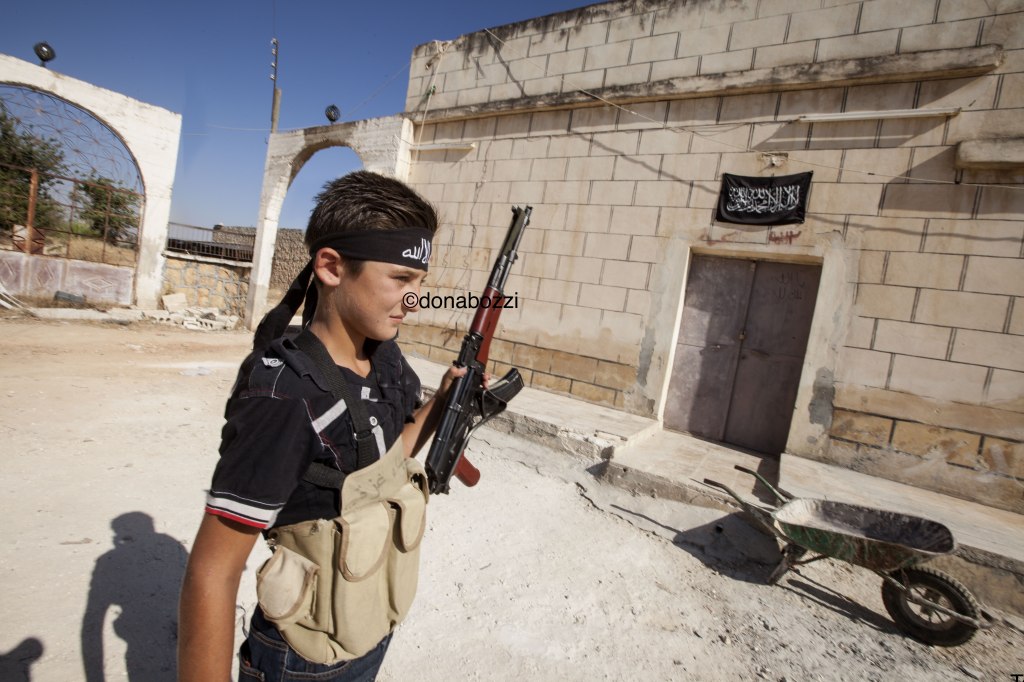
Of all the FSA commanders we met, Yaser Sokar, head of the Al-Aqsa brigade, an unprejudiced, soft-spoken man, is the only one who dared to shake our hands, wiping his own afterwards as a joke. The villages of Nubbul and Al-Zahra have been penetrated by Hezbollah; “Can the siege be broken by the SAA?”, we asked him. “No, never, we’ll eventually rout them out!” He gave us the green light to go to Jabbal Shewehna, a front line at the bottom of a hill a few kilometers from Hraytan. The Al Aqsa fighters stand on one side of the hill, and the regime troops stand on the other. “If we take this hill top, we’ll take all of Aleppo!” says one Al-Aqsa fighter, still foolishly trapped in the magical thinking of victory over “Gaahesh”, that’s what they call Bashar here from the donkey’s genes that shape his face. The rebels complained about the enemy’s superiority given its use of the Shilka, a tank with a sniper capable of shooting 2400 bullets per minute.
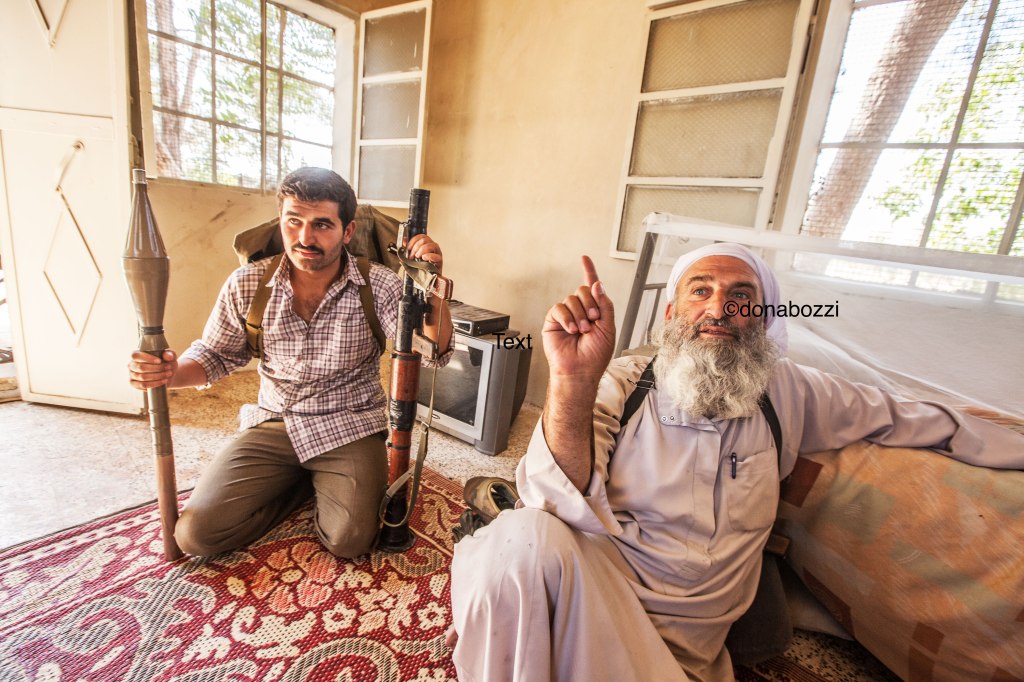
The FSA fighters have received a few Concourse missiles, basically zapper guns, but still lament the weapons of the poor. They particularly badly need RPG-type of rocket that can better track and follow enemy targets, primarily the Russian made T-72 tanks.
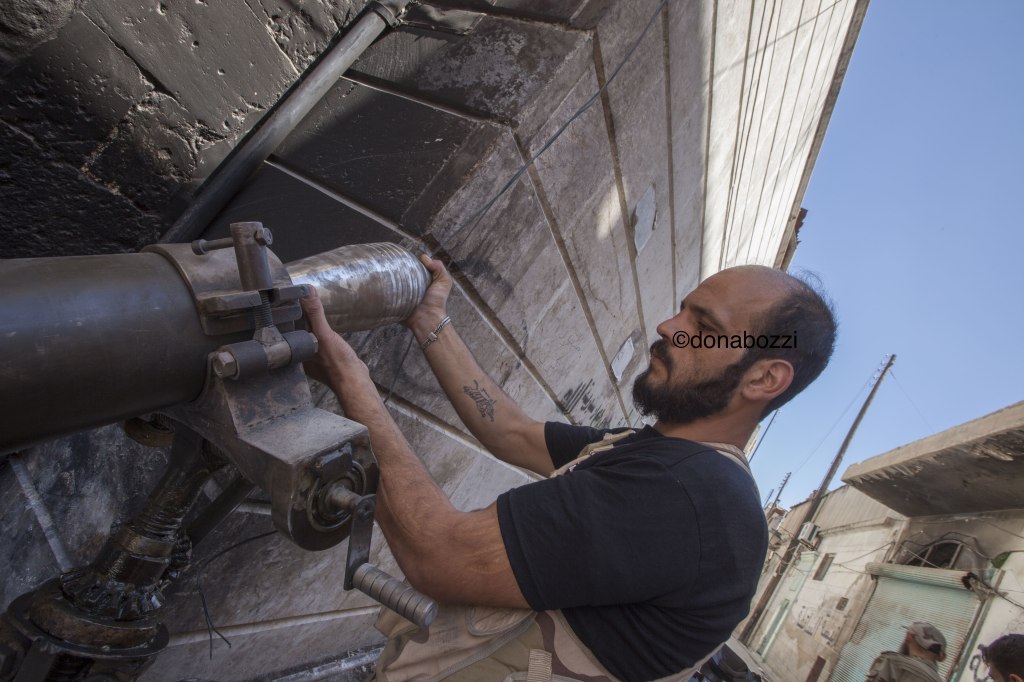
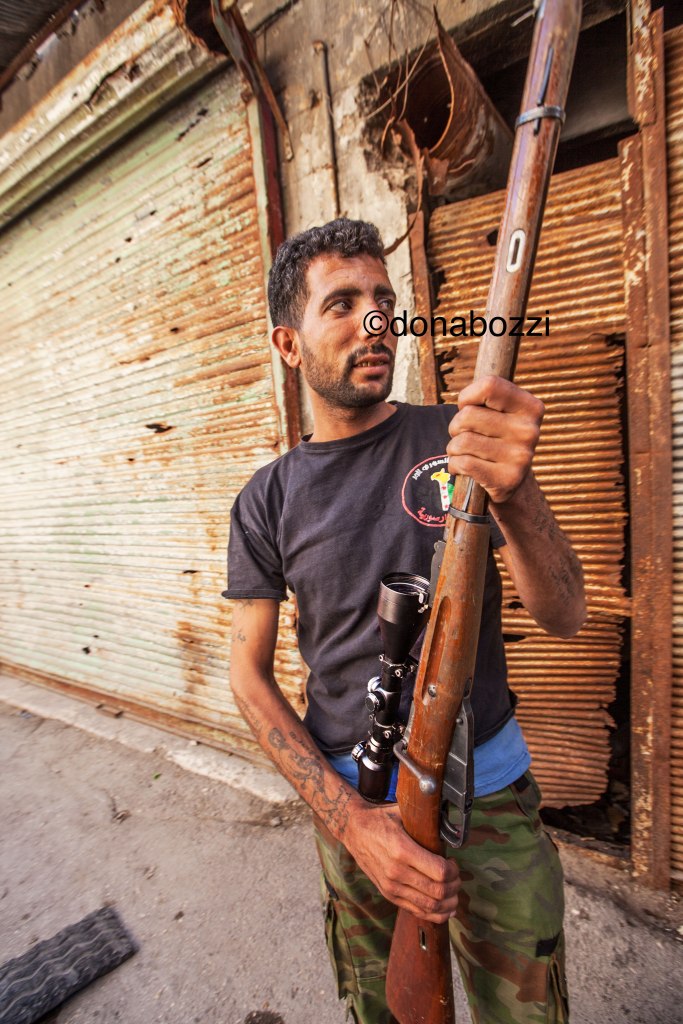
The FSA base, a huge barrack behind of a two-kilometer long wall used for sniping through the breaches in it, “is manned by about 400 men, or so the regime thinks!”, says a young fighter, laughing. Standing out beside an antique mystery cannon and home made attempts at casting their own barrels, is a “Dushka” machine gun, pilfered from the regime and fitted with a 14.5 mm cartridge that can release 300 bullets per minute.
Commander Yaser Socar’s dinner invitation had an hidden agenda; it was a cry for help. The comfortably furnished rooms of his house exuded culture and open mindedness, and moderate wealth. Too unpretentious to present us with an exclusively Syrian meal, he added a European-type of course to the dinner to make us feel more comfortable. Then he exclaimed, painfully:
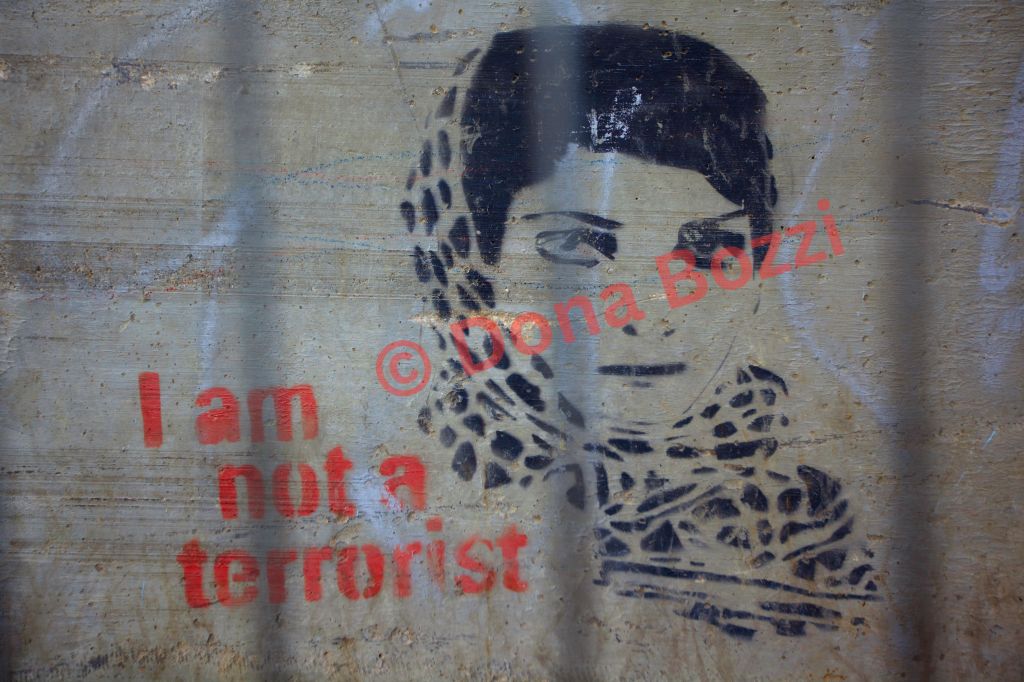
“We are the real Muslims of Syria. Do we look like terrorists to you? They killed our children, they burned our houses. Did they call them terrorists? We are the ones they called terrorists! The true terrorists were released by the regime in 2011 from Saidnaya prison, under pressure from the international community in the first few months of the uprising, as part of a smokescreen amnesty.
Our battalion, the Al Aqsa Brigade, didn’t get all the media attention that Al-Tawheed did, and therefore didn’t get the needed military supplies from Qatar that they did. We didn’t even get enough bullets from the military council of the FSA, let alone foreign powers!”
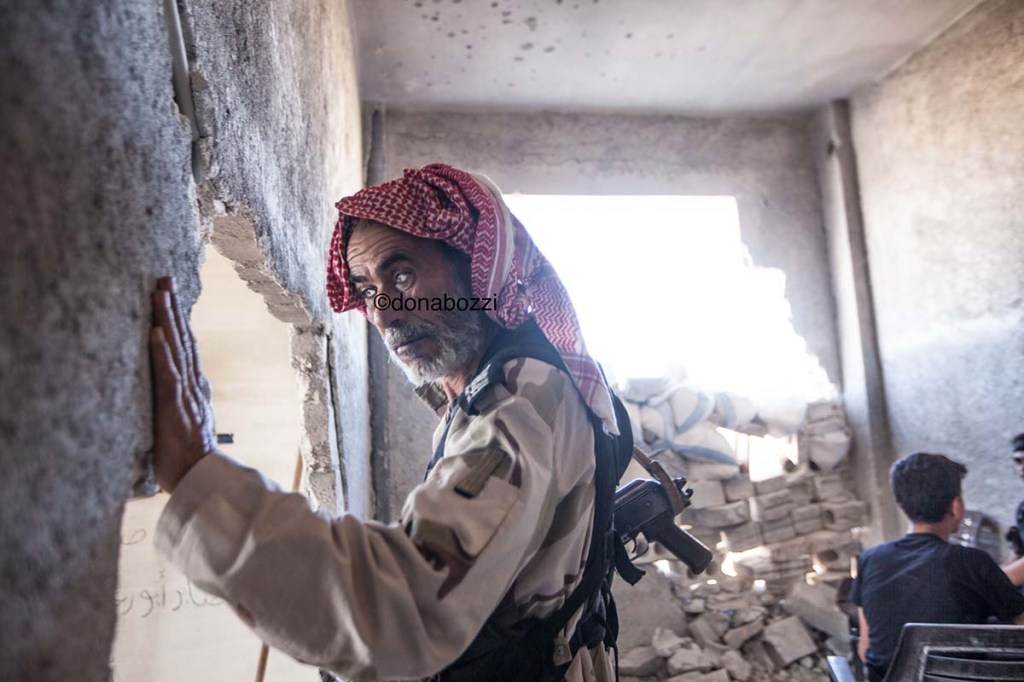
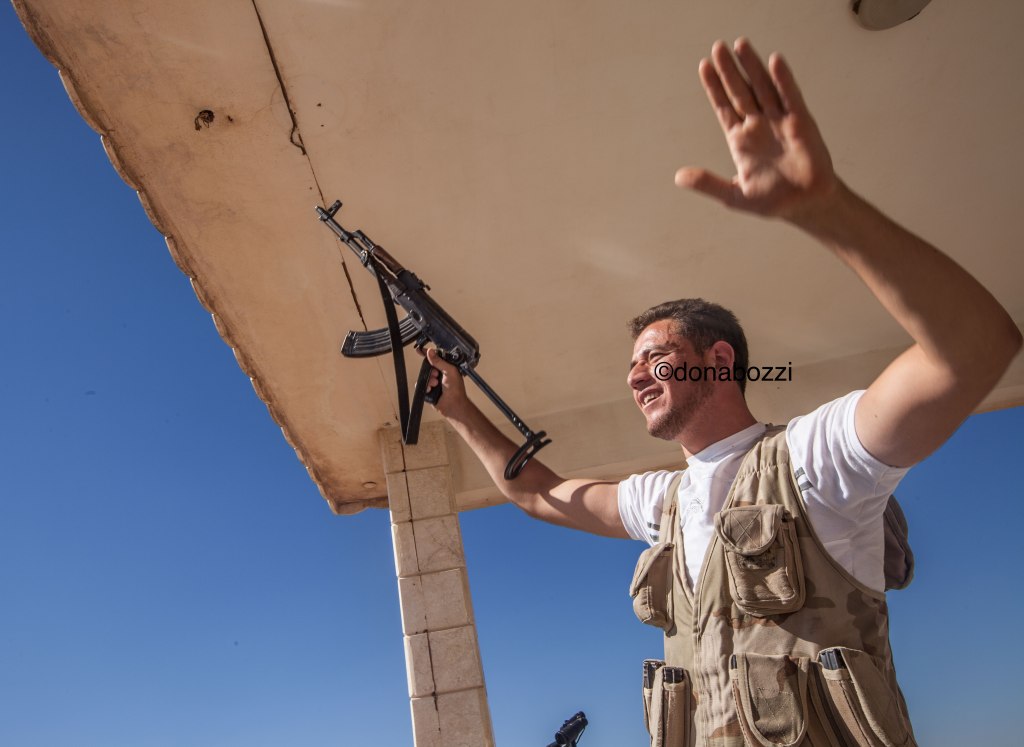
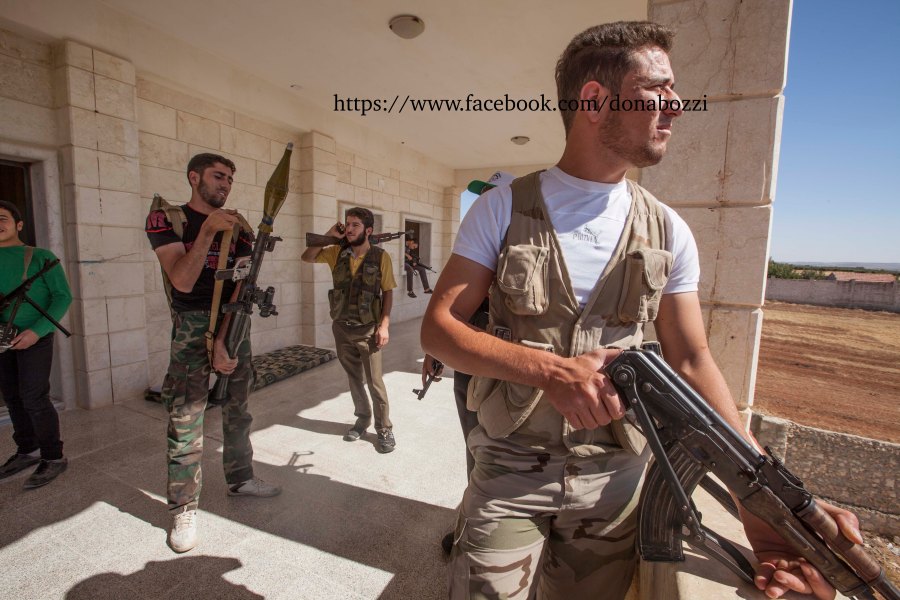
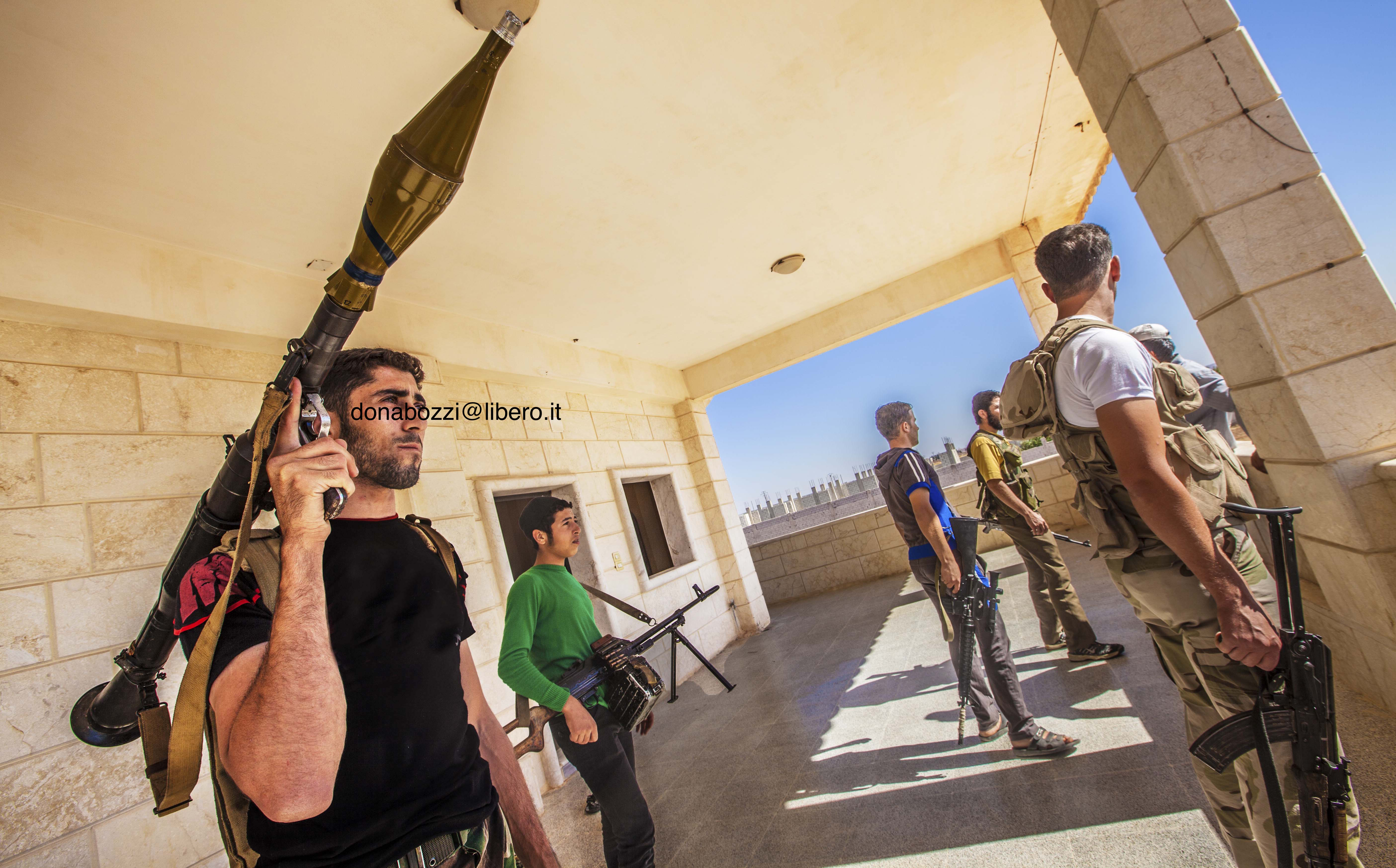
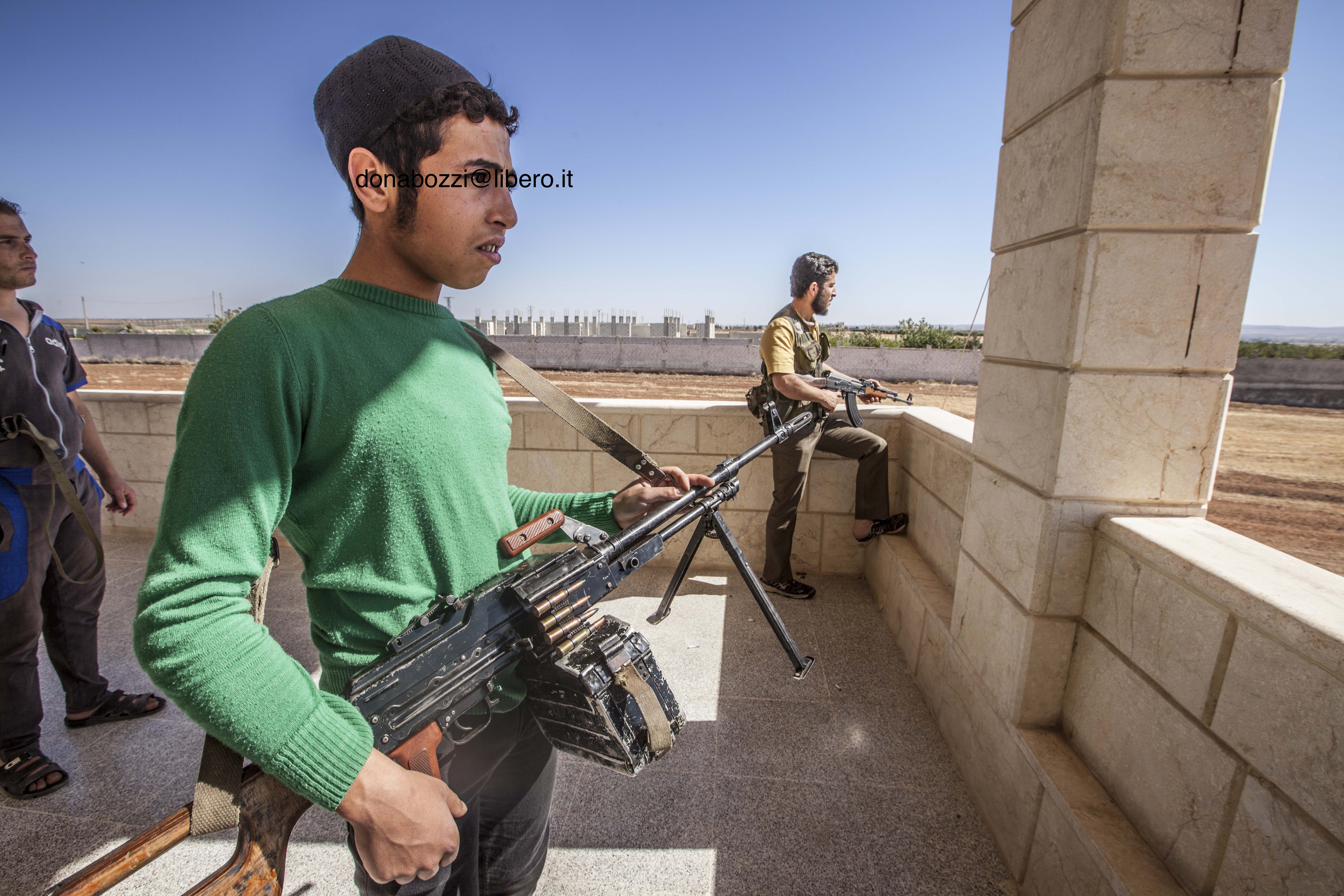
He said he would take us on the following day to Nubbul and Al-Zahra, two Shia villages on the outskirts of Aleppo, with a combined population of about 5000, where Hezbollah reigns and even the women carry guns. Here, the Al-Aqsa men enjoy a formidable vantage point: the terrace of yet another elegant private mansion turned into an FSA headquarters. We were actually facing Nubbul and Al-Zahra from about three kilometres away. The rebel’s elevated position above the villages definitely gave them the upper hand. Suddenly, the men ducked in a row behind the terrace wall to exchange fire. Suddenly, one of the Al-Aqsa fighters shouted “Allahu Akbar,” leaping excited with his Kalashnikov lifted in the air. It then became still. He had just killed a man. When asked why Hezbollah woudn’t dare to retaliate the injury, they said that daylight doesn’t allow them to clash comfortably enough. All throughout the clash, our fixer and our friends held their back glued to the terrace floor. On it, lay a dozen or so empty bullet casings landed from the other side.
Zakaria Jrab, leader of the Katiba Shams Alhak (The Sun of Righteousness), is a member of the military commitee of the Council of the Governorate of Aleppo. I asked him:
“Mr. Jrab, what is the ideological difference between Ahrar Al-Sham and the FSA? The way Ahrar members dress, in black from head to toe and wearing black kohl around their eyes, is not exactly reassuring”.
“There is no difference between the two: we are brothers, we coordinate with each other on the front line. However, Ahrar Al-Sham is more devout and more rigorous in the observance of the Sharia then the FSA, where some elements may be nonchalant or plain aloof. We can definitely say they are Islamists, but we work together because they are not radical.”
“Does the FSA has more affinity with Ahrar Al-Sham than with Al- Golani?” Ahrar Al-Sham is easier to deal with, more open minded and doesn’t have an agenda. Mr. Golani wants to take over the country after the revolution.” “Why can’t you get good antiaircraft from the United States, like Turkey did? “Because the United States has a precondition: they want to give Idlib and Aleppo to their ally, Turkey.”
” What about Qatar? Why they don’t help you more?” “Because they don’t have the OK from the United States. Recently a shipment of RPG made in Austria, from the UAE to Syria, was stopped by the United States. The regime has Shilkas with snipers capable of shooting 2400 bullets per minute. We have 45 mm “Dushka” machine guns at 300 bullets per minute” And a sleek, albeit quite lonely, M16 from the United States; plus, of course, MRE, “meals ready to eat”, repurposed from Iraq and Afghanistan. http://www.bbc.com/news/magazine-33997408