In Antakia there is no media center printing press passes and selling tickets to the war.
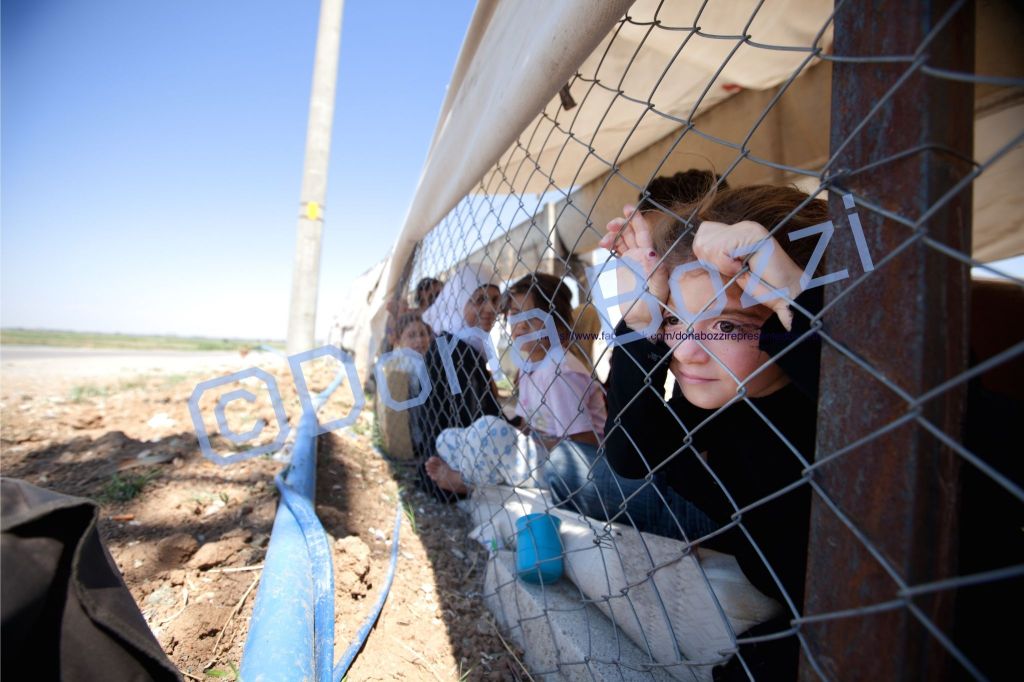
So we got our leads by stopping Syrians in the street, asking where are the thousands of refugees that Turkey hosts, and the names of villages and camps started bubbling up :Yadalagi, the Boshin camp, Todoledo. So we proceeded surreptitiously, through a breach in the barbed wire.
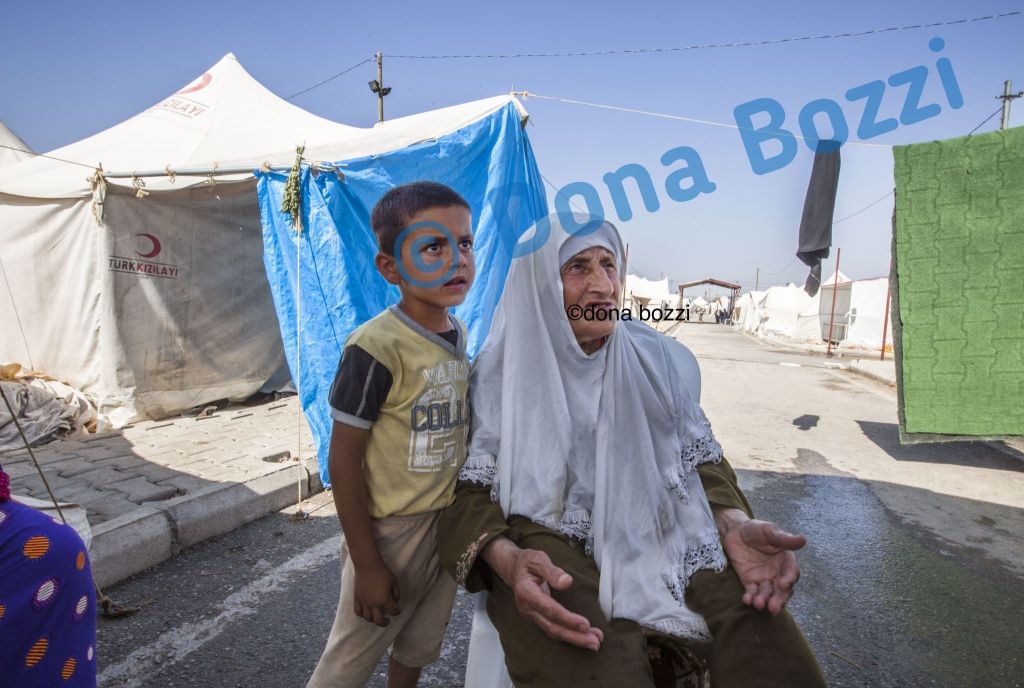
In the camp, Fahere Zerzore, 86 year old from Idlib with the attitude of a leader in her eyes, produced metaphorical gestures with her hands: she lifted them up in front of her belly, closing a circle as if to indicate a pregnant woman. Then she lifted her arm, and vigorously dropped her virtually armed fist to rip her body.
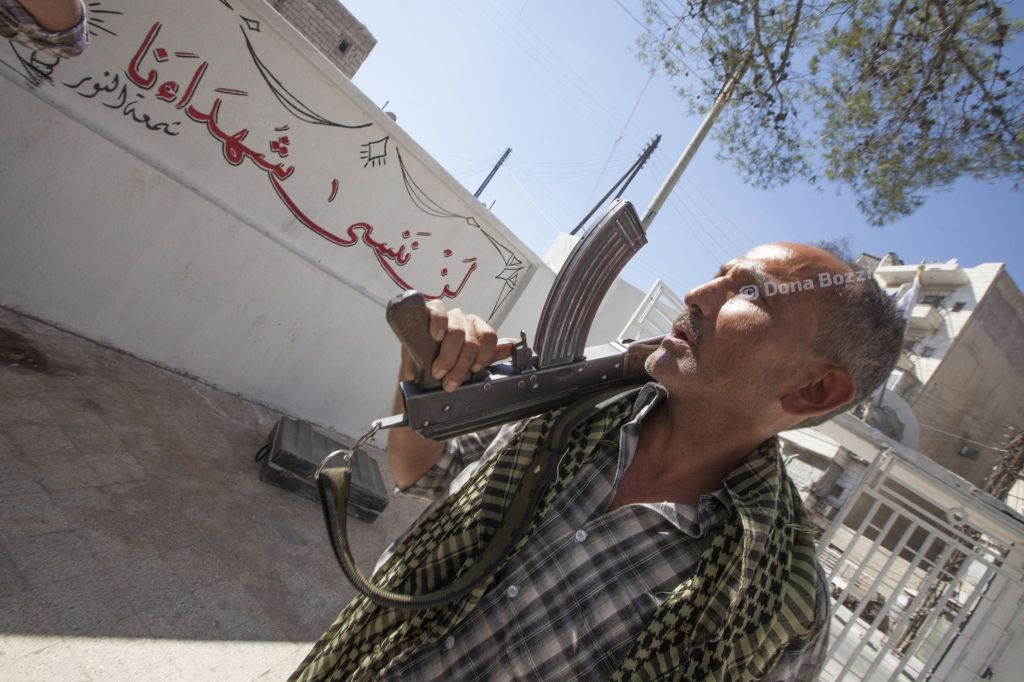
A FSA incarnation finally popped up, in the semblance of Abu Ammar, his nome de guerre, all he agreed to give. We met him in a store, calling out for a translator who would procure us a pillow, to sleep on the back seat of the smugglers’ car trafficking us into the Syria night. Abu is a Syrian expat from Atlanta, Georgia, like in a Misrata redux, where Libyan expats to London would come back to help their brothers, by throwing rpg from the Dafnyina front line,into Gadhafi held Zlitan.
He procured us a lift to Bereniaz, the last Turkish village before a smugglers’ crossing. We spent the night at the house of Abu Fahed,the first liaison of Abu Ammar’s in Syria. Before going to bed, his wife dissolved friendly bacteria into the milk vat, from which the morning after she strained out our breakfast cheese.
Then she showed us the bathroom, anywhere out in the olive grooves. We spent the night on the porch of Fahed’s farm, under a useless mosquito cloth hovering over our bed, awaked now and then by sleepless Fahed working the phone across the “border”, as our illegal crossing was approaching.
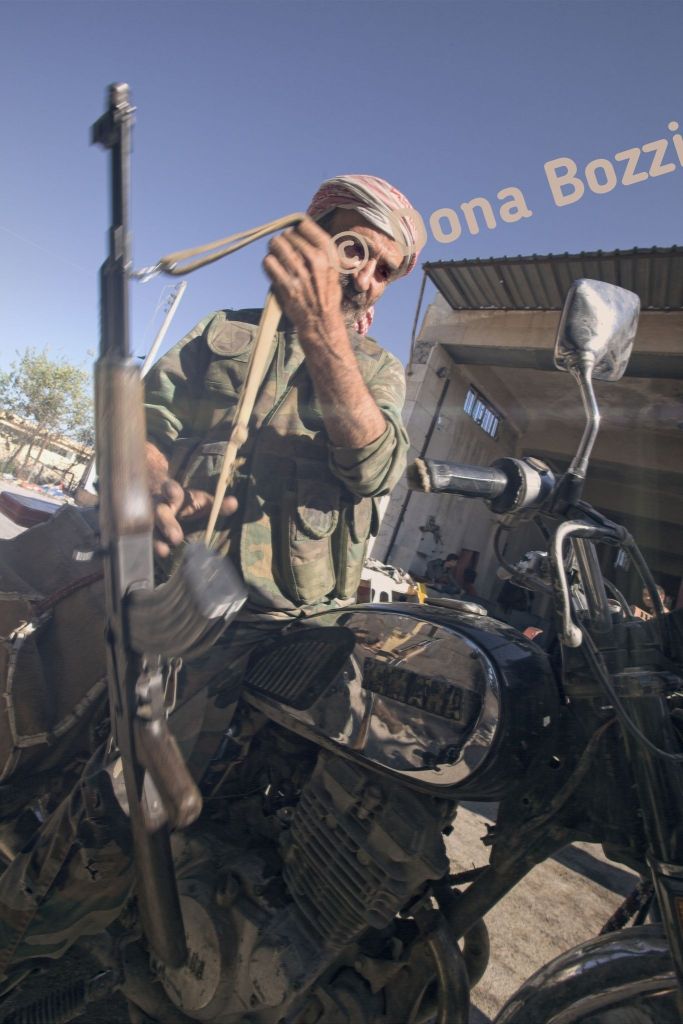
At the break of down, Abu Saleh and Muhammed, the interpreter, came from the other side to pick us up, and took us into Syria, holding our hands across a two mile-span of muddy no man’s land. In the meantime, a few Syrian motorcycles riding the opposite way, carried a few Syrians across the border, while the Turkish guards turned more than one blind eye from their watchtowers.
ATMEH
Abu Saleh, who turned out to be our designated host, was the second liaison of Abu Ammar’s in Syria, who was pulling the strings for us in Antakya throughout our trip: as far as dress code, he was ruthless: a black coat, long enough to stumble on it, on top of heat absorbing skins, not a hair wisp was allowed to show.
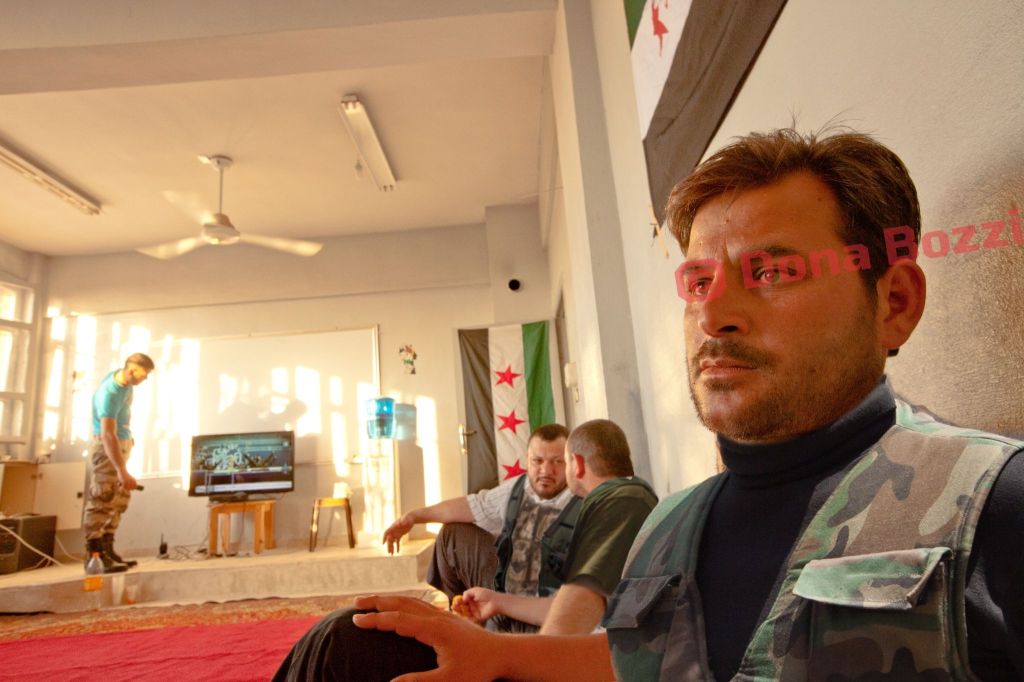
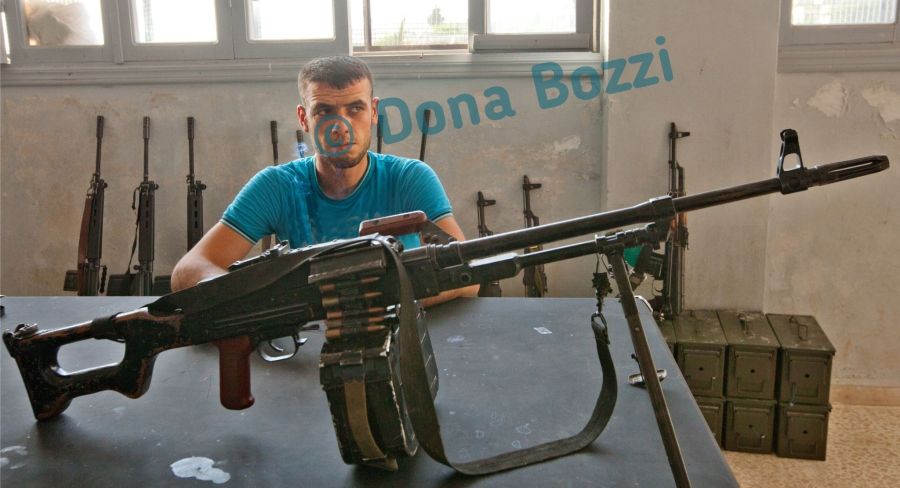
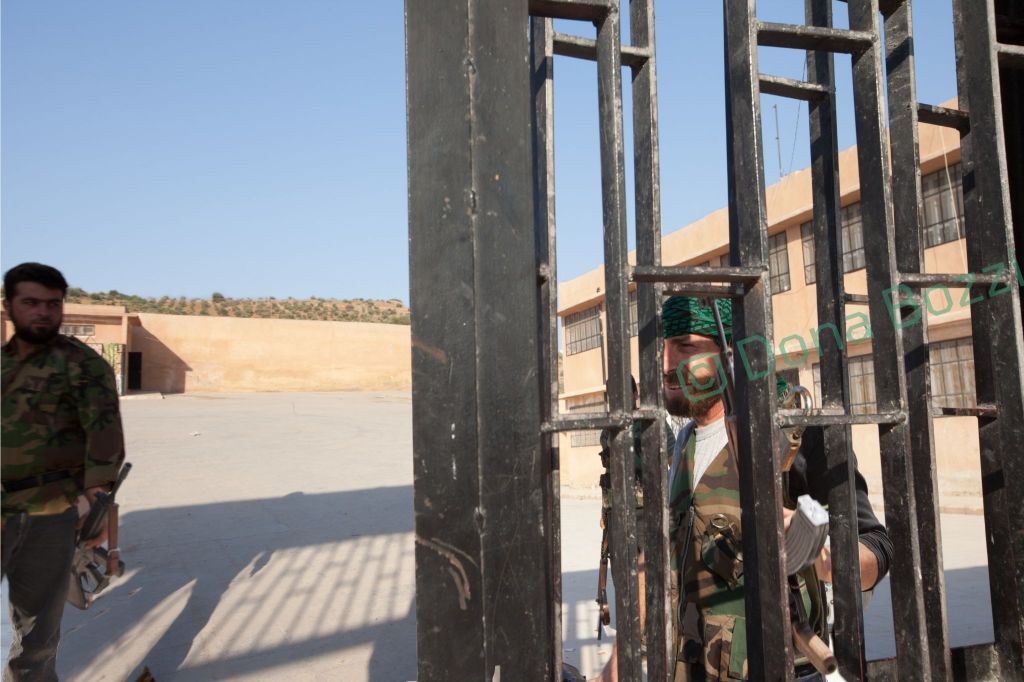
For us, he opened the gate of the FSA head quarters, and took us to visit the FSA operation rooms: the disgruntled young men, in their quote-t shirts, didn’t look willing to blow themselves up for the jihad.
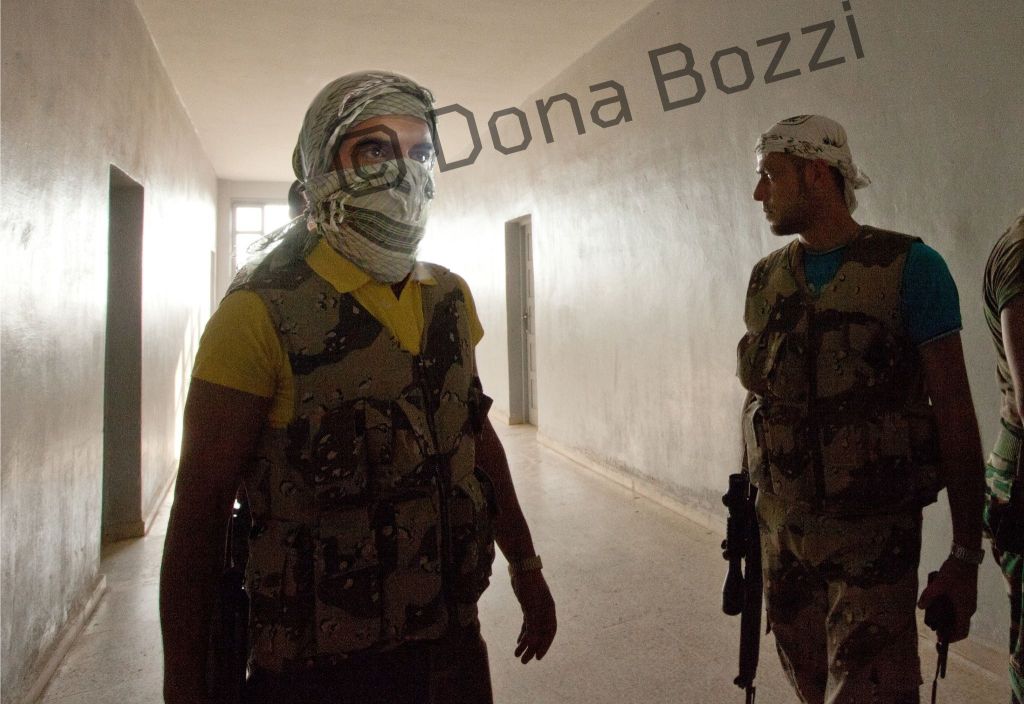
After only 2 days, Mujahid, the third liason of Abu Ommar’s since we crossed the border, came to pick us up and took us to Meadia,(not to be confused with Madaya, although you won’t find Meadia on the map). Veering alternately to the right and left, for four hours, for a 300 miles – span of sickening zig zags, deep down into Homs without us even knowing. After Binnish, we gave up remembering the names. Our security, a pistol on the dashboard, and a few “no Bashar here”, reiterated now and then by Mujahid.
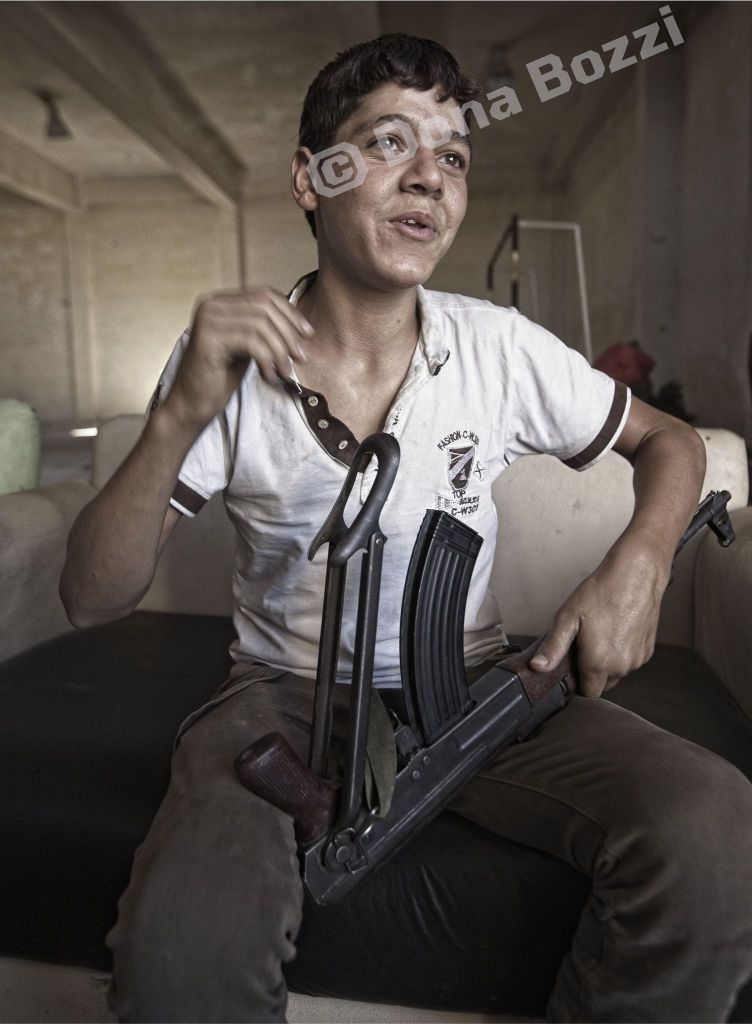
In Meadia, he’s the owner of an empty house and a wife, and seems to make a living out of shuttling journalists from Meadia to Homs, and back. The bare floors woud get covered later in the day with multiple sofa cushions, enough to sleep a mischievous gang of 7 kids, busy during the day with burning tyres, trying to get smoke into the regime pilots’s eyes.
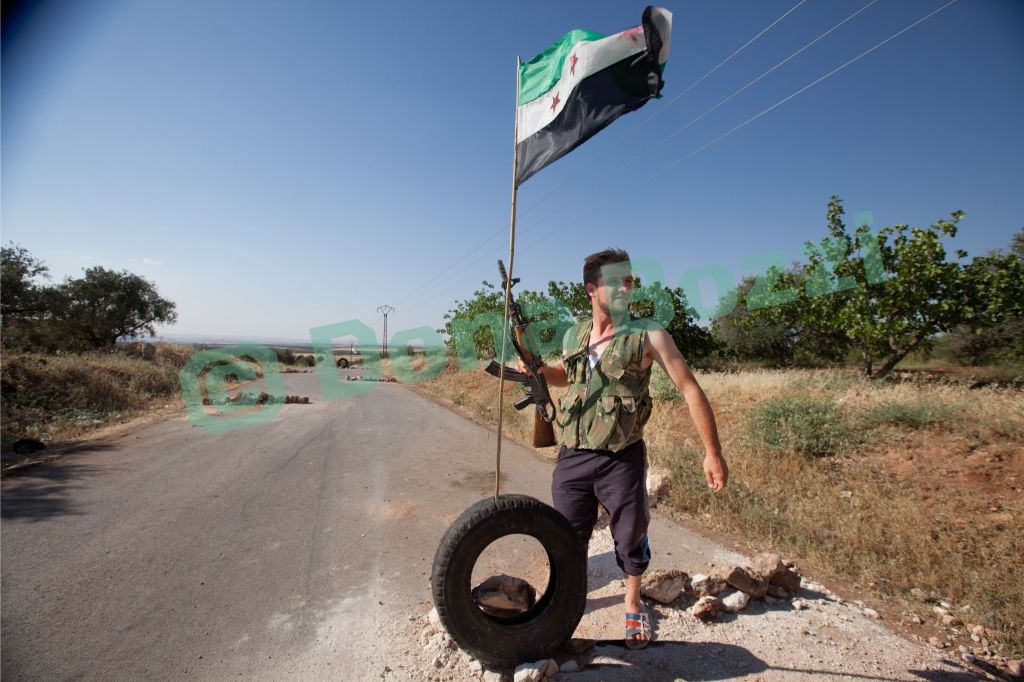
From Meadia we drove to Kfrezeta. Mohammed’s friends’ told stories of houses burned by the regime with white phosphorous, ethnically cleansing the Sunnis’ houses and their contents. They show us pictures of charred human flesh, diaphanous irises popping out like organic marbles; like in every revolution, the spared from death are eager to show the victims to the visitors, and demand their losses to go viral for the world to see.
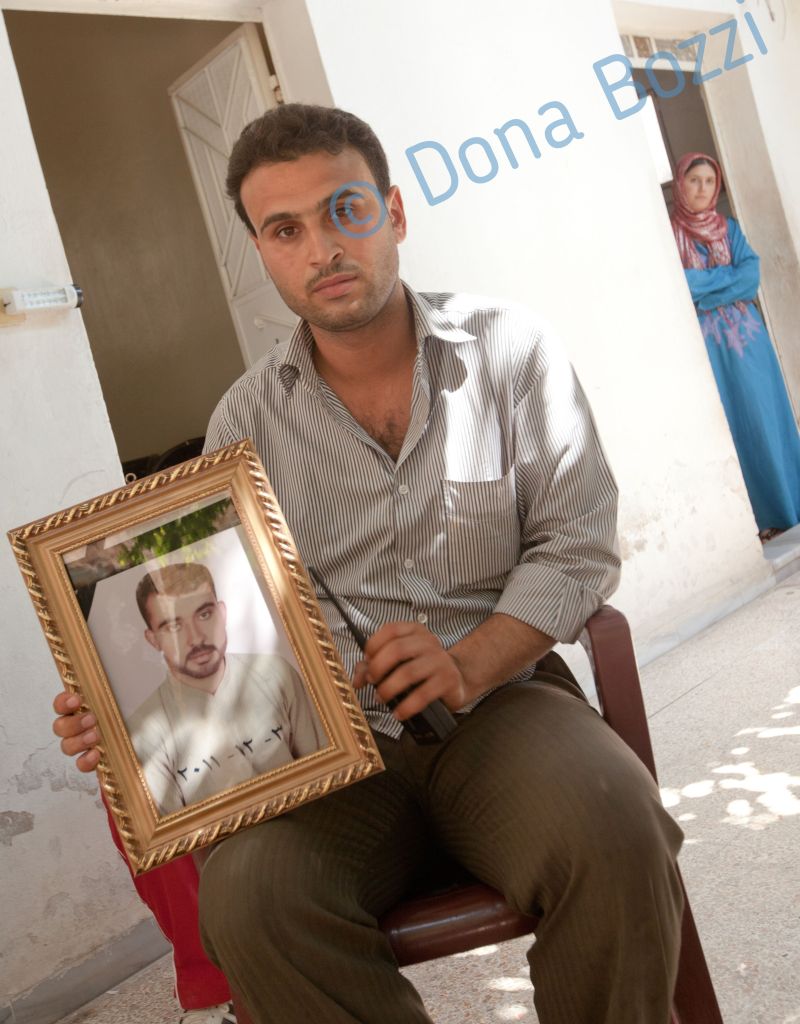
Our host decided that we would be better off in Khan Sheikhoun, a bigger city with, in a previous era, a higher standard of living then Kfr-zeta.
Khan Sheik Houn
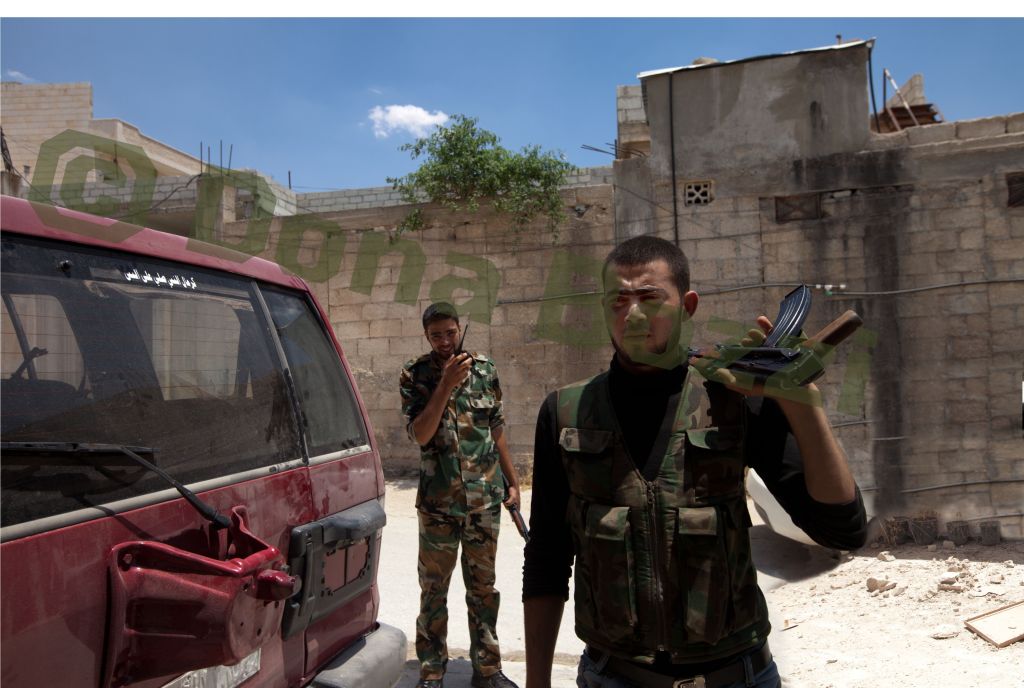
On the dirt road, we pulled over at the scene of an execution. Our friends requested pictures,fortunately we were spared the ethics,the camera batteries being uncharged due to power rationing. Zuher, the interpreter, explained that they generally identify the SAA check points via the executed bodies,left rotting along the road. I don’t know why for some reasons getting killed didn’t seem possible at that particular moment, as if we could have remained unflappable and proved to popping up Bashar forces that we were war tourists.
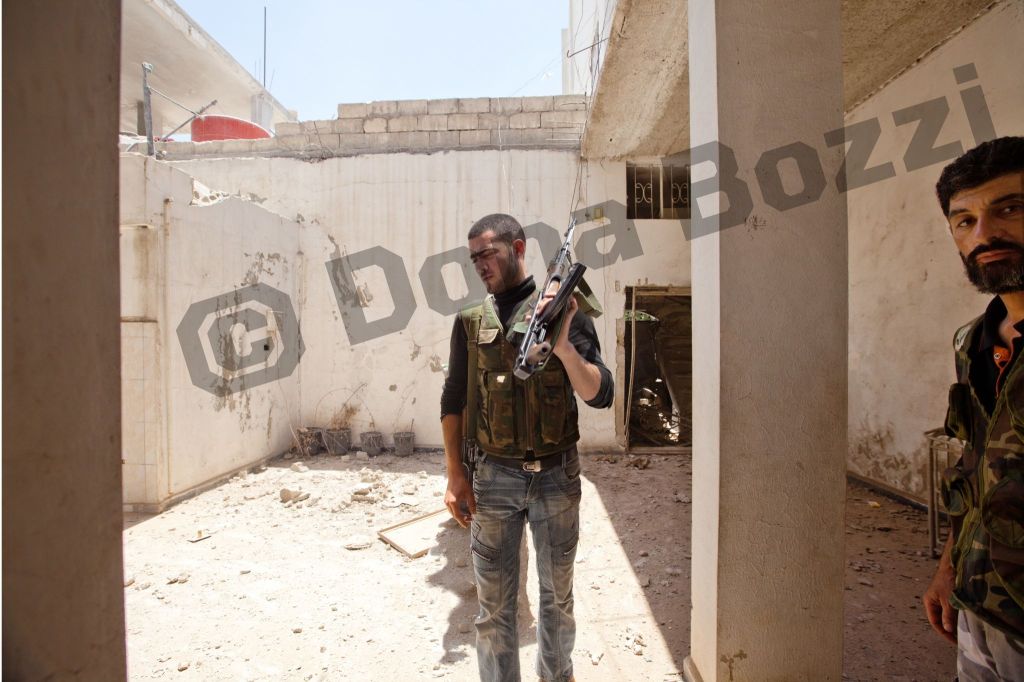
Captain Foud Qotiny, and Anas Hassao, of the FSA in Khan Sheikhoun, wore the reassuring coat of arms with the two stars on the Syrian shield, plus one, reassuring us of their identity politics with the opposition.
They guaranteed our security throughout the day, by shifts, from the shelled buildings to the souk, where the strong smell of zatar remained from a previous era, which we dubbed “Syrian oregano”, from the familiar albeit amplified smell.
From Captain Foud gratitude, it looked as if Khan Sheikhoun had been bypassed by journalists: seeking moral compensation from our camera screen, he took us to the destroyed buildings, the houses of the wounded.
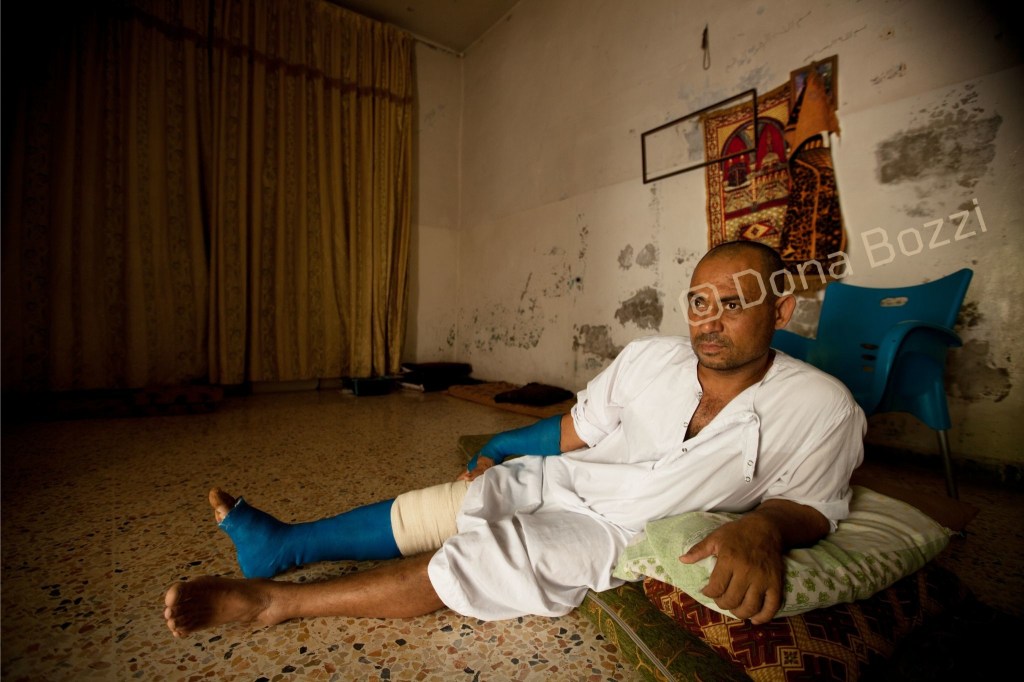
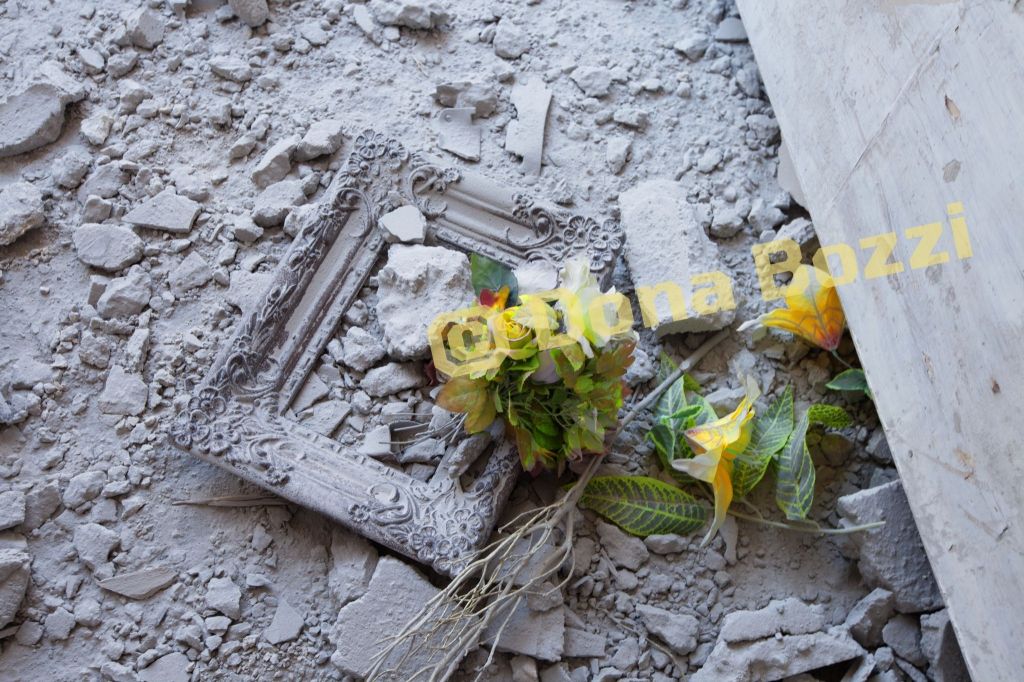
While hopping from one trembling stone to another in the remains of a gutted house, suddenly Hany Souci, Anas’s brother, whispered: “speed, speed!”, as if he was trying to push us out of the field of view of a telescopic iris. Later that day, the FSA rebels showed us a 14,5 mm bullet coming from a BMT tank, which had killed a Sunni of Syria, exactly in the area where we had carried out the inspection.
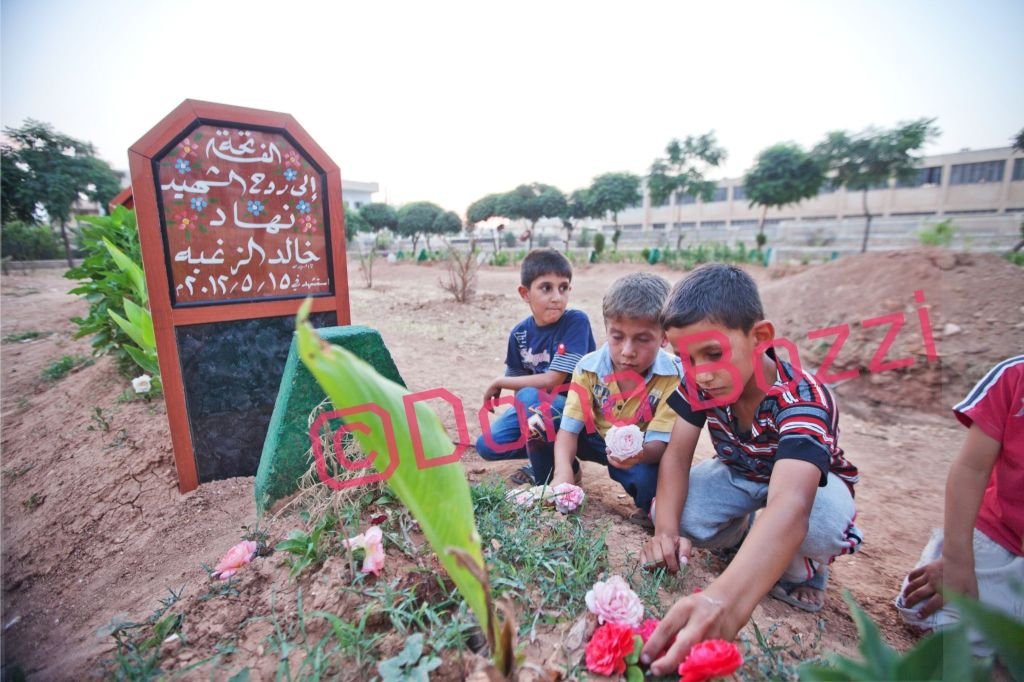
At twilight, they took us to the Shouhada Khan Sheikhoun cemetery, the monument to the martyrs of 15 05 2012, when 50 residents were killed in one day by a regime air strike. Three children, unaccompanied, knew exactly what to do: they croached down, laid flowers on the bare earth, then stood up and turned their palms upwards, in prayer, until the awkward eye contact happened through the lens.D isturbed by our encroachment on their privacy, they left, and so we did, Feeling like vultures circling on a funeral
From Zhena and her daughters we learned to give up the soap and how to eat from hunger: one night Zhena cooked what we dubbed sweet spaghetti, basically noodles and sugar; with a stern face, she asked us if we liked it, as if the sweetener was the most natural replacement for tomato sauce. Sharing their misery, it was sort of being fed cake by the regime when starving.
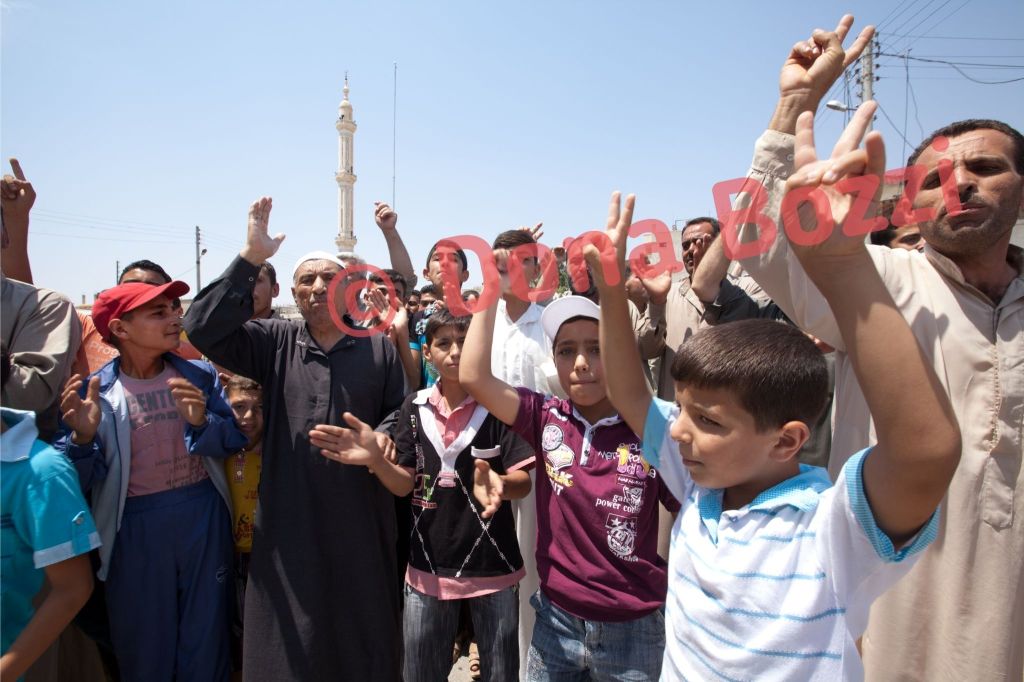
friday, traditionally demonstration day in rebel held cities,such as Khan Sheik Houn. Our friends warned us that the shabiha snipers might be wholesale shooting at demonstrators from the rooftops: so our eyes raked the opposite roofline searching for a silhouette that didn’t belong, but the light was blinding, so we adopted the Sarajevo trick: running with wobbly legs and skipping earth beats to the town square; the protesters had no banner, just their arms raised, their clenched fists.
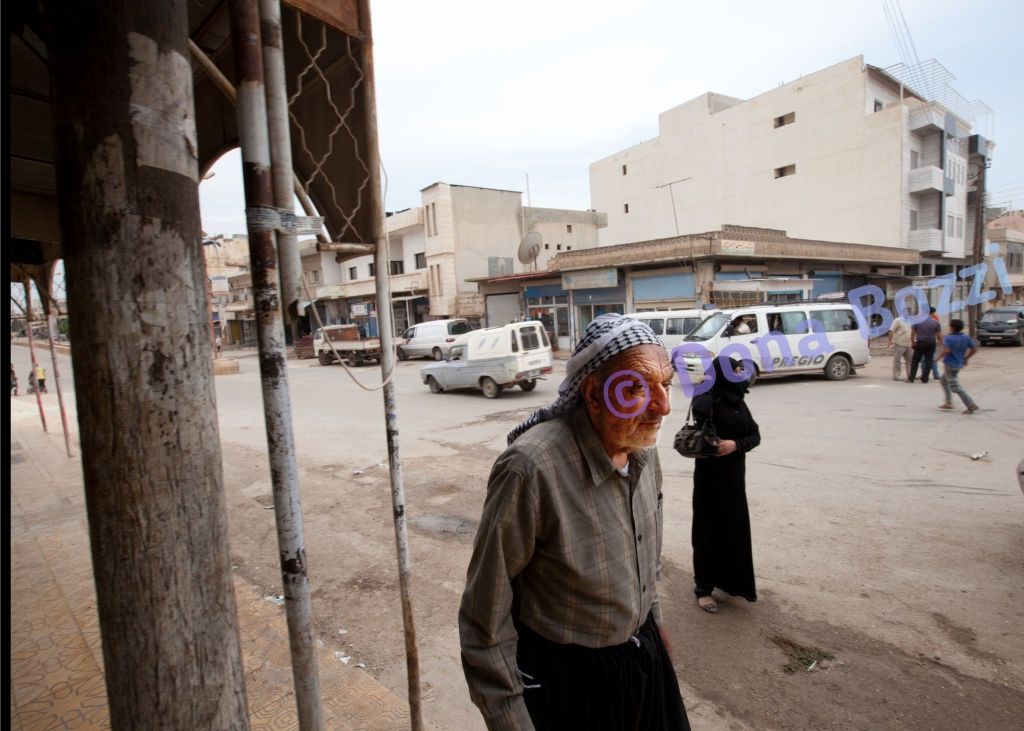
Back at home, Hany for the second time in two days, suddenly wispered to us: ”speed, speed!”: we were ordered to pack up and leave. The heads up came from Abu Ammar, again calling the shots from Instanbul.
Bashar’s army was about to surround the city, we had to get out immediately. We jumped in the car, Foud at the wheel, Hany in the front. In the back, on each side of us, a man with a gun.
The non lethal assistance promised by the US to the opposition must have been in the mail, in that captain Foud Qotiny, three stars and the hawk of Quraish on his shoulder, didn’t have a satellite phone, and had to pull over to ask the farmers about the shabiha’s positions.
In two hour, we were back to start at Mujahid’s house in Meadia. As a fixer, he was still dodging katyusha rockets when shuttling journalists back and forth from Meadia to Atmeh.
 blogsofwar.me